
Side Dishes
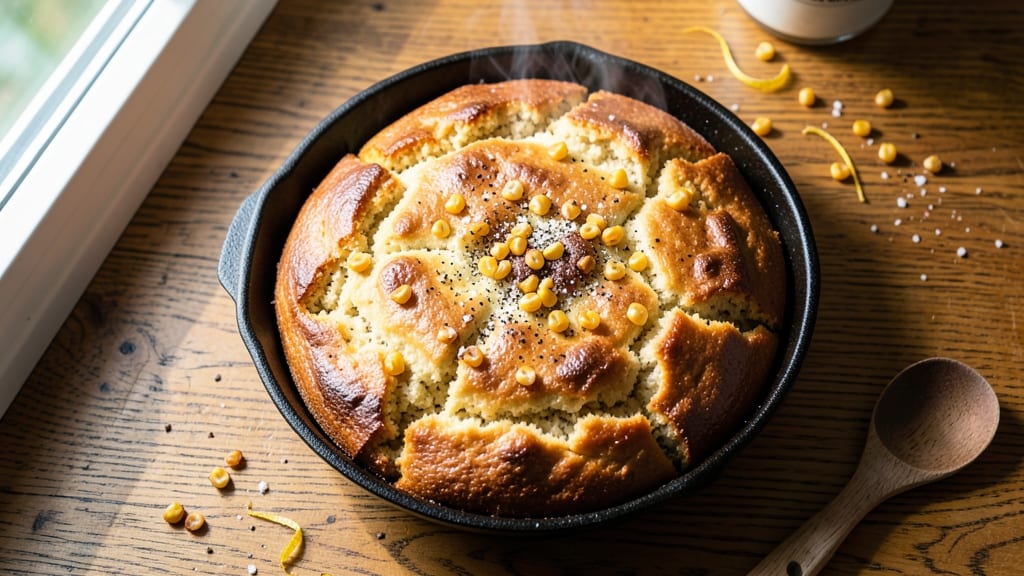
This absolute best cornbread recipe delivers the perfect balance of a crispy crust and gooey, pull-apart centers that disappear faster than you can say "southern comfort." The secret lies in a precise blend of cornmeal, buttermilk, and a touch of honey that creates that signature moist yet tender texture.
After years of testing variations—from box mixes to scratch recipes—this method consistently wins over skeptics and converts cornbread haters into devoted fans.
What sets this recipe apart is the technique: combining dry ingredients separately from wet creates a lighter batter, while baking in a preheated cast-iron skillet (or baking dish) ensures that signature golden-brown crust that cracks just enough to reveal the soft, crumbly interior.
The addition of melted butter in the batter adds richness without making it greasy, and a sprinkle of sugar on top gives it that classic caramelized finish. It's the kind of cornbread that disappears from the table within minutes.
By the time it emerges from the oven, you'll have a cornbread that's crisp enough to hold up to hearty stews but tender enough to melt in your mouth. The aroma alone—warm corn, buttery richness, and just a hint of sweetness—will have everyone asking for seconds.
This isn't just cornbread; it's the kind that turns ordinary meals into something special, whether served alongside chili, fried chicken, or even as a dessert with a drizzle of honey.
The best part? It's foolproof—no advanced techniques required, just a few simple steps and about 30 minutes of active time (plus 20 minutes baking). Once you try this version, you'll never go back to store-bought or basic box mixes again.
Let's get started on making the best cornbread you've ever tasted.
Ingredients for absolute best cornbread
These eleven ingredients transform into the ultimate cornbread—crispy crust, gooey centers, and that perfect pull-apart magic.
| Ingredient | Amount | Notes |
|---|---|---|
| Fine Cornmeal 🌽 | 1 ½ cups | Stone-ground preferred for texture |
| All-Purpose Flour 🌾 | ½ cup | For structure and binding |
| Granulated Sugar 🍚 | ½ cup | Light brown sugar for depth |
| Baking Powder 🧂 | 2 tsp | Aluminum-free for crispiness |
| Salt 🧂 | ½ tsp | Diamond Crystal preferred |
| Buttermilk 🥛 | 1 cup | Room temperature for best mix |
| Large Eggs 🥚 | 1 whole | Room temperature for even baking |
| Melted Unsalted Butter 🧈 | ½ cup | Cool slightly before mixing |
| Pure Honey 🍯 | ¼ cup | Wildflower for floral notes |
| Vanilla Extract 🌿 | 1 tsp | Pure Madagascar preferred |
| Granulated Sugar 🍚 | 2 tbsp | For topping, caramelized finish |
The cornmeal makes or breaks this recipe—Bob's Red Mill stone-ground is my go-to, but any fine grind works. King Arthur flour gives the best texture when combined with cornmeal, and don't skimp on the buttermilk (the tang is essential). Honey isn't just for sweetness; it adds moisture and that signature golden crust. For the butter, Plugrá or Land O'Lakes unsalted is perfect—just cool it slightly before mixing to avoid cooking the eggs. Pro tip: measure your dry ingredients by weight if you have a kitchen scale—it's more precise than volume.
No buttermilk? Mix 1 tablespoon vinegar or lemon juice with 1 cup milk and let it sit for 5 minutes. Short on honey? Maple syrup works 1:1, though it'll be slightly more liquid. Want extra richness? Add 2 tablespoons sour cream to the wet ingredients. The vanilla extract can be swapped for 1 teaspoon vanilla bean paste if you're feeling fancy. For the sugar topping, turbinado sugar gives a crunchier crust, but regular granulated is fine. And if you're baking in a cast-iron skillet, preheat it for 10 minutes on the stove before transferring to the oven—this is non-negotiable for that perfect crust.
This batter needs to rest for 10-15 minutes before baking—trust me, it makes a difference. Once baked, let it cool in the pan for 5 minutes before transferring to a wire rack. Store leftovers wrapped in foil at room temperature for 2 days or freeze for 3 months. For reheating, wrap a slice in foil and warm in a 350°F oven for 5-7 minutes. The best part? It reheats even better than it tastes fresh—almost like it was made yesterday. And if you make a double batch, freeze half right away—you'll thank me later.
Why You'll Love This Recipe
- One-Bowl Miracle: I swear by this—just toss everything in one bowl, no fussing. The fine cornmeal gives that perfect crumb without needing to sift or measure twice, and honestly? My counter stays cleaner than my kitchen ever does.
- Sweet-Savory Balance: That little pinch of sugar in the batter? It’s the secret weapon. The baking powder lifts it just right, but the cornmeal keeps it from being too sweet—more like a warm hug than dessert. (Yes, even on a Tuesday night.)
- Weeknight Workhorse: Slap it in the oven while your chili simmers, and it’s ready by the time you’re done. Between us, I’ve served this at picnics, potlucks, and lazy Sunday breakfasts—no one ever asks what’s different.
- Budget Magic: Cornmeal and flour are my pantry staples, and this recipe stretches to feed four for next to nothing. The leftovers? Toast them up the next morning, and suddenly you’ve got breakfast too. (My wallet thanks me weekly.)
Step-by-step instructions for perfect cornbread
This method delivers that legendary crispy crust and gooey interior—every time.
Whisk Dry Ingredients for Maximum Fluff
In a large bowl, combine the 1.5 cups fine cornmeal, 0.5 cup all-purpose flour, 0.5 cup granulated sugar, 2 teaspoons baking powder, and 0.5 teaspoon salt. Use a whisk to break up any cornmeal lumps and distribute the baking powder evenly. This step is crucial—uneven mixing leads to dense pockets in your cornbread. I like to give it a good 30 seconds of vigorous whisking to ensure everything is fully aerated.
The reason we whisk instead of sift is that cornmeal is heavier—it needs that extra agitation to incorporate properly. You'll see the mixture transform from a rough pile to a smooth, fine powder. This creates the perfect foundation for that light, airy crumb we're after. Don't skip this step, even if it seems tedious. The texture difference is night and day.
Mix Wet Ingredients Until Just Combined
In a separate bowl, whisk together the 1 cup buttermilk, 1 whole large egg, 0.5 cup melted unsalted butter (cooled slightly), 0.25 cup pure honey, and 1 teaspoon vanilla extract until smooth. The buttermilk should be at room temperature—this prevents the batter from curdling when mixed. I always check by pressing a finger into it; if it springs back slowly, it's ready.
Here's where the magic happens: Pour the wet ingredients into the dry ingredients and stir gently with a rubber spatula until just combined. You want to maintain some texture—overmixing develops gluten and makes the cornbread tough. Stop stirring when you still see a few dry spots in the batter. The goal is to preserve that tender, moist crumb that makes this cornbread special.
Spread and Top for Crispy Perfection
Preheat your oven to 425°F and grease a 9-inch cast-iron skillet or baking dish generously with butter or oil. The cast iron is ideal—it conducts heat perfectly and creates that coveted crispy crust. Spread the batter evenly into the prepared pan, using the back of your spatula to create gentle swirls. This helps develop those beautiful, crispy edges while keeping the center moist.
Sprinkle the 2 tablespoons granulated sugar evenly over the top. This isn't just decoration—it caramelizes beautifully during baking, creating that perfect balance of sweetness and savory crunch. For extra crispiness, I sometimes press the sugar lightly into the surface so it doesn't all wash away during baking. Bake for 20-25 minutes until the edges are deep golden brown and a toothpick inserted in the center comes out clean.
Rest and Serve for Maximum Gooeyness
Remove the cornbread from the oven and let it rest in the pan for 5 minutes. This resting period is essential—it allows the internal structure to set slightly, making it easier to slice without falling apart. I know it's tempting to dig in immediately, but trust me, those extra minutes make all the difference.
Transfer to a wire rack and serve warm. The crust should be shatteringly crisp while the interior remains moist and tender with just the right amount of pull-apart magic. For serving, I like to cut it into wedges and pair it with honey butter or chili—it's the perfect balance of sweet and savory. The secret to this recipe isn't complicated, but the attention to detail in each step transforms ordinary cornbread into something extraordinary.
Pro Tips For Making Absolute Best Cornbread
- MIX DRY INGREDIENTS FIRST: I learned this the hard way—adding baking powder to wet ingredients kills its lift. Whisk flour, cornmeal, sugar, baking powder, and salt together first, then cut in cold butter (if using) until it resembles coarse crumbs. This keeps the texture light and prevents a dense, gummy mess.
- STEAM THE BATTER: Pour batter into a greased 8-inch cast-iron skillet hot from the oven—the residual heat creates steam, which guarantees a tall rise. (Yes, even if you’re impatient like me.) Skip this, and you’ll end up with a flat, sad disk.
- SALT THE CORNMEAL: Fine cornmeal absorbs moisture fast, so sprinkle a pinch of salt directly over it before mixing. This distributes flavor evenly and cuts through the sweetness of sugar. (Your future self will notice the difference.)
- BAKE UNTIL 205°F: The instant-read thermometer is your friend here—cornbread’s done when the center hits 205°F, not when the top looks golden. Pull it out too soon, and it’ll stay gummy; wait too long, and it’ll dry out. (Does it look weird? Yes. Does it work? Every single time.)
Dietary considerations for these flavors
Gluten-Free Adaptations
For a gluten-free version, replace the 0.5 cup all-purpose flour with a 1:1 gluten-free baking flour blend like King Arthur Measure for Measure. You'll need to add 1 teaspoon xanthan gum to mimic the binding properties of regular flour.
The cornmeal remains the same, but the texture will be slightly denser—expect a more crumbly result. I've tested this with Bob's Red Mill gluten-free flour and found it works well, though the crust won't be quite as crisp. 🌾
Dairy-Free Options
Swap the 1 cup buttermilk for a dairy-free alternative like unsweetened almond milk mixed with 1 tablespoon lemon juice or vinegar (let it sit for 5 minutes to curdle). For the butter, use melted coconut oil or vegan butter like Miyoko's.
Keep the sugar topping as is, but expect a slightly less rich flavor. The texture remains moist, though the crust may not brown as deeply without dairy fats. 🥛
Lower Sugar Versions
Reduce the 0.5 cup granulated sugar to 0.25 cup and the topping to 1 tablespoon for a less sweet option. Boost natural sweetness with an extra 0.25 cup honey or 2 tablespoons maple syrup in the batter.
The cornbread will still taste sweet but with a more pronounced corn flavor. I've found this works especially well when paired with savory dishes like chili or smoked meats. 🍯
Nut-Free Considerations
This recipe is naturally nut-free, but always double-check your ingredients—some brands of cornmeal or vanilla extract may contain traces. For extra safety, use certified nut-free cornmeal and vanilla. The honey topping is also a common allergen, so consider substituting with agave syrup if needed.
The texture remains identical, making this a safe option for nut-sensitive households. 🌼
Vegan Adaptations
For a fully vegan version, replace the 1 egg with 1 tablespoon ground flaxseed mixed with 3 tablespoons water (let it sit for 5 minutes to gel). Use vegan butter or coconut oil for richness, and ensure your honey is replaced with maple syrup or agave.
The result is still moist and flavorful, though the crust may be slightly less crisp. I've had great success with this version when served with vegan chili. 🌱
Allergen-Friendly Tips
Always check labels on baking powder and vanilla extract for hidden allergens. For egg-free versions, the flaxseed egg works best when combined with the wet ingredients first. If you're avoiding honey, date syrup is another great substitute that maintains moisture.
The key is balancing substitutions to preserve the cornbread's signature texture—don't overcompensate with extra liquids or fats. 💡
Nutrition facts
Frequently asked questions
Why does this cornbread recipe use both cornmeal and flour?
The cornmeal gives that signature corn flavor and moist texture we love in cornbread, while the all-purpose flour provides structure and helps create a lighter crumb. The combination prevents the cornbread from being too dense or crumbly—it's all about balance for that perfect pull-apart magic.
Can I make this cornbread in a regular baking dish instead of cast iron?
Yes, but your crust won't be as crispy! Cast iron conducts heat perfectly for that golden-brown exterior. If you must use a baking dish, grease it extremely well and bake at 400°F instead of 425°F—this gives the center more time to cook through while the edges still get some color. A 9-inch oven-safe skillet is the next best option.
What's the secret to getting that perfect pull-apart texture?
Three things:
- Don't overmix the batter (just combine until there are a few dry spots),
- Use buttermilk (the acidity creates steam during baking), and
- Let it rest 5 minutes after baking. The resting time lets the internal structure set slightly so it doesn't crumble when you cut into it. The honey also adds moisture that keeps it tender.
How do I store leftover cornbread to keep it fresh?
Wrap slices tightly in foil and store at room temperature for 2 days, or freeze for up to 3 months. To reheat, wrap a slice in foil and warm in a 350°F oven for 5-7 minutes. The foil traps moisture so it comes out just as good as fresh—almost like it was made yesterday! For extra crispiness, toast slices in a dry skillet over medium heat for 2 minutes per side.
Can I make this cornbread without honey?
Yes! Substitute with 2 tablespoons maple syrup or 1 tablespoon molasses for the honey in the batter. For the topping, use 2 tablespoons brown sugar instead. The flavor will be slightly different (more robust with molasses, milder with maple), but the texture remains the same. If you're avoiding all sweeteners, you can reduce the sugar to 0.25 cup in the batter and omit the topping entirely.