
Side Dishes
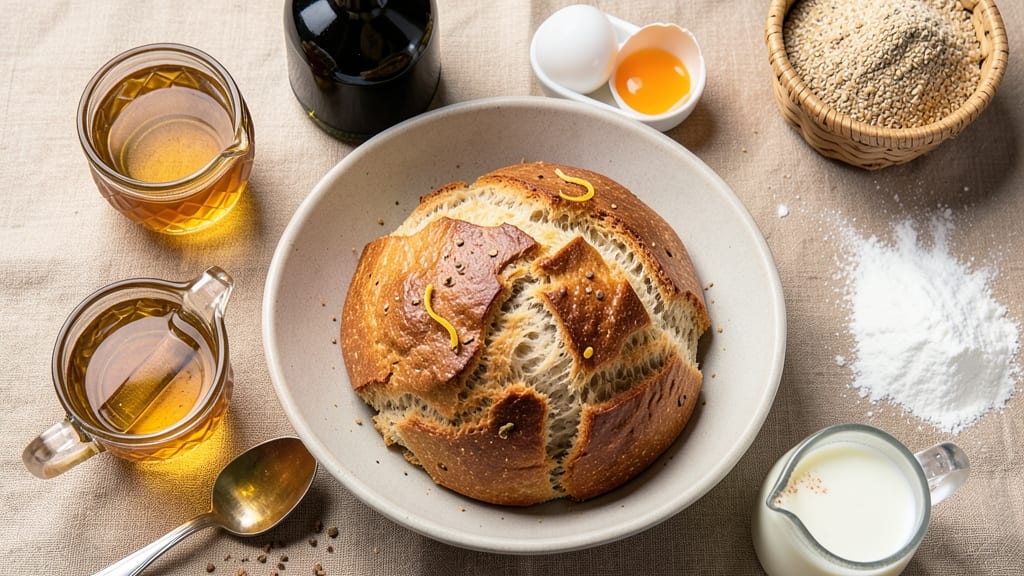
This airy whole wheat bread recipe transforms dense, heavy loaves into light, fluffy masterpieces—no compromise on nutrition or texture. The secret lies in a precise blend of whole wheat flour, vital wheat gluten, and a touch of honey, which creates that signature open crumb and tender crumb.
I've baked this recipe countless times for picky eaters who refuse whole wheat bread, and every time, they're stunned by how light it is.
What makes this recipe work is the combination of proper kneading, controlled proofing, and a steam bath in the oven—techniques that unlock whole wheat's potential for airiness.
Unlike many recipes that rely on white flour for lift, this version uses a high-protein blend that develops gluten properly, while the honey and oil create a tender crumb. The result?
A loaf with a crisp golden crust and an interior so light you'll want to cut it into thick slices just to admire the texture.
This bread is perfect for sandwiches, toast, or serving alongside soups—its mild sweetness and satisfying chew make it versatile for any meal. The recipe yields two standard loaves, and leftovers freeze beautifully for up to three months.
Whether you're a seasoned baker or new to whole wheat, this method delivers restaurant-quality results with just a few simple steps and about 2 hours of active and passive time.
For those who prefer vegan options, I've included substitutions that maintain the bread's airy texture without dairy or eggs. The key is replacing them with flaxseed "eggs" and plant-based milk, which work surprisingly well in this recipe. Let's get started on baking bread that's as nutritious as it is delicious.
Ingredients for airy whole wheat bread
The perfect blend of whole wheat flour, vital wheat gluten, and honey creates light, fluffy bread without sacrificing nutrition.
| Ingredient | Amount | Notes |
|---|---|---|
| Whole Wheat Flour 🌾 | 3 cups | High-protein blend preferred |
| Vital Wheat Gluten 🌾 | ½ cup | For proper gluten development |
| All-Purpose Flour 🌾 | ½ cup | Balances texture and rise |
| Honey 🍯 | ¼ cup | Lightens crumb and adds sweetness |
| Vegetable Oil 🫒 | ¼ cup | For tenderness and moisture |
| Instant Yeast 🍞 | 2 tsps | Active dry works too |
| Salt 🧂 | 1 tsp | Diamond Crystal preferred |
| Warm Water 💧 | 1 ¼ cups | 110°F for optimal yeast activation |
| Large Eggs 🥚 | 2 whole | For structure and binding |
| Milk 🥛 | ¼ cup | Adds richness and tenderness |
| Sesame Seeds 🌻 | 2 tbsp | For topping and texture |
The whole wheat flour is the foundation—look for a high-protein blend (13% or higher) at stores like Whole Foods or King Arthur Flour for the best rise. Vital wheat gluten is non-negotiable here; it mimics the elasticity of white flour, giving you that signature airy crumb. I always buy mine in bulk from Bob's Red Mill—it keeps for 6-12 months in a cool, dark place. The honey should be pure, liquid honey (no corn syrup blends)—Manuka or clover work beautifully. If you're avoiding honey, maple syrup is a perfect 1:1 substitute, though it adds a slightly earthier note.
No eggs? Flax eggs (1 tbsp ground flaxseed + 3 tbsp water = 1 egg) work perfectly—just let them sit for 5 minutes to thicken. The milk can be swapped for unsweetened almond milk or oat milk for a vegan version, though regular milk adds richness that's hard to beat. Short on sesame seeds? Poppy seeds or sunflower seeds give a similar crunch. The yeast is best bought fresh—check the expiration date on the package. If it's past its prime, test it first by mixing 1 tsp yeast with 1 tsp sugar and 1/4 cup warm water; it should foam within 10 minutes. Diamond Crystal salt dissolves more easily than Morton's, but either works in a pinch.
Store wrapped loaves in a bread box or paper bag at room temperature for 3-4 days—they'll stay fresh longer than in plastic. For longer storage, freeze slices wrapped in parchment paper for up to 3 months. The vital wheat gluten and whole wheat flour can be stored in the pantry for up to a year, while the yeast should be refrigerated after opening. If you're making this ahead, shaped dough keeps in the fridge for up to 24 hours before baking. The honey and oil can be stored at room temperature indefinitely.
Why You'll Love This Recipe
- No-Knead Magic: I swear by this trick—just mix, let it rise, and bake. The vital wheat gluten gives it that light, fluffy texture without a single knead. Honestly, my hands stay clean while the bread does all the work.
- Honey-Kissed Sweetness: That drizzle of honey isn’t just for flavor—it caramelizes just enough to give every slice a subtle, warm depth. The whole wheat stays hearty but never heavy, and the oil keeps it tender. (Yes, even on a Tuesday night.)
- Sandwich Star: This bread is my go-to for everything: turkey and avocado, peanut butter toast, or even grilled cheese. The open crumb holds fillings like a dream, and it’s sturdy enough for toast without turning to mush.
- Budget-Friendly Staple: Whole wheat flour and vital wheat gluten stretch my grocery budget, and a batch lasts us a week. Freeze extras for quick toast or sandwiches—no waste, just pure convenience. Between us, this is my secret weapon for cheap, filling meals.
Step-by-step instructions for airy whole wheat bread
Here's how to achieve that perfect light, fluffy texture with whole wheat flour.
Mix the Wet Ingredients
In a large mixing bowl, combine the 1.25 cups warm water, 0.25 cup honey, 0.25 cup vegetable oil, 2 whole large eggs, and 0.25 cup milk. I like to use a whisk for this step to ensure everything is fully incorporated and there are no lumps. The warm water should be between 105-110°F—test it by placing your finger in it; it should feel warm but not hot to the touch. This temperature activates the yeast without killing it.
The honey and oil work together to create a smooth base that helps lighten the dense whole wheat flour. The eggs provide structure while the milk adds richness. Mix these ingredients until they're completely homogeneous, about 2-3 minutes. This step sets the foundation for your bread's texture, so don't rush it.
Combine Dry Ingredients and Develop Gluten
In a separate bowl, whisk together the 3 cups whole wheat flour, 0.5 cup vital wheat gluten, 0.5 cup all-purpose flour, 2 tsps instant yeast, and 1 tsp salt. The vital wheat gluten is crucial here—it compensates for whole wheat's lower gluten content and gives you that professional bakery-style rise. Sift the dry ingredients through a fine-mesh sieve directly into the bowl to aerate them and prevent clumping.
Create a well in the center of the dry ingredients and pour in the wet mixture. Using a wooden spoon, gently fold the ingredients together until just combined. Avoid overmixing at this stage—you want to preserve the air bubbles created by the yeast. The dough should be shaggy but cohesive. If it's too sticky, you can add 1-2 tablespoons more whole wheat flour as needed.
Knead the Dough for Optimal Texture
Transfer the dough to a lightly floured surface and knead for 8-10 minutes by hand, or use a stand mixer with a dough hook attachment on medium speed for 5-6 minutes. You're looking to develop gluten without overworking the dough. I know it seems counterintuitive with whole wheat, but proper kneading creates the structure needed for that light, airy crumb.
Test for doneness by doing the windowpane test: stretch a small piece of dough between your fingers. If it's ready, it should be thin enough to see light through without tearing. The dough should be smooth, elastic, and slightly tacky but not sticky. If it's too sticky, knead in an additional 1 tablespoon of flour until it reaches the right consistency.
First Rise for Maximum Volume
Lightly grease a large mixing bowl with vegetable oil and place the dough inside. Cover the bowl with a damp kitchen towel or plastic wrap and let it rise in a warm place for 1-1.5 hours, or until it has nearly doubled in size. The warm environment helps activate the yeast more quickly. I like to place the bowl on top of my turned-off oven with the light on for consistent warmth.
During this time, the dough should puff up noticeably and feel springy when pressed gently with your finger. If it rises too quickly, it might collapse later. This first rise is critical—it allows the gluten to relax and the yeast to ferment properly, setting the stage for that perfect oven spring when baked.
Shape, Second Rise, and Bake
Gently punch down the risen dough to release any large air bubbles. Shape it into a loaf by folding the ends toward the center and rolling it tightly into a log. Place the shaped loaf seam-side down in a greased 9x5-inch loaf pan. Cover it again and let it rise for an additional 30-45 minutes until it's just above the top of the pan.
Preheat your oven to 375°F. Just before baking, brush the top of the loaf with a little water and sprinkle evenly with the 2 tbsp sesame seeds. Bake for 35-40 minutes until the top is golden brown and the internal temperature reaches 205°F when measured with an instant-read thermometer. The bread should sound hollow when tapped on the bottom.
Cool and Enjoy
Remove the bread from the pan and place it on a wire rack to cool completely for at least 1 hour. I know it's tempting to slice into it warm, but resisting this urge prevents the loaf from falling apart. The cooling process allows the gluten to fully set and the crumb to firm up.
Once cooled, slice the bread to reveal that perfect open crumb structure—you should see an even, airy texture with no dense pockets. The exterior should be crisp with a slight sheen from the sesame seeds. Store any leftovers wrapped in a bread bag at room temperature for up to 3 days, or freeze for up to 3 months for freshness whenever you need it.
Pro Tips For Making Airy Whole Wheat Bread
- Sift the Gluten First: Vital wheat gluten is your airiness lifeline—sift it before mixing with whole wheat flour. I learned this the hard way: clumps in the dough mean dense bread. Toss the gluten through a fine-mesh sieve into your bowl, then whisk it into the flour. No sifting? At least break it up with your fingers until it’s powder-fine.
- Let the Dough Rise Twice: Whole wheat dough fights you—it’s dense and sluggish. After the first rise, punch it down and let it rest 10 minutes before shaping. Then, give it a second rise (this time in a greased loaf pan) until it’s just over the rim. The extra patience pays off in crumb that’s light, not brick-like.
- Honey Needs Warmth: Cold honey is thick and stubborn. Warm it in a 20-second microwave burst (or dip the jar in hot water) until it’s pourable—about 100°F. This ensures even distribution in the dough, so your bread doesn’t taste like sweet pockets. Trust me, your first slice will taste flat if you skip this.
- Oil the Pan After Shaping: Brush the pan with vegetable oil right before the dough goes in—after it’s shaped but before the final rise. This creates a nonstick barrier and helps the crust brown evenly. I used to oil it early, and the dough would stick like glue, no matter how much flour I dusted. Waste of time.
Regional styles of this dish
Southern U.S. Style
In the Southern states, whole wheat bread often gets a hearty twist with additions like cornmeal or molasses for extra depth.
I like to replace ½ cup of the whole wheat flour with fine cornmeal and swap the honey for ¼ cup molasses—this creates a slightly denser but still airy loaf with a molasses-kissed sweetness that pairs perfectly with fried chicken or BBQ.
The cornmeal also adds a subtle crunch. 🌾
Italian-Inspired Variations
For an Italian touch, add 1 tablespoon dried oregano and ½ teaspoon fennel seeds to the dry ingredients. Replace the sesame seeds with poppy seeds and brush the baked loaf with garlic-infused olive oil before serving.
This version works beautifully as a side for pasta dishes or as a base for panini sandwiches. The fennel seeds bring a subtle anise note that complements tomato-based sauces. 🌿
German Rye-Inspired Twist
Swap 1 cup of the whole wheat flour for milled rye flour (or pumpernickel flour) and reduce the vital wheat gluten to ¼ cup. Add 1 teaspoon caraway seeds to the dry mix and a splash of dark beer (like Schöfferhofer Original) instead of milk.
This creates a denser, slightly tangy loaf with a deep flavor—ideal for cheese platters or open-faced sandwiches. The rye flour adds a satisfying chew while keeping the crumb tender. 🍺
French Baguette Adaptation
For a French-inspired version, shape the dough into two long baguettes instead of a loaf. Use 1 tablespoon cornmeal in the dry mix and skip the sesame seeds in favor of coarse sea salt sprinkled on top. Bake at 425°F for 20-25 minutes for a crisp crust.
This version is perfect for dipping in olive oil or using as a garlic bread base. The high heat creates a beautiful blistered crust while maintaining an airy interior. 🥖
Mexican Cornbread Fusion
Replace ½ cup of the whole wheat flour with fine cornmeal and add ½ teaspoon ground cumin and ¼ teaspoon cinnamon to the dry ingredients. Use orange juice instead of milk for a citrusy twist. Top with chopped cilantro and crushed red pepper flakes before baking.
This fusion loaf is fantastic for breakfast sandwiches or as a side with black beans and salsa. The cumin adds warmth that balances the sweetness. 🌶️
Nutrition facts
Frequently asked questions
Why does my whole wheat bread turn out dense instead of airy?
Whole wheat flour has less gluten than white flour, which is why we use vital wheat gluten and proper kneading. Overmixing or under-kneading (less than 8-10 minutes) prevents gluten development. Also, ensure your yeast is fresh and your water is 105-110°F—too hot or cold water can kill yeast or slow fermentation.
Can I make this bread without a stand mixer?
This recipe works perfectly by hand. Knead the dough on a lightly floured surface for 8-10 minutes—focus on stretching and folding the dough rather than punching it. The windowpane test (stretching dough thin enough to see light) confirms when it's ready. A little extra elbow grease ensures that airy texture!
How do I store leftovers to keep them fresh?
Wrap cooled loaves in a paper bag or bread box (not plastic) at room temperature for 3-4 days. For longer storage, slice and freeze wrapped in parchment for up to 3 months. To reheat, toast frozen slices directly or warm at 300°F for 5-10 minutes until crisp.
What's the best way to test if my bread is fully baked?
Use the internal temperature method—insert an instant-read thermometer into the center. It should read 205°F. Alternatively, tap the bottom: a hollow sound means it's done. The crust should also be golden brown. Avoid cutting too soon—wait at least 1 hour for the crumb to set properly.
Can I substitute white flour for the whole wheat flour?
You can replace up to 1 cup of the whole wheat flour with white flour, but the bread will be less nutritious and may lack the satisfying chew. For a lighter texture, reduce the vital wheat gluten by ¼ cup if substituting. However, the honey and oil in this recipe already help balance whole wheat's density, so minimal substitution works best.