
Desserts
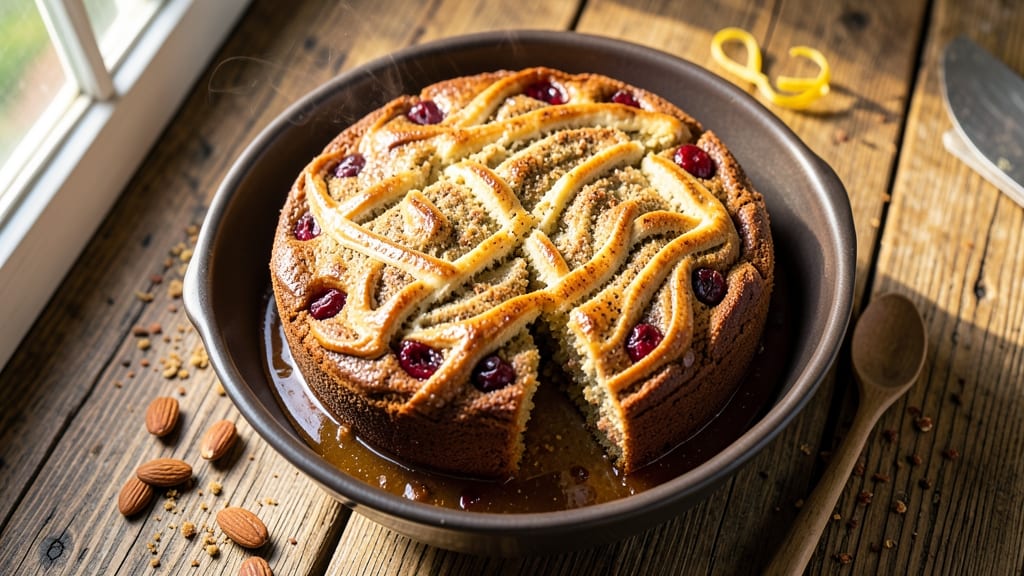
This almond flour gingerbread cake delivers all the cozy warmth of traditional gingerbread—molasses depth, spiced aroma, and tender crumb—without the gluten or refined flour. The secret lies in almond flour's natural moisture retention, creating a silky heart that stays tender even when topped with that signature crunchy spice crust.
I developed this recipe after years of baking gluten-free desserts that either turned out dense or crumbly, and this version finally nailed the perfect balance.
The magic happens with a two-stage baking approach: first baking the cake layer until just set, then brushing with molasses buttercream and sprinkling with cinnamon sugar for that signature crunch.
Almond flour's fat content means you don't need extra oil—just melted butter and a touch of applesauce for extra moisture. The spices (ginger, cinnamon, cloves) infuse every bite with that familiar holiday warmth, but without the heaviness of traditional flour.
What you'll end up with is a cake that's moist and dense enough to hold slices neatly, yet light enough to melt in your mouth. The crust develops a beautiful caramelized edge from the molasses glaze, while the interior remains tender and fragrant.
This is the kind of dessert that feels indulgent yet satisfies dietary needs—perfect for holiday gatherings or whenever you crave something warm and spiced.
For extra richness, I recommend adding a layer of cream cheese frosting between the cake layers, and garnishing with candied pecans for crunch. The cake keeps well at room temperature for 3 days or can be frozen for up to a month—ideal for making ahead. Let's get baking!
Ingredients for almond flour gingerbread cake
Here's everything you need to create a gluten-free gingerbread cake with holiday warmth and silky texture.
| Ingredient | Amount | Notes |
|---|---|---|
| Superfine Almond Flour 🌰 | 2 ½ cups | Blanched, finely ground preferred |
| Unsalted Butter 🧈 | 1 cup | Melted, cooled slightly |
| Dark Brown Sugar 🍚 | 1 ½ cups | Packed firmly, molasses-rich |
| Granulated Sugar 🍬 | ½ cup | For balanced sweetness |
| Large Eggs 🥚 | 3 whole | Room temperature preferred |
| Unsweetened Applesauce 🍎 | ½ cup | For moisture without density |
| Pure Molasses 🍯 | ½ cup | Unsulphured for rich flavor |
| Ground Ginger 🌿 | 2 tbsp | Freshly ground preferred |
| Ground Cinnamon 🍃 | 2 tsp | Ceylon preferred for delicate flavor |
| Ground Cloves 🌶️ | 1 tsp | Freshly ground for potency |
| Baking Soda 🧂 | 1 tsp | Pure, no aluminum |
| Salt 🧂 | ½ tsp | Diamond Crystal preferred |
| Vanilla Extract 🌸 | 2 tsp | Pure Madagascar preferred |
| Cream Cheese Frosting 🧀 | 1 ½ cups | For layering between cakes |
| Cinnamon Sugar 🍬 | ¼ cup | For crust topping |
Almond flour is the star here—Bob's Red Mill or Anthony's Goods are my go-tos for that ultra-fine grind. The difference between super-fine and regular almond flour is noticeable: super-fine creates that signature tender crumb. If you can only find regular, pulse it extra in your food processor. The molasses? Unsulphured is key—it's sweeter and richer. Skip the pre-made molasses from the baking aisle; grab a bottle from the coffee section instead. For the spices, Penzeys or McCormick Gourmet are worth the splurge—they stay potent longer. Freshly ground spices make all the difference, but if you're using pre-ground, make sure they smell vibrant, not dusty.
No almond flour? Oat flour or coconut flour at half the amount works, but texture will differ—expect more density. Running short on molasses? Maple syrup at half the amount mimics the depth, though it lacks that signature tang. The cream cheese frosting can be swapped for vegan buttercream if needed, but trust me on the full-fat version for that perfect balance of tang and sweetness. For the cinnamon sugar topping, Trader Joe's has the best pre-mixed version, but homemade (equal parts sugar and cinnamon) is foolproof. The applesauce keeps the cake moist without adding density—don't skip it, even if you're using extra butter.
This cake keeps beautifully at room temperature for 3 days if wrapped tightly in parchment and stored in an airtight container. For longer storage, freeze the fully assembled cake (before frosting) for up to 1 month. Thaw at room temperature, then add the frosting. The spices intensify over time, so it actually tastes better the next day. For make-ahead prep, bake the layers and freeze them unfrosted—just thaw and assemble when ready. The frosting can be made a day ahead and stored in the fridge, though it softens slightly when brought to room temperature.
Why You'll Love This Recipe
- No Mixing Madness: I swear by this recipe—just fold the almond flour into the butter and sugar until it almost comes together, then let the eggs do the work. No overmixing, no waiting for dough to chill, just a few minutes of hands-on time before baking.
- Spiced Perfection: That molasses-kissed brown sugar and fresh ginger? It’s like gingerbread’s cozy cousin—warm, deep, and just sweet enough to make you reach for another slice. The almond flour keeps it moist without being heavy, so every bite feels special.
- Crowd-Pleaser Flex: Serve it warm with whipped cream for a holiday dessert, slice it into squares for a breakfast treat, or pack it in lunchboxes—it’s that versatile. Honestly, I’ve even used it as a base for cheesecake filling (yes, really).
- Budget-Friendly Luxury: Almond flour might seem pricey, but this recipe uses just a cup—enough to make a whole cake that feeds six. The butter and sugar stretch further than you’d think, and leftovers? They disappear faster than my willpower on a Sunday afternoon.
Step-by-step instructions for almond flour gingerbread cake
Here's how to create a gingerbread cake with a perfect balance of spice and moisture—every layer delicious.
Mix Wet Ingredients for Maximum Moisture
In a large mixing bowl, combine the 1 cup unsalted butter (melted and cooled slightly) with the 1.5 cups dark brown sugar and 0.5 cup granulated sugar. Whisk until fully incorporated and the mixture is smooth. This step ensures the sugars dissolve completely, preventing graininess in your cake.
Next, add the 3 whole large eggs (room temperature preferred) one at a time, whisking vigorously after each addition. The eggs should be fully emulsified into the butter-sugar mixture. Stir in the 0.5 cup unsweetened applesauce, 0.5 cup pure molasses, and 2 tsp vanilla extract. The applesauce adds moisture without altering the cake's texture, while the molasses deepens the gingerbread flavor. Whisk until everything is thoroughly combined and the mixture is homogeneous.
Combine Dry Ingredients for Perfect Texture
In a separate bowl, sift together the 2.5 cups superfine almond flour, 2 tbsp ground ginger, 2 tsp ground cinnamon, 1 tsp ground cloves, 1 tsp baking soda, and 0.5 tsp salt. Sifting ensures the almond flour is light and aerated, which is crucial for a tender crumb. The spices should be evenly distributed throughout the flour to guarantee consistent flavor in every bite.
Gradually add the dry ingredients to the wet mixture, folding gently with a spatula. Avoid overmixing—just until the batter is smooth and no dry spots remain. The almond flour can be tricky, so fold until the batter is thick but still pourable. This step is where the cake's signature texture begins to form, so take your time to ensure everything is well incorporated.
Bake in Layers for Even Cooking
Preheat your oven to 350°F. Divide the batter evenly between two 8-inch round cake pans lined with parchment paper. The batter should fill the pans about two-thirds full. Bake for 25-30 minutes, or until a toothpick inserted into the center comes out clean. The edges should be golden brown, but the tops should remain slightly soft to the touch—this indicates a moist interior.
I like to rotate the pans halfway through baking to ensure even cooking. The almond flour can sometimes cause uneven browning, so keep an eye on the edges. Once the cakes are done, remove them from the oven and let them cool in the pans for 10 minutes. Then transfer to a wire rack to cool completely before frosting. This cooling step is essential—it prevents the frosting from melting and ensures clean layers.
Assemble with Cream Cheese Frosting
Once the cakes are completely cool, place one layer on a serving plate. Spread 0.75 cup cream cheese frosting evenly over the top, leaving a small border for the second layer. The frosting should be smooth and spread thinly to avoid a soggy cake. Place the second layer on top and repeat the process, spreading the remaining 0.75 cup cream cheese frosting over the top and sides.
For the final touch, sprinkle the 0.25 cup cinnamon sugar evenly over the top and sides of the cake. The cinnamon sugar adds a delightful crunch and enhances the gingerbread flavor. Serve immediately or refrigerate for up to 2 hours before serving to let the flavors meld. The cake will be moist and rich, with a perfect balance of spice and sweetness in every bite.
Pro Tips For Making Almond Flour Gingerbread Cake
- CREAM THE BUTTER LONG: I learned this the hard way—almond flour batter is thicker than regular cake mix, and rushing the butter-sugar cream means you’ll end up with a dense, heavy texture. Beat the butter and sugars on high for at least 3-4 minutes until it’s pale and fluffy, like whipped frosting. That lightness carries through the whole cake.
- WEIGH THE ALMOND FLOUR: Superfine almond flour packs differently than regular flour, and scooping it straight from the bag introduces air pockets. Spoon it into your measuring cups, then level it off with a knife—don’t tap the cup. Too much flour makes the cake dry; too little, and it collapses. Trust the scale if you have one, but even a kitchen cup works if you’re precise.
- DON’T OVERMIX THE BATTER: Almond flour releases gluten-free gums when overworked, and this batter turns into a stiff, chewy mess faster than you’d think. Mix just until the dry ingredients disappear—maybe 10-12 strokes with a spatula. The second you see streaks of flour, stop. Overmixing is the fastest way to ruin the tender crumb.
- BAKE UNTIL SPRINGY: This cake won’t brown like wheat flour cakes, so rely on texture. Press the center lightly—it should spring back slowly, not wobble like jelly. If it’s still warm and jiggly, it needs 5-10 more minutes. Underbaking is the real risk with almond flour; the sugars caramelize late, and you’ll end up with a gummy center. Patience here makes all the difference.
Creative variations of almond flour gingerbread cake
Spiced Rum Infusion
For a boozy twist, add 1 tbsp spiced rum (like Kahlúa or Bacardi Limón) to the wet ingredients. The rum enhances the molasses flavor and adds a warm, aromatic depth.
I like to use Appleton Estate Reserve for its rich caramel notes—just replace 1 tbsp of the vanilla extract with rum for subtle complexity. 🌟
Cranberry-Orange Glaze
Swap the cinnamon sugar topping for a tangy cranberry-orange glaze. Simmer ½ cup cranberry sauce (no sugar added) with 1 tbsp orange zest and 1 tbsp honey until thickened. Drizzle over the cooled cake and sprinkle with toasted pecans for crunch. This balances the sweetness beautifully.
Chai-Spiced Version
For a cozy chai twist, replace the cloves with 1 tsp chai spice blend (or mix ½ tsp cardamom, ½ tsp black pepper, and ½ tsp nutmeg). The earthy warmth of chai spices pairs perfectly with almond flour’s nutty base.
I also add 1 tsp espresso powder to the wet ingredients for a subtle coffee note.
Vegan Adaptation
Make this cake fully plant-based by replacing the eggs with 3 tbsp ground flaxseed mixed with 9 tbsp water (let sit for 5 minutes to thicken). Use vegan butter and dairy-free cream cheese frosting (like Kite Hill).
The texture stays moist, though slightly denser. For extra richness, add 2 tbsp coconut oil to the wet ingredients.
Caramel Pecan Swirl
Add a decadent swirl by folding ½ cup caramelized pecans (toasted and chopped) into the batter before baking. For extra drama, drizzle warm homemade caramel sauce (made with butter, brown sugar, and heavy cream) between the layers. Top with extra pecans for a restaurant-worthy finish. 🥜
Nutrition facts
Frequently asked questions
Why does almond flour make this gingerbread cake different?
Almond flour creates a naturally moist, dense yet tender crumb that stays rich without needing extra fat. Unlike wheat flour, it has no gluten, so the cake holds its shape while remaining velvety. The nutty base also enhances the gingerbread spices, giving it a sophisticated depth. Plus, it's naturally gluten-free and lower in carbs!
Can I make this cake without eggs?
Yes! For a vegan version, replace the eggs with 3 tbsp ground flaxseed + 9 tbsp water (let sit 5 minutes). The texture stays moist but may be slightly denser. For extra richness, add 2 tbsp coconut oil to the wet ingredients. The cake will still rise well with the baking soda.
How do I prevent the cake from cracking?
Cracking happens when the cake cools too quickly. Always let it cool in the pan for 10 minutes before transferring to a rack. Avoid opening the oven door early, and don't overbake—remove it when a toothpick comes out with moist crumbs (not wet batter). The almond flour version is more forgiving than wheat flour!
What's the best way to store leftovers?
Wrap the cake tightly in parchment paper, then place in an airtight container at room temperature for up to 3 days. For longer storage, freeze the fully assembled cake (before frosting) for up to 1 month. Thaw overnight in the fridge, then add frosting. The spices actually intensify over time!
Can I use regular almond flour instead of superfine?
Yes, but pulse regular almond flour in a food processor until it's ultra-fine (like powder). The texture will be slightly less tender, but still delicious. For best results, use superfine almond flour—it blends more smoothly and creates that signature silky crumb. If you can't find it, oat flour works in a pinch (use half the amount).