
Side Dishes
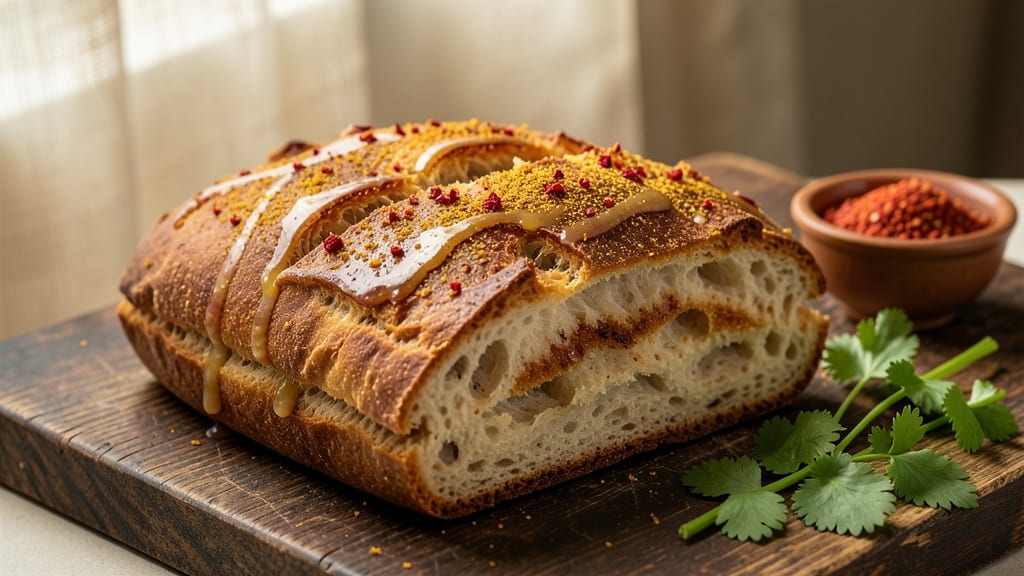
This Ethiopian ambasha bread recipe delivers the perfect balance of crispy edges and tender centers, infused with traditional spices that transport you to an Ethiopian dining table. 🌟 The secret lies in the dough's unique texture—achieved through a blend of flour and spices that create an aromatic, slightly chewy flatbread perfect for soaking up stews or serving alongside hearty dishes.
What sets ambasha apart is its crispy exterior, achieved through a precise baking technique that ensures even heat distribution. The dough incorporates berbere spice—a signature Ethiopian blend of chili, fenugreek, and coriander—that adds depth without overpowering the bread's natural flavor. This recipe simplifies the traditional method while preserving its authenticity.
By the time you pull these golden-brown flatbreads from the oven, you'll have a batch that's crisp enough to hold up to rich stews yet soft enough to fold around your favorite fillings. The aroma alone—warm, spiced, and inviting—will transform your kitchen into a taste of Ethiopia.
Serve warm with misir wot (spicy red lentil stew) or use as a side for grilled meats. The versatility of ambasha makes it a staple for any meal, and the recipe's simplicity ensures you'll want to bake it again and again.
Ingredients for ambasha bread
Four cups of flour, a pinch of yeast, and Ethiopian spices come together for crispy, aromatic ambasha bread.
| Ingredient | Amount | Notes |
|---|---|---|
| All-Purpose Flour 🌾 | 3 cups | Unbleached preferred for authentic texture |
| Active Dry Yeast 🍞 | 1 tbsp | Instant yeast works too |
| Warm Water 💧 | 1 cup | 110°F for optimal yeast activation |
| Granulated Sugar 🍚 | 1 tsp | Feeds yeast for better rise |
| Salt 🧂 | 1 ½ tsp | Diamond Crystal preferred |
| Berbere Spice 🌶️ | 1 ½ tbsp | Homemade or store-bought blend |
| Ground Coriander 🌿 | 1 tsp | Freshly ground for best flavor |
| Ground Cumin 🌿 | 1 tsp | Toasted for deeper aroma |
| Vegetable Oil 🫒 | 2 tbsp | For dough elasticity |
| Honey 🍯 | 1 tbsp | Enhances browning and flavor |
| Sesame Seeds 🌰 | 1 tbsp | For traditional Ethiopian topping |
Berbere spice is the soul of this bread, so don't cut corners—Ethiopian markets or specialty stores carry the best blends. If you can't find it, Penzeys Spices sells a solid version online. For the coriander and cumin, toast the whole seeds first in a dry pan for 2 minutes before grinding—this unlocks their full aroma. The flour should be unbleached for that authentic, slightly chewy texture. I always grab mine from King Arthur Flour—it's consistent and never bitter. Yeast is non-negotiable here; expired yeast means flat, flavorless bread.
No berbere? Mix 1 tsp smoked paprika, 1/2 tsp cayenne, 1/2 tsp coriander, 1/4 tsp fenugreek, and 1/4 tsp cinnamon for a close approximation. Running short on sesame seeds? Poppy seeds or nigella seeds work in a pinch, though they'll change the flavor slightly. The honey can be swapped for maple syrup if you're avoiding it, but it won't caramelize as beautifully. For the oil, avocado or sunflower oil are great alternatives—they won't overpower the spices like olive oil might. And if you're worried about the dough being too sticky, add 1 extra tbsp of flour during mixing.
This dough keeps for 24 hours in the fridge, covered tightly—perfect for baking fresh batches throughout the week. For longer storage, freeze portions in airtight containers for up to 3 months. The bread reheats beautifully; wrap in foil and warm in a 350°F oven for 5 minutes to restore that crispy exterior. I like to bake two batches at once and freeze extras—nothing beats pulling a warm ambasha straight from the freezer for a quick stew dinner. The sesame seeds should be toasted in a dry pan for 1 minute before sprinkling to enhance their nutty flavor.
Why You'll Love This Recipe
- No-Knead Magic: I swear by this—just mix the flour, yeast, warm water, and a pinch of sugar, let it rise overnight, then bake. That’s it. No standing at the counter, no overworking the dough, just pure, hands-off simplicity.
- Sweet-Savory Crust: The sugar in the dough caramelizes just enough to give it that irresistible golden crust, while the salt keeps it balanced—like a warm hug for your taste buds. Honestly, the first bite makes me want to bake another batch immediately.
- Weeknight & Holiday Star: It’s my go-to for breakfast toast, sandwiches, or even a fancy charcuterie board. (Yes, even on a Tuesday night.) And when company’s coming? This bread disappears faster than I can say “pull it from the oven.”
- Budget-Friendly Staple: Five ingredients, minimal effort, and it keeps for days. I make a big batch on Sundays, freeze half, and never stress about stale bread again—plus, it’s cheaper than buying artisanal loaves that’ll go bad in two days.
Step-by-step instructions for Ethiopian spiced flatbread
Here's how to craft perfectly crisp-edged Ambaṣha bread with aromatic spices and tender centers.
👨🍳 Step 1: Activate the Yeast and Mix the Dough Base
In a large mixing bowl, combine the 1 cup warm water with the 1 tsp granulated sugar and 1 tbsp active dry yeast. Let this sit for 5-10 minutes until foamy—this confirms your yeast is alive and ready to work. You'll see small bubbles forming on the surface and a slightly effervescent texture.
In a separate bowl, whisk together the 3 cups all-purpose flour, 1.5 tsp salt, 1.5 tbsp berbere spice, 1 tsp ground coriander, and 1 tsp ground cumin. The berbere will give your bread that signature Ethiopian warmth, while the coriander and cumin add depth. I like to press the spices into the flour with my fingers to ensure even distribution throughout the dough.
🍳 Step 2: Combine and Knead for Elastic Dough
Pour the yeast mixture into the dry ingredients and add the 2 tbsp vegetable oil and 1 tbsp honey. Using a wooden spoon or your hands, stir until a shaggy dough forms. The honey will help create a beautiful caramelized crust later, while the oil keeps the dough tender and elastic.
Turn the dough out onto a lightly floured surface and knead for 8-10 minutes until smooth and springy. You're looking for a dough that bounces back when pressed gently—this indicates proper gluten development. If it feels too sticky, add flour 1 tablespoon at a time until it comes together nicely. The dough should be soft but not wet, with a slightly tacky surface.
⏰ Step 3: First Rise and Shape the Dough
Lightly oil a large bowl and place the dough inside, turning it to coat all sides. Cover with a damp kitchen towel or plastic wrap and let rise in a warm place for 1-2 hours until nearly doubled in size. I place my bowl on top of my turned-off oven with the light on for consistent warmth—this creates the perfect environment for even rising.
Once risen, punch down the dough to release air and divide it into 4 equal pieces (about 8 ounces each). Roll each piece into a smooth ball, then flatten into a ½-inch thick circle. The key here is even thickness—press down gently but firmly to create uniform flatbreads that will cook evenly and develop crispy edges.
🔥 Step 4: Cook Until Golden and Crispy
Heat a clean, dry skillet over medium-high heat until hot. Add one flatbread and cook for 2-3 minutes per side, pressing down gently with a spatula during the first minute to help develop that signature crispy edge. You'll know it's ready when the edges are deep golden brown and the bread releases easily from the pan.
Transfer the cooked bread to a plate and sprinkle immediately with 1 tbsp sesame seeds while warm. Repeat with the remaining dough pieces, keeping the cooked breads warm in a 200°F oven while you finish. The sesame seeds add a delightful nutty crunch that contrasts beautifully with the soft interior. Serve immediately with your favorite Ethiopian stews or as a side to complement any meal.
Pro Tips For Making Ambasha Bread
- Bloom the Yeast First: Skip mixing yeast directly into dry flour—it’ll wake up slower. Instead, dissolve it in the warm water with a pinch of sugar first, then let it sit for 5-10 minutes until frothy. I learned this the hard way when my dough took three times longer to rise because the yeast was half-asleep.
- Measure Flour Right: Scoop and level that flour—don’t just grab a handful from the bag. Ambasha bread relies on a precise ratio, and packing it in makes the dough denser. Use a kitchen scale if you’re serious, or at least spoon it into a measuring cup and sweep off the excess.
- Don’t Rush the Kneading: Two minutes of half-hearted mixing won’t cut it. Knead until the dough is smooth and springs back when poked—about 8-10 minutes by hand. I used to skimp here, and my bread turned out gummy. Trust the process; your arms will thank you later.
- Shape Loaves Tightly: Roll the dough into tight, compact logs—no loose ends or gaps. If it tears while shaping, pinch it closed and reshape. My grandmother swore by this, and she was right: loose seams mean uneven baking and a sad, flat loaf.
Serving suggestions for this recipe
Traditional Ethiopian Pairings
Ambasha bread shines when served with classic Ethiopian stews like misir wot (spicy red lentil stew) or doro wot (chicken stew with berbere). The bread's crispy edges soak up the rich, spiced sauces beautifully, creating a perfect balance of textures.
I always keep a small bowl of ayib (Ethiopian spiced butter) nearby for dipping—its garlic and chili notes complement the bread's warmth. 🌶️
Modern Fusion Ideas
For a contemporary twist, serve ambasha with grilled lamb chops or spiced chickpea curry. The bread's aromatic spices stand up to bold flavors while adding a unique texture contrast.
I've also used it as a base for Ethiopian-style pizza topped with tomato sauce, mozzarella, and fresh herbs—it's a crowd-pleaser at dinner parties!
Breakfast or Brunch
Transform ambasha into a breakfast staple by serving it with scrambled eggs, avocado slices, and Ethiopian coffee (or regular coffee if you prefer). The bread's slight chewiness pairs wonderfully with runny yolks, and the spices add an unexpected depth to morning meals.
I love this combo on lazy weekends when I want something special but low-effort.
Dessert Twist
Sweet tooth? Brush warm ambasha with honey or maple syrup and sprinkle with crushed pistachios for a quick dessert. The bread's crispy edges contrast perfectly with the soft, sweet filling.
I've also used it as a base for fruit salads—the spices add an interesting contrast to tropical fruits like mango and pineapple.
Meal Prep Hack
Bake an extra batch and store them in the freezer for quick meals. Reheat in a 375°F oven for 5-7 minutes until crispy again. I keep a stash of frozen ambasha to pair with homemade soups or charcuterie boards—they add an unexpected cultural touch to everyday meals.
The reheated bread works just as well as fresh!
Garnish Like a Pro
For restaurant-quality presentation, sprinkle the warm bread with toasted sesame seeds and a pinch of flaky sea salt right before serving. A drizzle of garlic-infused olive oil or a sprinkle of smoked paprika elevates the dish instantly. These simple touches make ambasha feel like a gourmet experience every time. ✨
Nutrition facts
Frequently asked questions
Can I make ambasha bread without berbere spice?
If you can't find berbere, mix 1 tsp smoked paprika, ½ tsp cayenne, ½ tsp coriander, ¼ tsp fenugreek, and ¼ tsp cinnamon for a similar flavor profile. The bread will still be delicious, though the authentic Ethiopian warmth will be slightly different.
How do I get the perfect crispy edges?
The secret is cooking over medium-high heat in a dry skillet and pressing down gently with a spatula during the first 30 seconds of cooking. This helps create steam inside while browning the edges. Keep the heat consistent—too low, and the bread will be soggy; too high, and it burns before crisping.
Can I use whole wheat flour instead of all-purpose?
Yes, but replace ½ cup of the all-purpose flour with whole wheat for a nuttier flavor and slightly denser texture. Whole wheat absorbs more liquid, so you may need an extra 1-2 tbsp of water during kneading. The bread will still be crispy but with a heartier bite.
Why did my dough not rise properly?
Check these common issues: expired yeast (test it in warm water with sugar—it should foam in 5-10 minutes), water that's too hot (110°F is ideal), or a cold kitchen. Place your dough in a warm spot (like a turned-off oven with the light on) for even rising. If it still doesn't rise, your yeast might be dead—start fresh!
How long does ambasha bread stay fresh?
Store wrapped in a clean kitchen towel at room temperature for 2-3 days to maintain crispiness. For longer storage, freeze cooked bread in an airtight container for up to 3 months. Reheat in a 350°F oven for 5 minutes to restore that perfect crunch.