
Side Dishes
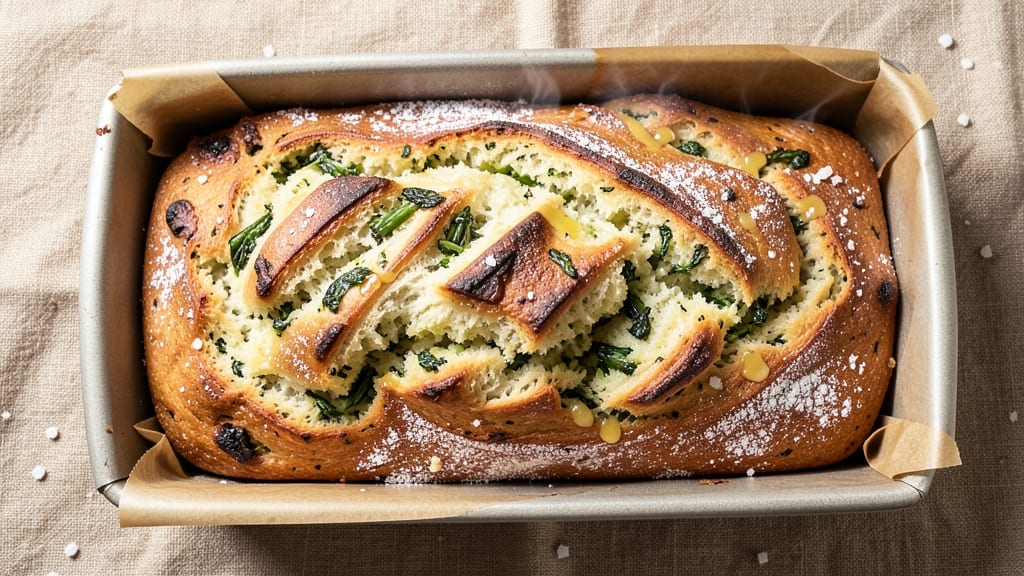
This asparagus bread recipe transforms humble ingredients into a fragrant, herb-infused loaf where tender asparagus spears become part of the dough itself. The secret lies in finely chopping the greens—no one will guess they're hidden inside this golden, crusty loaf.
I developed this recipe after realizing how often asparagus went to waste, and this method ensures every bite is packed with flavor without sacrificing texture. The process is straightforward but requires patience: proofing the dough twice for maximum rise and flavor development.
You'll work with a simple yeast-based dough enriched with olive oil and a blend of fresh herbs like dill and chives, which complement the asparagus beautifully. The result is a loaf with a crisp exterior and a tender, moist crumb that's perfect for sandwiches or serving alongside soups.
What makes this bread special is its versatility. Use it to make open-faced sandwiches with smoked salmon and cream cheese, or serve thick slices with butter and jam for breakfast.
The asparagus adds a subtle earthiness that pairs wonderfully with both savory and sweet toppings, making this loaf a standout for any meal. For those with dietary restrictions, simply swap the butter for olive oil and use a flaxseed egg substitute.
The recipe maintains its integrity while accommodating different needs, proving that even hidden greens can be universally loved.
Ingredients for asparagus bread
Four cups flour, one pound asparagus, and fresh herbs transform into a fragrant loaf with hidden greens.
| Ingredient | Amount | Notes |
|---|---|---|
| Active Dry Yeast 🍞 | ¼ tsp | One packet or 7g |
| Granulated Sugar 🍚 | 1 tbsp | For yeast activation |
| Warm Water 💧 | ½ cup | 110°F (43°C) preferred |
| All-Purpose Flour 🌾 | 4 cups | Plus 2 tbsp for kneading |
| Unsalted Butter 🧈 | ½ cup | Cold, cubed for dough |
| Large Eggs 🥚 | 1 whole | Room temperature |
| Asparagus Spears 🌱 | 1 lb | Tender, trimmed and chopped |
| Fresh Dill 🌿 | ¼ cup | Chopped, stems removed |
| Fresh Chives 🌿 | ¼ cup | Finely chopped |
| Extra-Virgin Olive Oil 🫒 | ¼ cup | Plus 1 tbsp for bowl |
| Diamond Crystal Kosher Salt 🧂 | 1 ½ tsp | Adjust to taste |
| Black Pepper 🌶️ | ½ tsp | Freshly cracked |
| Cornmeal 🌽 | ¼ cup | For dusting bread pan |
The asparagus should be tender but not woody—harvest your own or buy pre-trimmed spears from the grocery store's produce section. For the herbs, farmers markets often have fresher dill and chives than supermarkets, but the grocery store's herb section works in a pinch. The yeast is non-negotiable here; Bob's Red Mill or Saf-Instant are reliable brands that ensure consistent proofing. If your asparagus is particularly fibrous, trim the tough ends and chop the spears into 1/4-inch pieces for even distribution in the dough. The butter should be cold—pull it from the fridge 15 minutes before use to soften slightly while remaining workable.
No fresh dill or chives? Dried herbs at half the amount will work, though the flavor won't be as bright. Substituting the butter for olive oil keeps the recipe vegan, but the texture will be slightly denser. For the asparagus, if you can't find tender spears, blanched and cooled asparagus from a previous meal can be finely chopped and used, though the texture will differ. The kosher salt matters here—Diamond Crystal is less dense than Morton's, so adjust if using a different brand. For a gluten-free version, swap the all-purpose flour for a 1:1 gluten-free blend, though the rise and texture will vary significantly.
The dough requires two proofing sessions, so plan accordingly—first proof for 1 hour, second for 2 hours in a warm, draft-free environment. Store any unused chopped asparagus or herbs in airtight containers in the fridge for up to 3 days. The shaped loaf can be refrigerated overnight, then baked straight from the fridge for a slower rise and deeper flavor. For longer storage, freeze the shaped loaf (unbaked) for up to 3 months. Once baked, this bread stays fresh for 3-4 days at room temperature, wrapped in a clean kitchen towel.
Why You'll Love This Recipe
- No-Knead Magic: I swear, the yeast and warm water do all the work here. Just mix, let it rise, and shape—no stand mixer, no stress.
- Buttery Green Twist: That butter and flour combo? Rich. But the asparagus—even finely chopped—adds this fresh, earthy depth. It’s like a classic brioche got a springtime upgrade.
- Breakfast to Brunch: Toast it for breakfast, serve it with soup for lunch, or slice it for charcuterie. Honestly, I’ve even used it to sop up pasta sauce when I’m lazy.
Step-by-step instructions for herb-infused asparagus bread
Transform fresh asparagus into a flavorful, moist loaf with this precise baking method.
Prepare the Asparagus and Yeast Mixture
Preheat your oven to 375°F and line a 9x5-inch loaf pan with parchment paper. In a food processor, pulse the 1 lb asparagus spears (trimmed and chopped) until finely minced—you should have about 1 cup of asparagus purée. Transfer this to a bowl and set aside.
In a separate small bowl, combine the 0.25 tsp active dry yeast and 1 tbsp granulated sugar with the 0.5 cup warm water (test temperature with your finger—it should feel warm but not hot). Let this sit for 5-10 minutes until frothy. This activates the yeast and ensures your dough rises properly.
Mix the Dough and Incorporate Herbs
In the bowl of a stand mixer fitted with the dough hook, combine the 4 cups all-purpose flour, 1.5 tsp diamond crystal kosher salt, and 0.5 tsp black pepper. Mix on low speed to distribute the dry ingredients evenly.
Add the yeast mixture, 0.25 cup extra-virgin olive oil, 0.5 cup cold unsalted butter (cubed), and 1 large egg (room temperature). Mix on low speed until combined, then increase to medium speed for 3-4 minutes until the dough becomes smooth and elastic. Scrape down the sides as needed.
Remove the dough from the mixer and turn it out onto a lightly floured surface. Gently fold in the asparagus purée, 0.25 cup chopped fresh dill, and 0.25 cup finely chopped fresh chives. Knead lightly by hand for 2-3 minutes until the herbs are evenly distributed. The dough will be slightly sticky—this is normal due to the asparagus moisture.
First Rise and Shape the Loaf
Lightly grease a large mixing bowl with 1 tbsp extra-virgin olive oil and place the dough inside. Cover the bowl with a damp kitchen towel and let it rise in a warm place for 1-1.5 hours, or until doubled in size. The dough should feel springy when pressed gently—this indicates it's ready for shaping.
Punch down the dough to release air, then transfer it to a lightly floured surface. Shape it into a 9x5-inch loaf by rolling it tightly from one end to the other. Place the loaf seam-side down into the prepared loaf pan, gently pressing it into the corners. Cover loosely with a towel and let it rise for another 30-45 minutes.
Bake to Golden Perfection
Sprinkle the 0.25 cup cornmeal evenly over the top of the loaf—this creates a crispy crust and adds texture. Bake in the preheated oven for 45-50 minutes until the bread is deep golden brown and sounds hollow when tapped on the bottom. If the top browns too quickly, tent loosely with foil after 25 minutes.
Remove the loaf from the oven and transfer it to a wire rack to cool for 10 minutes before removing it from the pan. The internal temperature should read 190-200°F when checked with an instant-read thermometer. Let the bread cool completely before slicing—this ensures clean cuts and prevents a gummy texture.
Serve and Store
Slice the loaf into ½-inch thick pieces and serve warm. The bread should have a tender crumb with subtle asparagus flavor and bright herb notes. For best results, store any leftovers wrapped in plastic at room temperature for up to 2 days, or freeze for up to 3 months. Reheat slices in a 350°F oven for 5-7 minutes to restore freshness.
Pro Tips For Making Asparagus Bread
- Bloom the Yeast: DESCRIPTION: Skip the guesswork—dissolve that sugar in your warm water first, then sprinkle in the yeast and let it sit for 5 minutes until it’s frothy. I used to just toss it all in the bowl, and half the time my dough never rose properly. This quick check guarantees your bread won’t turn out dense and flat.
- Soften the Butter Right: DESCRIPTION: Take your unsalted butter out of the fridge 30 minutes before mixing—just enough to press it into the flour with your fingers, not melt into a puddle. I learned this the hard way after kneading a sticky, greasy mess that refused to hold shape. Room temp butter works best, but don’t overdo it.
- Knead Until Smooth: DESCRIPTION: Stop when the dough springs back slowly when poked and looks silky, not when it’s exhausting to work with. Over-kneading makes asparagus bread tough—aim for 8-10 minutes by hand or 5-6 on a stand mixer with the dough hook. Your arms will thank you later.
- Proof in a Warm Spot: DESCRIPTION: Place your shaped loaf in a greased bowl, cover it loosely with a damp towel, and let it rise in a slightly warm spot—like the top of the fridge or near a turned-off oven with the light on. Cold spots make it drag, and direct heat burns the top. Patience here pays off with a light, airy texture.
Troubleshooting this dish
Dough Too Sticky
If your dough feels excessively sticky after mixing, don't panic—this is normal with asparagus purée. Add 1-2 tablespoons of flour at a time while kneading until the dough is just slightly tacky but manageable.
Over-kneading can develop gluten too much and make the bread dense. I've found that using King Arthur all-purpose flour absorbs moisture better than some store brands, so it might help if you're struggling. 🌱
Uneven Rise
An uneven rise often happens when the kitchen is too cold or drafty. Place your dough in a warm spot—I like using the top of my fridge with a bowl of hot water nearby to create a mini proofing box.
If your dough rises too quickly, it may collapse when shaping. For a more controlled rise, try proofing in a proofing box set to 80°F for consistent results. 🔥
Bread Collapses After Baking
This usually means the dough wasn't fully proofed or the oven wasn't hot enough. Make sure your dough doubles in size before shaping—it should spring back slowly when pressed. Also, preheat your oven for at least 30 minutes before baking.
If your bread still collapses, try baking at 350°F instead of 375°F for a slower rise in the oven. 💡
Pale or Dense Crust
A pale crust often means the bread didn't bake long enough or the oven wasn't hot enough. For a deeper color, brush the loaf with egg wash (1 egg + 1 tbsp water) before baking.
If your bread turns out dense, check your yeast—it might have expired. For extra crispiness, sprinkle semolina or crushed cornflakes instead of cornmeal on top before baking. ✨
Herbs Visible or Uneven
If your herbs aren't evenly distributed, fold them in more gently during the final kneading step. For a smoother texture, pulse the herbs in a food processor for 2-3 seconds before mixing into the dough.
If you accidentally over-chopped the herbs, strain them through a fine-mesh sieve to remove any large pieces before adding to the dough. 🌿
Asparagus Flavor Too Strong
If the asparagus flavor overpowers the bread, reduce the amount to ½ lb asparagus (about ½ cup purée) next time. For a milder taste, blanch the asparagus for 2 minutes before processing to mellow its flavor.
Adding 1 tsp lemon zest to the dough also balances the earthiness of the asparagus beautifully. 💛
Nutrition facts
Frequently asked questions
Can I use frozen asparagus instead of fresh?
Fresh asparagus works best for this recipe since it gives the most vibrant flavor and texture. However, if you must use frozen, thaw it completely first, drain well, and pat dry with a paper towel to remove excess moisture. This helps prevent a soggy dough.
How do I know when the dough is fully proofed?
The dough is ready when it has doubled in size and springs back slowly when gently pressed with your finger. For visual confirmation, look for rounded edges and a slightly puffy center. If it springs back quickly, it needs more time. A warm spot (like near the oven) helps speed this along.
What can I do if I don't have a loaf pan?
Shape the dough into a round boule or oval batard instead. Place it on a parchment-lined baking sheet, dimple the top with your fingers, and sprinkle with cornmeal or semolina. Bake at 375°F for 30-35 minutes until golden. The crust will be crispier but the interior will remain tender.
Can I make this bread without yeast?
Yes! For a quick version, replace the yeast with 1 tsp baking powder and 1 tsp baking soda. Mix the dry ingredients first, then add wet ingredients and asparagus purée. Bake immediately at 375°F for 35-40 minutes—this version won't rise as dramatically but will still be delicious.
How should I store leftovers?
Wrap cooled slices tightly in plastic wrap or aluminum foil and store at room temperature for up to 3 days. For longer storage, freeze slices individually on a tray before transferring to a bag. Reheat in a 350°F oven for 5-7 minutes or toast directly in the toaster.