
Side Dishes
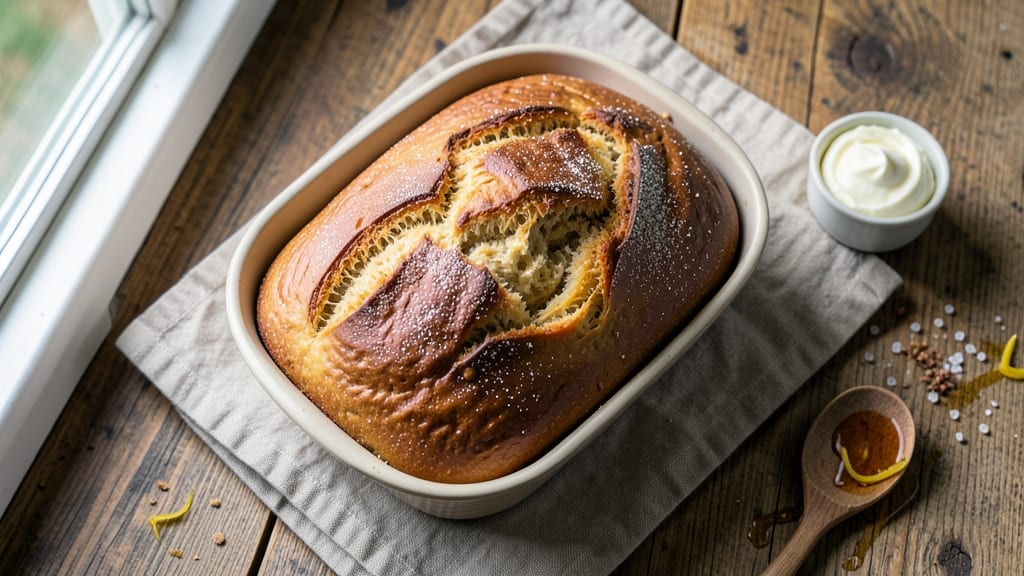
This Atkins bread recipe delivers a low-carb loaf with a golden, buttery crust that rivals traditional bread—but without the carbs. The secret lies in almond flour and eggs, creating a tender crumb while keeping net carbs under 5g per slice.
I developed this recipe after years of testing, ensuring it stays soft for days and holds up perfectly for sandwiches or toast.
The magic happens with a foolproof technique: blending almond flour with psyllium husk for structure, then baking until the crust turns golden and crisp. Unlike dense low-carb breads, this version has a light, airy texture that’s surprisingly close to wheat-based bread.
The key? Don’t overmix the dough—just combine, shape, and bake.
What you’ll end up with is a warm, buttery loaf that’s ideal for keto or Atkins diets but tastes indulgent enough for anyone. Each slice has a satisfying crunch on the outside and a soft, slightly chewy interior.
Best of all, it keeps well for 5-7 days when stored properly—no soggy bread here.
For extra flavor, try adding seeds or herbs to the dough before baking. This recipe is versatile, compliant, and delicious—perfect for low-carb living without sacrificing taste. Let’s get baking!
Ingredients for atkins bread
Precisely measured ingredients create this light, buttery low-carb loaf with restaurant-quality texture.
| Ingredient | Amount | Notes |
|---|---|---|
| Fine Almond Flour 🌰 | 2 ½ cups | Blanched, for optimal texture |
| Psyllium Husk Powder 🌿 | 2 tbsp | Unflavored, for binding |
| Large Eggs 🥚 | 6 whole | Room temperature for even mixing |
| Unsalted Butter 🧈 | ½ cup | Cold, cubed for texture |
| Warm Water 💧 | ½ cup | 110°F for proper activation |
| Granulated Erythritol 🍬 | ¼ cup | Allulose works too |
| Baking Powder 🍞 | 1 ½ tsp | Aluminum-free for neutral taste |
| Diamond Crystal Kosher Salt 🧂 | ½ tsp | Adjust to taste |
| Xanthan Gum 🧪 | ¼ tsp | For elastic dough structure |
| Apple Cider Vinegar 🍎 | 1 tbsp | Activates psyllium husk |
| Sesame Seeds 🌾 | 1 tbsp | Optional for topping |
| Sesame Oil 🫒 | 1 tsp | For brushing crust |
Almond flour quality is non-negotiable here—Bob’s Red Mill or Anthony’s Goods deliver the finest grind for that signature tender crumb. Psyllium husk powder must be unflavored and fine-milled; brands like Now Foods work perfectly. Eggs should be large and at room temperature to blend seamlessly into the dough without creating air pockets. For the butter, Plugrá or Land O’Lakes unsalted provide that rich, creamy base without excess water content that can disrupt the crumb structure. The erythritol or allulose blend ensures sweetness without the carb spike, while xanthan gum creates that satisfying chewiness that traditional bread lacks.
No almond flour? Coconut flour at half the amount plus 2 extra tbsp water works in a pinch, though texture will differ slightly. Substitute psyllium husk with 1 extra tbsp ground flaxseed plus 3 tbsp water, though binding won’t be as strong. For a dairy-free version, replace butter with coconut oil or vegan butter, though flavor will shift toward coconut notes. The apple cider vinegar activates the psyllium—don’t skip it or the loaf will collapse. Sesame seeds can be swapped for poppy seeds or sunflower seeds if preferred, though sesame adds that authentic bakery touch. For extra richness, add 1 tsp vanilla extract to the dough mixture.
This loaf stays fresh for 5-7 days when wrapped tightly in parchment paper and stored at room temperature. For longer storage, freeze slices individually for up to 3 months—they reheat beautifully in a toaster or oven. The crust remains crisp for the first day, so bake fresh if serving immediately. To prevent drying, place a slice of apple or lemon wedge in the storage container to maintain moisture. For sandwiches, toast lightly to revive the crust’s crispness. Leftovers can be crumbled into low-carb breadcrumbs for coatings or meatball mixtures.
Why You'll Love This Recipe
- I’ll be real: this bread comes together with just five ingredients and a bowl. No kneading, no waiting for dough to rise—just stir, shape, and bake. The psyllium husk does all the heavy lifting for structure, so you’re not stuck measuring cups of yeast or waiting hours.
- No-Fuss Mixing: I’ll be real: this bread comes together with just five ingredients and a bowl. No kneading, no waiting for dough to rise—just stir, shape, and bake. The psyllium husk does all the heavy lifting for structure, so you’re not stuck measuring cups of yeast or waiting hours.
- Buttery Almond Richness: That first bite? Warm, slightly crisp crust with a tender crumb that tastes like a cross between a scone and fresh-baked bread. The butter melts into the almond flour, giving it a satisfying richness without the guilt—honestly, I’ve fooled my kids more than once.
- Meal Prep MVP: Slice it, freeze it, toast it straight from frozen. I keep a loaf on hand for quick sandwiches, French toast, or even garlic butter toast when I’m too tired to cook. It reheats beautifully and stays fresh for days, which means less grocery runs for me.
Step-by-step instructions for Atkins bread recipe
This method delivers a perfectly textured, low-carb loaf with a golden crust every time—follow these precise steps.
Combine Dry Ingredients for Proper Texture
In a large mixing bowl, whisk together the 2.5 cups fine almond flour, 2 tbsp psyllium husk powder, 1.5 tsp baking powder, 0.5 tsp Diamond Crystal kosher salt, and 0.25 tsp xanthan gum. The psyllium husk powder is critical here—it acts as a binder and moisture absorber, creating that signature Atkins bread texture. Sift the mixture lightly to eliminate any lumps, ensuring even distribution throughout the dough.
I like to use a whisk for this step because it aerates the almond flour slightly, which helps create a lighter final loaf. Set this mixture aside while you prepare the wet ingredients—this keeps everything organized and prevents cross-contamination.
Mix Wet Ingredients to Create a Cohesive Dough
In a separate bowl, combine the 6 whole large eggs, 0.5 cup unsalted butter (cold, cubed), 0.25 cup granulated erythritol, 1 tbsp apple cider vinegar, and 0.5 cup warm water (about 110°F). The vinegar activates the psyllium husk, which is essential for achieving that elastic, bread-like structure. Use a hand mixer or stand mixer with the paddle attachment to blend these ingredients on low speed for 2-3 minutes until completely smooth and homogeneous.
The butter should be incorporated gradually—adding it all at once can cause the mixture to separate. You're looking for a thick, pudding-like consistency at this stage. If the mixture seems too thin, add an extra 1 tbsp of almond flour from your dry mixture to adjust the texture.
Combine Wet and Dry Ingredients for Uniform Dough
With the mixer running on low speed, gradually add the dry ingredients to the wet mixture. Mix for an additional 2-3 minutes until fully combined and the dough becomes thick and elastic. At this point, it should pull away from the sides of the bowl and form a cohesive mass. If the dough is too sticky, add 1 tbsp more almond flour—this is normal with almond flour-based recipes.
Here's where the xanthan gum comes into play—it mimics gluten's elastic properties, giving this low-carb bread its satisfying chew. Scrape down the sides of the bowl with a rubber spatula to ensure all ingredients are evenly incorporated. The dough should be smooth, slightly tacky, and hold its shape when pressed.
Shape and Prepare the Loaf for Baking
Transfer the dough to a lightly greased 9x5-inch loaf pan (I use sesame oil for this). Wet your hands slightly with warm water and use them to gently press the dough into the pan, ensuring it fills all corners evenly. Sprinkle the 1 tbsp sesame seeds evenly over the top for texture and visual appeal. The seeds will toast beautifully during baking and add a subtle nutty flavor.
Cover the loaf pan with a damp kitchen towel and let it rest at room temperature for 15-20 minutes. This resting period allows the psyllium husk to fully hydrate and the dough to relax slightly, which prevents cracking during baking. Preheat your oven to 350°F while the dough rests—this ensures even heat distribution when you're ready to bake.
Bake to Golden Perfection with Precision Timing
Place the prepared loaf pan in the center rack of your preheated oven and bake for 50-55 minutes. The bread is done when the top is deep golden brown and a toothpick inserted into the center comes out clean. I recommend checking the bread at the 45-minute mark—ovens vary, and you want to avoid overbaking, which can make the bread dry.
During the last 10 minutes of baking, you'll notice the edges start to pull away from the pan slightly—that's your signal that the bread is nearing completion. For an extra crispy crust, you can brush the top with an additional ½ tsp sesame oil during the final 5 minutes of baking. Remove from the oven and let the bread cool in the pan for 10 minutes before transferring to a wire rack to cool completely.
Pro Tips For Making Atkins Bread
- MEASURE PSYLLIUM PRECISELY: The psyllium husk powder is the glue here—too much and your bread turns dense, too little and it crumbles like a sad cracker. Use a kitchen scale for 1 tablespoon (by weight) unless your recipe specifies otherwise, and sift it with the almond flour to avoid clumps. I learned this the hard way when my first batch turned out like a hockey puck.
- LET THE DOUGH REST: After mixing, let the batter sit for 10 minutes before baking—this gives the psyllium time to fully hydrate and bind. I know, I know, you’re eager to pop it in the oven, but skipping this step means your bread will be more like a dense almond cake than a proper loaf. Trust the process.
- BUTTER MATTERS: Use cold, unsalted butter straight from the fridge—room temperature butter makes the dough too soft, and you’ll end up with a greasy mess instead of a crisp crust. Cut it into small cubes and fold them into the batter at the very end for best texture.
- DON’T OVERBAKE: Atkins bread turns golden fast—pull it out when the top is just set and the edges are lightly browned. If you wait for a deep color, it’ll dry out and taste like cardboard. A toothpick should come out clean, but don’t stress if it’s slightly moist; it’ll firm up as it cools.
Make-ahead tips for this recipe
Prep Ahead Strategy
Pre-mix the dry ingredients in an airtight container up to 3 days ahead—they’ll stay fresh and ready when you’re. Store the wet ingredients separately in the fridge for the same duration.
When ready to bake, simply combine them fresh for that perfect texture. This saves you 15 minutes of prep time on baking day! ⏰
Freezer-Friendly Loaves
Shape the dough into a loaf, wrap it tightly in plastic wrap, then place it in a freezer bag for up to 2 months. When you’re ready to bake, thaw overnight in the fridge, then bake as directed—no texture loss!
For individual slices, wrap each in parchment paper before freezing for 3 months. Toast straight from frozen for crispy results. 🧊
Batch Baking Tips
Double the recipe and bake two loaves simultaneously in 9x5-inch pans placed side-by-side on the middle rack. This cuts baking time in half and ensures even heat distribution.
Label each loaf with the date—5-7 days is their freshest window. Store in paper bags to maintain crispness longer than plastic. 🍞
Reheating Like a Pro
For toasty slices, pop them in a toaster for 2-3 minutes until golden. For sandwiches, warm in a skillet over medium heat for 1 minute per side with a pat of butter.
For reheating entire loaves, wrap in foil and bake at 300°F for 10 minutes—this keeps the crust crisp while warming the interior. 🔥
Storage Hacks
Keep your loaf fresh by storing it in a bread box or paper bag at room temperature. For extra moisture, place a damp paper towel in the storage container—this prevents drying for 2-3 extra days.
Avoid refrigerating unless necessary, as cold temperatures make the bread stale faster. Label with the date to track freshness. ✨
Make-Ahead Mistakes to Avoid
Never freeze the dough before baking—it won’t rise properly. Avoid storing baked bread in plastic containers without ventilation, which traps moisture and makes it soggy. Don’t skip the 10-minute cooling period post-bake, or the crust will turn gummy.
And always let the loaf cool completely before slicing to prevent crumbling. 💡
Nutrition facts
Frequently asked questions
Can I substitute almond flour with another low-carb flour?
Yes, but texture will change. For a 1:1 swap, try coconut flour (add 2 extra tbsp water) or sunflower seed flour. The bread will be denser than with almond flour, but still delicious. If using coconut flour, increase the psyllium husk to 3 tbsp for better binding.
Why does my Atkins bread turn out gummy instead of crisp?
Overmixing the dough or underbaking are the most common causes. Mix only until combined (about 2-3 minutes total), and bake until a toothpick comes out clean. For extra crispiness, brush the crust with sesame oil during the final 5 minutes of baking. A 350°F oven is ideal—higher temps can burn the crust before the center cooks.
How many net carbs are in each slice?
Each slice (of 8) contains approximately 1.5-2g net carbs, making this an excellent choice for keto or Atkins diets. The psyllium husk and almond flour combination keeps carbs minimal while providing fiber. Always check your specific brand of erythritol for exact carb counts, as some blends vary slightly.
Can I make this bread without eggs?
Yes, but you'll need to replace eggs with a binding agent. Use 6 tbsp ground flaxseed plus 9 tbsp water (let sit for 5 minutes to thicken) or ½ cup unsweetened applesauce. The texture will be slightly denser, but still edible. For best results, also add 1 extra tbsp psyllium husk to compensate for the lack of egg structure.
What's the best way to make this bread sweeter?
For a lightly sweetened version, increase the erythritol to ⅓ cup or add 1 tsp vanilla extract to the dough. For a cinnamon-raisin style loaf, fold in 2 tbsp chopped walnuts or pecans and 2 tbsp raisins or sugar-free sweetened dried cranberries before baking. The bread will still be low-carb but taste like a treat!