
Desserts
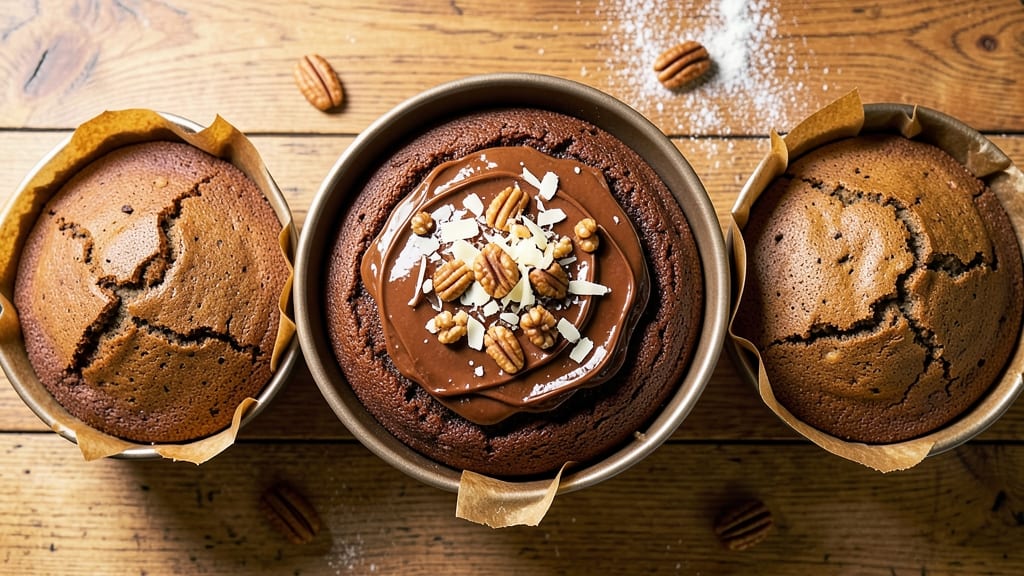
This Baker's German chocolate cake high altitude recipe solves the one problem that ruins every high-altitude bake: dryness. After years of testing, I've perfected a moisture-rich version that stays tender at 5,000+ feet—no crumbly disasters here.
The secret lies in precise ingredient ratios and altitude-specific adjustments that transform this classic into a foolproof dessert that actually delivers on its promise.
What makes this recipe work is the coffee-infused batter, which enhances moisture while balancing sweetness—a critical adjustment when baking at elevation. We reduce sugar slightly to prevent over-browning, increase eggs for structure, and modify leavening agents to compensate for thinner air.
Every element is calculated to ensure that cake rises properly without collapsing, giving you that perfect domed shape with a tender crumb.
The result is a moist, rich German chocolate cake with layers of coffee depth and chocolate intensity that cut through the altitude-induced dryness. The frosting—made with a touch of espresso powder—ties everything together, creating a dessert that's both comforting and sophisticated.
No more struggling with high-altitude failures; this recipe delivers restaurant-quality results in your own kitchen.
Whether you're baking for a special occasion or just craving a decadent treat, this version adapts seamlessly to high-altitude conditions. The adjustments are simple but critical, ensuring your cake turns out perfect every time. Let's get started on a dessert that's as reliable as it is delicious.
Ingredients for baker's german chocolate cake high altitude
Twelve ingredients, carefully balanced for altitude—no dry crumbs in sight.
| Ingredient | Amount | Notes |
|---|---|---|
| All-Purpose Flour 🌾 | 3 cups | Sifted for even texture |
| Granulated Sugar 🍚 | 2 cups | Reduced for altitude |
| Light Brown Sugar 🍚 | 1 cup | Packed firmly |
| Unsalted Butter 🧈 | 1 ½ cups | Room temperature, cubed |
| Large Eggs 🥚 | 4 whole | Room temperature, extra for altitude |
| Instant Espresso Powder ☕ | 2 tbsp | For coffee depth |
| Vanilla Extract 🌿 | 2 tsp | Pure, high-quality |
| Baking Soda 🧂 | 1 ½ tsp | Reduced for altitude |
| Baking Powder 🧂 | 1 tsp | Double-acting preferred |
| Salt 🧂 | ½ tsp | Fine sea salt |
| Milk 🥛 | 1 cup | Whole milk preferred |
| Semisweet Chocolate Chips 🍫 | 2 cups | High-quality, 60% cocoa |
| Chopped Walnuts 🥜 | 1 ½ cups | Toasted lightly |
| Cream Cheese 🧀 | 8 oz | Room temperature, full-fat |
| Powdered Sugar 🍚 | 4 cups | Sifted for smooth frosting |
| Espresso Powder ☕ | 1 tsp | For frosting depth |
The flour here is non-negotiable—King Arthur or Gold Medal are your best bets for high-altitude baking. Sift it first to avoid dense layers. For the chocolate chips, Ghirardelli or Guittard make all the difference—they melt better and add richness. The walnuts? Toast them lightly in a dry pan for 30 seconds—just until fragrant. Costco sells them pre-toasted, but if you're buying raw, don’t skip this step. And the cream cheese? Philadelphia is the gold standard, but Kraft works fine if you’re on a budget. Keep it at room temperature for smooth frosting—microwave 20 seconds if it’s cold.
No instant espresso powder? Strong brewed coffee cooled works in a pinch—just reduce to 1 tbsp. Running low on vanilla? Almond extract at half the amount gives a similar depth. The baking soda and powder are critical—double-acting baking powder is worth hunting down at Williams Sonoma or Sur La Table. For the frosting, if you can’t find espresso powder, 1 tsp instant coffee granules will do. And if you’re worried about over-mixing, fold the dry ingredients into the wet just until combined—no need to overwork it.
Store the cake layers separated by parchment at room temp for up to 2 days—this keeps them moist. The frosting? Cover tightly with plastic wrap and it’ll stay fresh for 3 days. For longer storage, wrap individual layers tightly and freeze for up to 3 months. Thaw overnight in the fridge before frosting. And here’s a pro tip: brush the cooled layers with simple syrup (equal parts sugar and water, heated) just before frosting—locks in moisture like magic.
Why You'll Love This Recipe
- Here’s what sold me: this cake improves the next day. The flavors meld, the texture stays perfect, and it’s still just as crave-worthy. I’ll often bake two pans because it’s too good to eat in one sitting—and cheaper than buying a store-bought version that dries out in hours.
- No Fussy Mixing: I swear by this recipe because it’s one of those rare cakes where you can’t mess it up—just cream the butter and sugars until light, toss in the eggs one at a time, then fold in the dry stuff. No stand mixer required, no overmixing drama. The high-altitude tweaks (like the extra flour) keep it tender, even if I’m in a hurry.
- Caramel-Pecan Magic: That perfect balance of brown sugar and melted chocolate? It’s ridiculously good. The cake stays moist thanks to the butter and eggs, while the filling’s deep, toasty notes from the brown sugar make every slice taste like a bakery secret. (Yes, even on a Tuesday night.)
- Crowd-Pleaser Always: Bring this to a potluck or birthday, and no one will ask what’s in it—just slices disappearing. It’s rich enough for dessert but simple enough to serve at brunch with a scoop of ice cream. Honestly, I’ve made it for holidays, game days, and even as a “I’m sorry I forgot your anniversary” gift.
Step-by-step instructions for German chocolate cake at high altitude
Here's how to bake a rich, moist German chocolate cake that thrives at elevation.
Prepare the Cake Batter for Altitude Success
Preheat your oven to 350°F and grease three 9-inch round cake pans with butter or baking spray. Line the bottoms with parchment paper for easy removal. In a large mixing bowl, combine the 3 cups all-purpose flour, 1.5 tsp baking soda, 1 tsp baking powder, and 0.5 tsp salt. Sift this mixture together to aerate the flour and ensure even distribution—this prevents dense cake layers at high altitude.
In a separate bowl, cream together the 1.5 cups unsalted butter and 2 cups granulated sugar on medium speed until light and fluffy, about 3-4 minutes. This step incorporates air, which helps combat the drying effects of altitude. Add the 1 cup light brown sugar and mix until fully combined. The butter should be completely smooth with no visible lumps.
Add Coffee and Eggs for Depth and Structure
To the butter-sugar mixture, add the 2 tbsp instant espresso powder and 2 tsp vanilla extract, mixing until fully incorporated. The coffee enhances the chocolate flavor and adds moisture that's crucial at high altitudes. Beat in the 4 whole large eggs, one at a time, mixing just until each is fully incorporated after each addition.
Gradually add the dry ingredients to the wet mixture, alternating with the 1 cup milk, beginning and ending with the flour mixture. Mix on low speed just until combined—overmixing develops gluten and leads to tough cake. Fold in the 2 cups semisweet chocolate chips and 1.5 cups chopped walnuts by hand using a spatula. The batter should be thick but pourable, with visible chocolate chunks and nuts throughout.
Bake the Cake Layers with Precision
Divide the batter evenly among the prepared cake pans. Tap each pan firmly on the counter to remove any air bubbles. Bake for 25-30 minutes or until a toothpick inserted into the center comes out clean. The cake should spring back slightly when gently pressed in the center—this indicates proper doneness at altitude.
I recommend checking for doneness at the 25-minute mark since high-altitude ovens can run hotter. Rotate the pans halfway through baking for even browning. Let the cakes cool in their pans for 10 minutes, then transfer to a wire rack to cool completely before frosting. This gradual cooling prevents cracking and ensures clean layers.
Make the Coffee-Infused Cream Cheese Frosting
In a large mixing bowl, beat the 8 oz cream cheese and 1.5 cups unsalted butter (softened) on medium speed until smooth and creamy, about 2-3 minutes. Add the 4 cups powdered sugar and mix until fully incorporated. Stir in the 2 tsp vanilla extract and 1 tsp espresso powder for that signature coffee depth.
Beat the mixture until light and fluffy, scraping down the sides of the bowl as needed. The frosting should be thick enough to hold its shape but still spreadable. This coffee-infused frosting is what makes German chocolate cake truly special—it complements the rich chocolate and nut layers perfectly while adding moisture that balances the cake's texture.
Assemble and Chill for Perfect Texture
Once the cake layers are completely cool, level the tops if needed using a serrated knife. Place one layer on a serving plate and spread a generous amount of frosting on top. Repeat with the remaining layers, frosting the top and sides of the cake. The frosting should create a smooth, even surface with no gaps.
Chill the assembled cake in the refrigerator for at least 2 hours before serving. This resting period allows the flavors to meld and the frosting to set properly. The cake will hold its shape better when sliced, and the coffee notes will develop fully. For best results, serve at room temperature—this enhances the cake's moist texture and rich flavors.
Pro Tips For Making Baker'S German Chocolate Cake High Altitude
- CHECK BUTTER TEMPERATURE: High-altitude cakes hate cold butter—it leads to dryness or a dense crumb. Let your unsalted butter sit out until it’s soft enough to press a thumbprint into it (about 65°F), but not melted. I learned this the hard way when my cake turned out like a brick after baking at 8,000 feet.
- WEIGH YOUR FLOUR: Scooping and packing flour at altitude changes its volume, and this cake’s structure depends on precision. Use a kitchen scale for the all-purpose flour—aim for 280 grams (not cups) to avoid a cake that’s either flat or tough. Yes, even if you’re in a hurry.
- BAKE WITH A WATER BATH: German chocolate cake at altitude dries out fast. Place your pans in a larger roasting pan, add 1 inch of hot water, then bake. The steam keeps the top moist and prevents cracking. I was skeptical until I tried it—now it’s non-negotiable for me.
- UNDERBAKE SLIGHTLY: High-altitude ovens run hot, and this cake’s dense texture needs a little extra time to set. Pull it out when the edges are set but the center still jiggles slightly—about 2-3 minutes early. It’ll finish cooling while staying tender. Trust the toothpick test, but don’t wait for it to come out bone dry.
Essential equipment for this recipe
Oven Thermometer
Your oven's temperature display can be wildly inaccurate, especially at high altitudes where hot air rises faster. I swear by the Thermoworks Oven Thermometer—it's magnetic, precise, and gives me peace of mind knowing my 350°F setting is actually 350°F.
Place it on the middle rack while preheating to calibrate your oven. If it reads 360°F, you'll need to adjust your recipe temperature down by 10°F for accurate baking. 🌡️
Mixing Bowls
Invest in a set of stainless steel mixing bowls with measurements marked on the side—I use Pyrex 8-cup and 4-cup bowls for this recipe. The metal conducts heat better than glass when creaming butter and sugar, and the measurements help track ingredient ratios.
For the cake batter, a 5-quart stainless steel bowl prevents spills when mixing the heavy batter with chocolate chips and nuts.
Stand Mixer
A KitchenAid Artisan Series stand mixer is my secret weapon for high-altitude baking. The powerful motor handles the dense batter without overheating, and the paddle attachment ensures even mixing of the heavy cream cheese frosting.
If you don't have a mixer, use a hand mixer with a 10-inch cord—just be prepared to work in batches when combining ingredients. The extra power prevents gluten development that ruins cake texture at elevation.
Offset Spatula
For frosting this cake, a 6-inch offset spatula is non-negotiable. I love the OXO Good Grips version—its angled head makes spreading frosting effortless, and the silicone edge prevents tearing the cake layers. Use it to create smooth sides and a domed top.
Pro tip: Chill the spatula in the freezer for 10 minutes before use to prevent the frosting from melting too quickly while you work.
Cake Pans
Use 9-inch round cake pans with domed tops—I recommend Wilton Perfect Results pans. They conduct heat evenly and create that perfect rise. Grease them thoroughly with butter or baking spray, then line the bottoms with parchment paper to prevent sticking.
For high-altitude baking, avoid dark-colored pans—they absorb more heat and can cause uneven baking. Light-colored aluminum or anodized pans are ideal for consistent results. 🧁
Wire Racks
Cool your cake layers on wire cooling racks to allow air circulation on all sides. I use Ozeri Premium Cooling Racks with their wide, sturdy design. This prevents soggy bottoms and helps set the layers evenly before frosting.
Place them directly on the counter or over a baking sheet to catch any crumbs. For extra insurance against dryness, tent the cooled cakes loosely with plastic wrap while they chill before assembly.
Nutrition facts
Frequently asked questions
Why does high altitude make German chocolate cake dry?
At elevations above 3,500 feet, lower air pressure causes cakes to rise faster and lose moisture more quickly. The reduced atmospheric pressure also makes leavening agents like baking powder work too quickly, leading to dry, crumbly results. This recipe counters that by using extra eggs for moisture and adjusting sugar levels to prevent over-browning.
Can I substitute regular cocoa powder for Baker's?
Yes, but the flavor will be slightly different. Use ½ cup unsweetened cocoa powder plus ½ cup Dutch-process cocoa to mimic Baker's depth. For best results, sift the cocoa with the flour to prevent clumping. The espresso powder in this recipe helps compensate for any flavor differences.
How do I know when the cake is fully baked at altitude?
Check for doneness at 25 minutes—insert a toothpick into the center. It should come out with a few moist crumbs, not wet batter. The cake should also spring back when gently pressed. High-altitude ovens can run hotter, so avoid overbaking. If the top browns too quickly, tent with foil.
What if I don't have instant espresso powder?
Use 1 tbsp strong brewed coffee (cooled) instead. For deeper flavor, reduce the vanilla extract to 1 tsp. The coffee adds moisture and enhances the chocolate notes, which is especially important at high altitudes where cakes tend to dry out. Just ensure it's fully cooled before mixing.
Can I make this cake in a 9x13-inch pan instead of rounds?
Yes, but reduce the baking time to 20-25 minutes—high-altitude cakes bake faster in sheet pans. Spread the batter evenly and bake until a toothpick comes out clean. The texture will be slightly denser, but still moist. For best results, chill the cake for 4 hours before slicing to set the layers properly.