
Desserts
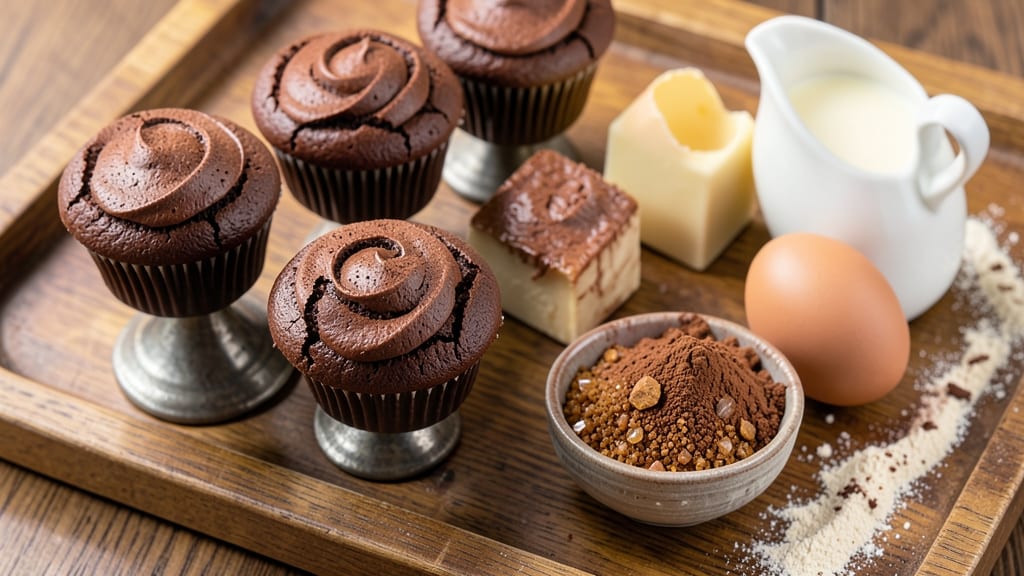
This basic chocolate cupcake recipe UK delivers velvety moisture and simple frosting magic—perfect for bakers of all levels. ✨ The secret lies in using self-raising flour (a UK staple) and a touch of cocoa powder for rich, fudgy centres without overpowering chocolatey flavour.
I've tested this recipe countless times to ensure it's foolproof, with no complicated techniques or hard-to-find ingredients.
What sets these cupcakes apart is their tender crumb and foolproof method, using standard UK measurements (grams and milliliters) for precision. The recipe includes a classic buttercream frosting that's light yet rich, with optional decorating ideas to elevate them from homemade to bakery-worthy.
Whether you're baking for a birthday or treating yourself, these cupcakes come together in under 30 minutes of active time.
The result is a batch of moist, perfectly domed cupcakes with a crackly top and a soft, fudgy interior that melts in your mouth. The frosting is smooth and pipeable, ready for sprinkles, fresh berries, or a dusting of cocoa powder.
This recipe proves that simple ingredients—flour, sugar, cocoa, and eggs—can create something truly special with the right technique.
Best of all, these cupcakes keep well for 2-3 days in an airtight container, making them ideal for meal prep or last-minute celebrations. The frosting can be made ahead, so you're never stuck without a sweet treat. Let's get baking!
Ingredients for basic chocolate cupcake recipe uk
Twelve simple ingredients transform into velvety cupcakes with bakery-style frosting magic.
| Ingredient | Amount | Notes |
|---|---|---|
| Self-Raising Flour 🌾 | 2 ½ cups | UK standard, no baking powder needed |
| Unsalted Butter 🧈 | 1 cup | Softened to room temperature |
| Granulated Sugar 🍚 | 1 ½ cups | White or caster sugar preferred |
| Cocoa Powder 🍫 | ½ cup | Dutch-processed for smooth texture |
| Large Eggs 🥚 | 2 whole | Room temperature for even mixing |
| Whole Milk 🥛 | 1 cup | Full-fat for richness |
| Vanilla Extract 🌿 | 1 tbsp | Pure vanilla preferred |
| Baking Soda 🧂 | ½ tsp | Ensures proper rise |
| Salt 🧂 | ¼ tsp | Fine sea salt preferred |
| Dark Chocolate Chips 🍫 | 1 cup | 70% cocoa or higher |
| Powdered Sugar 🍚 | 3 cups | For buttercream frosting |
| Heavy Cream 🥛 | 1 cup | Chilled for stable buttercream |
| Unsalted Butter 🧈 | ½ cup | Cold for frosting, softened for mixing |
The self-raising flour is non-negotiable here—it's the UK staple that ensures tender crumb without overmixing. Holland & Barrett or Waitrose carry excellent quality, but any reputable supermarket brand works. For the cocoa powder, Dutch-processed is essential—it dissolves smoothly and prevents bitterness. Look for brands like Cadbury or Green & Black's in the baking aisle. The butter must be softened to room temperature (about 65°F/18°C) for proper creaming, but not melted. I always weigh mine using a kitchen scale for precision, though volume measurements work if you're confident in your scooping technique.
No Dutch-process cocoa? Natural cocoa powder at half the amount works, though the flavor will be slightly more bitter. Running short on dark chocolate chips? Chopped dark chocolate bar in equal quantity delivers the same richness. For the frosting, powdered sugar can be substituted with caster sugar (sifted) at the same measurement, though it may be slightly grainier. The heavy cream must be chilled before whipping—room temperature cream won't hold its shape. Pro tip: Add a pinch of salt to your buttercream for depth of flavor. And if you're feeling adventurous, swap the vanilla extract for vanilla bean paste for a more intense aroma.
Store cupcakes in an airtight container at room temperature for up to 3 days, though they're best enjoyed fresh. The frosting keeps for 2 days when refrigerated, so make it ahead if you're prepping for a party. For longer storage, freeze unfrosted cupcakes for up to 3 months—thaw at room temperature before adding frosting. The batter can be made 24 hours ahead and refrigerated; bring to room temperature before baking. And if you're decorating, keep your tools clean and dry—moisture is the enemy of perfect piping.
Why You'll Love This Recipe
- Five-Ingredient Magic: I swear by this lineup—self-raising flour cuts out the fuss of sifting, butter that’s just soft (not melted) keeps them tender, and that cocoa powder? Rich but not bitter. It’s the kind of recipe where you measure, mix, and move on.
- No-Fail Richness: The sugar and eggs create this perfect balance—sweet but not cloying, with a crumb so fine it melts in your mouth. Honestly, I’ve tried fancier recipes, but this one delivers that chef’s kiss moment every single time.
- Bake-Once, Use Twice: Make a batch on Sunday, and you’ve got birthday treats, picnic snacks, or even a quick dessert for a last-minute dinner guest. Between us, I’ve even frosted half and eaten the rest plain—no judgment.
- Pocket-Friendly Luxury: You’re using pantry staples here, not specialty ingredients. A block of butter, a bag of flour, a handful of sugar—it’s the kind of treat that doesn’t break the bank but still feels special. (Yes, even on a Tuesday night.)
Step-by-step instructions for chocolate cupcakes
Here's the method for velvety, moist cupcakes with a silky frosting—simple yet professional.
👨🍳 Step 1: Cream Butter and Sugars to Lighten the Mixture
In a large mixing bowl, combine the 1 cup softened unsalted butter and 1.5 cups granulated sugar. Beat with an electric mixer on medium-high speed for 3-4 minutes until the mixture becomes pale and fluffy. You'll notice it nearly doubles in volume—this incorporates air that creates tender cupcakes.
I press down on the mixture occasionally to ensure the butter is fully emulsified with the sugar. The texture should be light and airy, almost like whipped cream. If you're using a stand mixer, let it run until the sides of the bowl are nearly clear—this signals proper creaming.
👨🍳 Step 2: Add Wet Ingredients and Combine Dry Components
Reduce mixer speed to low and add the 2 whole large eggs one at a time, mixing just until each is fully incorporated. Add the 1 cup whole milk and 1 tbsp vanilla extract, mixing until smooth. In a separate bowl, whisk together the 2.5 cups self-raising flour, 0.5 cup cocoa powder, 0.5 tsp baking soda, and 0.25 tsp salt. Sift this dry mixture into the wet ingredients.
Mix on low speed just until combined—you should still see small flour streaks. Overmixing develops gluten, which makes cupcakes tough. Gently fold in the 1 cup dark chocolate chips by hand using a spatula. The batter will be thick but smooth, like brownie batter.
🍳 Step 3: Fill Liners and Bake to Perfect Doneness
Preheat your oven to 375°F (190°C) and line a muffin tin with 12 cupcake liners. Fill each liner ⅔ full with batter—don't overfill or they'll spill over. Bake for 18-22 minutes until a toothpick inserted in the center comes out clean with just a few moist crumbs. The tops should be set but still slightly springy to the touch.
I recommend rotating the tin halfway through baking for even heat distribution. The cupcakes are done when they've risen slightly above the tin and developed a crackly top crust. Remove from the oven and let cool in the pan for 5 minutes before transferring to a wire rack to cool completely.
🥘 Step 4: Prepare the Buttercream Frosting
In a medium bowl, beat the 0.5 cup cold unsalted butter with an electric mixer until smooth. Gradually add the 3 cups powdered sugar, mixing on low speed until combined. Increase speed to medium and beat in the 1 cup chilled heavy cream. Add the 1 tbsp vanilla extract and beat for another 2-3 minutes until light and fluffy.
The frosting should be thick enough to hold peaks but still pipeable. If it's too soft, chill for 15 minutes before using. For extra flavor, you could add a pinch of salt or a drop of almond extract, but the vanilla keeps it classic.
🎂 Step 5: Frost and Decorate for Presentation
Once cupcakes are completely cool, pipe or spread the buttercream onto each cupcake using an offset spatula or piping bag with a star tip. For a professional finish, create a smooth dome shape. Dust with a little extra cocoa powder or sprinkle with colorful nonpareils for decoration.
Serve immediately for the best texture contrast between the warm cupcakes and cool frosting. These cupcakes stay moist for 2-3 days when stored in an airtight container, though they're best enjoyed fresh from the oven.
Pro Tips For Making Basic Chocolate Cupcake Recipe Uk
- Sift That Cocoa: Don’t just dump the cocoa powder—sift it with the self-raising flour first. I learned this the hard way when my cupcakes turned out dense and uneven; sifting aerates the batter and prevents lumps that make the texture suffer. Use a fine-mesh sieve and tap it firmly on the bowl.
- Cream Butter Cold: Take the unsalted butter straight from the fridge and beat it with the sugar until it’s pale but still cool to the touch. I used to rush this, and the cupcakes ended up greasy. Cold butter creates tiny air pockets that make the crumb lighter—just don’t overmix, or you’ll end up with tough cupcakes.
- Room Eggs First: Let your large eggs sit in warm water for 5 minutes before cracking them into the batter. Cold eggs can cause the butter to seize up, and you’ll end up with a weird, grainy texture. Room-temperature eggs also blend more smoothly, so the batter feels like velvet.
- Test Doneness Early: Pull the cupcakes out of the oven when the top looks set but still slightly springy—no cracks, no wobble. I used to wait for a toothpick to come out completely clean, but self-raising flour makes them firm faster. Overbaking dries them out, and no one wants a sad, crumbly cupcake.
Wine and beer pairings for basic chocolate cupcake recipe uk
Classic British Tea Pairing
There's nothing quite like pairing these cupcakes with a traditional Earl Grey tea—the bergamot notes in the tea complement the chocolate's richness beautifully. I always recommend a hot cup of English Breakfast tea for a more robust pairing that cuts through the sweetness.
For an afternoon tea setting, serve with scones and clotted cream to complete the British experience. 🍵
Port Wine Enhancement
A small glass of Ruby Port (about 1-2 ounces) elevates the chocolate flavor profile while adding a smooth, velvety finish. The natural sweetness of the port balances the cupcakes' richness, creating a perfect dessert pairing.
I suggest chilling the port slightly before serving to enhance its flavor without overpowering the cupcakes. 🍷
Creamy Coffee Pairing
For coffee lovers, a flat white or cappuccino with a splash of vanilla syrup creates a harmonious pairing. The espresso's bitterness contrasts nicely with the sweetness of the cupcakes, while the vanilla enhances the frosting's flavor.
If you prefer a stronger coffee, try a mocha latte made with 2 shots of espresso and 1 tablespoon chocolate syrup—it mirrors the cupcakes' chocolatey essence. ☕
Seasonal Adaptations
In summer, swap the tea for iced hibiscus tea—its tartness refreshes the palate after a sweet cupcake. For winter gatherings, serve with spiced chai tea or mulled wine to add warmth and depth to the chocolate experience. The spices in chai (cinnamon, cardamom, ginger) complement the cocoa beautifully. 🌶️
Non-Alcoholic Options
For a refreshing non-alcoholic pairing, try sparkling elderflower lemonade—the effervescence cleanses the palate between bites. Another great option is chocolate milk made with whole milk and a pinch of cinnamon, which enhances the cupcakes' chocolatey flavor.
For a festive touch, serve with sparkling apple cider during the holidays. 🍎
Wine Pairing for Special Occasions
For a more sophisticated pairing, opt for a dry Riesling—its crisp acidity and subtle sweetness balance the cupcakes' richness. Alternatively, a Pinot Noir with its red fruit notes complements the chocolate without overpowering it. I recommend chilling the wine slightly (around 55°F/13°C) to enhance its refreshing qualities. 🍇
Nutrition facts
Frequently asked questions
Can I substitute self-raising flour with plain flour?
Yes, but you'll need to add 2 teaspoons of baking powder per 2.5 cups of plain flour to mimic the lift of self-raising flour. The texture will be slightly denser, but still delicious. UK supermarkets like Tesco or Sainsbury's sell both types—just check the packaging for "self-raising" labels.
Why did my cupcakes crack on top?
Cracking usually means your oven was too hot or the cupcakes baked too quickly. Try lowering the temperature by 10°C (20°F) next time, and avoid opening the oven door during baking. The crackly top is actually desirable—it just shouldn't be sunken or overly dry.
How do I make these cupcakes gluten-free?
Replace the self-raising flour with a 1:1 gluten-free baking mix (like Doves Farm or Shakti) plus 1 teaspoon of xanthan gum. Use the same measurements, but reduce the milk by 1 tablespoon to account for the gums in GF flour. The texture will be slightly denser but still moist.
Can I bake these cupcakes in a fan oven?
Yes! For a fan oven, reduce the temperature by 10°C (20°F)—so 180°C (350°F) instead of 190°C (375°F). Fan ovens circulate heat faster, so check for doneness at 16-18 minutes to prevent overbaking. The baking time may vary slightly depending on your oven model.
What's the best way to store leftover cupcakes?
Keep unfrosted cupcakes in an airtight container at room temperature for 2 days, or freeze for up to 3 months. For frosted cupcakes, store in the fridge for 2 days (the frosting softens at room temperature). To refresh, rewarm in a 200°C (390°F) oven for 5-10 minutes before serving.