
Desserts
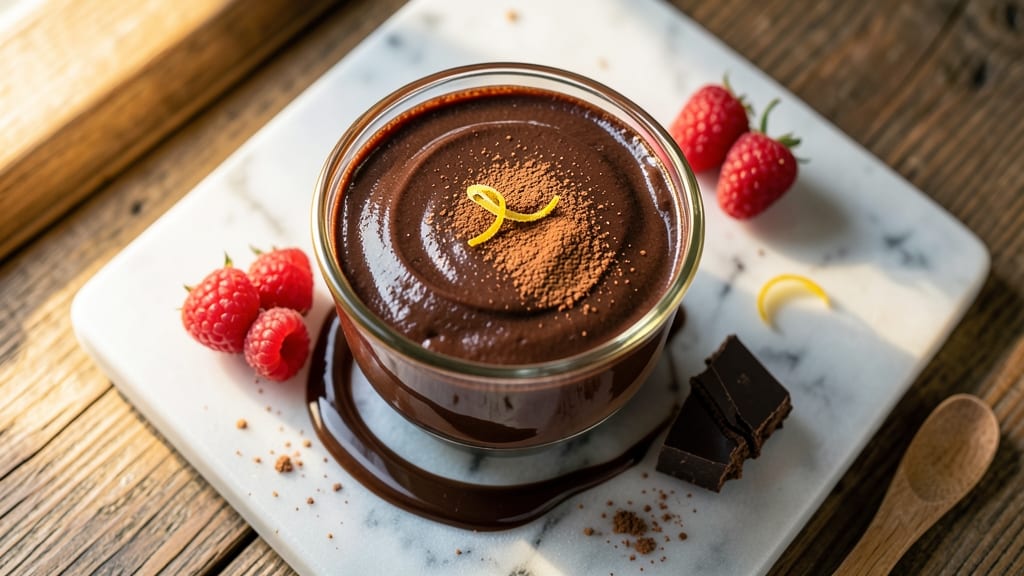
This Belgian chocolate mousse recipe delivers the kind of decadence that makes every bite feel like a moment of pure indulgence. The secret lies in perfectly tempered dark chocolate that melts into a silky, velvety texture, while espresso swirls add depth and a subtle coffee kick.
I've perfected this technique over years of testing—no grainy chocolate or overly firm mousse here, just restaurant-quality dessert that's surprisingly simple to make at home.
The real magic happens in the layers: a crispy cocoa crust at the bottom provides structure, while the mousse itself achieves that signature lightness through precise egg separation and gentle folding.
Chilling time is critical—too short and it won't set properly, too long and the texture becomes dense. I'll show you exactly how to balance it for that perfect, cloud-like consistency.
What you'll end up with is a dessert that looks as impressive as it tastes—deep chocolate color, glossy sheen, and those beautiful espresso swirls that cut through the richness. The cocoa crust adds a satisfying crunch contrast, while the mousse remains perfectly smooth and melt-in-your-mouth tender.
This isn't just dessert; it's an experience that will have your guests asking for the recipe.
Whether you're serving this for a special occasion or simply treating yourself, the technique scales beautifully. The same method works for individual portions or a large dish—just adjust your baking dish size. Let's create something truly memorable that will become your new signature dessert.
Ingredients for belgian chocolate mousse
Six key ingredients transform into a decadent dessert with restaurant-quality texture and flavor.
| Ingredient | Amount | Notes |
|---|---|---|
| High-Quality Dark Chocolate (70% Cocoa) 🍫 | 8 oz | Valrhona or Lindt for best texture |
| Large Eggs 🥚 | 6 whole | Room temperature for best whipping |
| Granulated Sugar 🍚 | ¾ cup | Superfine preferred for smoothness |
| Unsalted Butter 🧈 | ½ cup | Cold, cubed for crust |
| All-Purpose Flour 🌾 | ¼ cup | Sifted for cocoa crust |
| Instant Espresso Powder ☕ | 2 tbsp | High-quality for rich flavor |
| Heavy Cream 🥛 | 1 ½ cups | 35% fat for stability |
| Vanilla Extract 🌸 | 1 tsp | Pure Madagascar preferred |
| Pinch of Salt 🧂 | ⅛ tsp | Enhances chocolate flavor |
| Cocoa Powder (Natural) 🍫 | ¼ cup | Dutch-processed for crust |
| Powdered Sugar 🍚 | ¼ cup | For dusting final presentation |
The chocolate makes or breaks this. Valrhona or Lindt 70% cocoa bars melt into that signature silky texture—avoid anything with fillers or wax coatings. Williams Sonoma or Sur La Table carry excellent options, or check the specialty section at Whole Foods. Room-temperature eggs whip better, so take them out 30 minutes before starting. For the cocoa crust, Dutch-processed cocoa powder (like Ghirardelli) gives a smoother texture than natural cocoa. If you can't find instant espresso powder, finely grind Starbucks espresso beans—it's worth the extra step for that authentic coffee depth.
No Valrhona? Lindt or Guittard chocolate works just fine. Running short on eggs? Use aquafaba (chickpea brine) at 3 tablespoons per egg, but you'll lose some stability. For the cocoa crust, substitute 2 tablespoons melted dark chocolate for the butter if you're avoiding dairy. The heavy cream must be full-fat—half-and-half or light cream won't whip properly. Need a vanilla boost? Add 1 teaspoon vanilla bean paste for extra depth. And if you're making this ahead, prep the cocoa crust first—it needs 15 minutes to set before adding the mousse.
The cocoa crust keeps for 3 days at room temperature in an airtight container, while the mousse itself lasts 4 days refrigerated. For maximum freshness, assemble the full dessert 4 hours before serving—this gives the layers time to meld perfectly. Store components separately if prepping ahead: crust in the fridge, mousse in a sealed container. When ready to serve, let everything sit at room temperature for 15 minutes—this makes the mousse even creamier. The espresso swirls keep best when made fresh, but you can pipe them up to 2 hours ahead if needed.
Why You'll Love This Recipe
- No Whisk Required: I swear by this trick—just melt the dark chocolate and butter together, then fold in the whipped eggs and sugar. No overmixing, no stress. The flour? Just a whisper to thicken it right, not enough to ruin that silky texture.
- Decadent in Minutes: That first bite—rich, velvety, with a faint bitterness from the 70% cocoa—is pure bliss. The eggs add this airy lightness that makes it feel fancy, even though it’s basically melted chocolate and whipped eggs. Honestly, it’s the kind of dessert that makes you pause and think, "Wait, I made this?"
- Date Night or Meal Prep: Between us, this is my go-to for last-minute romance—dump it in glasses, chill, and boom, you’ve got a restaurant-worthy dessert. But it’s also my secret weapon for meal prep: make a big batch on Sunday, portion it out, and freeze. Thaw for 10 minutes, and you’ve got a stress-free treat any night.
- Budget-Friendly Luxury: You’d think something this fancy would break the bank, but high-quality dark chocolate goes a long way, and the rest of the ingredients? Basic pantry staples. I’ve made this for 12 people for under $15—proof that you don’t need a gourmet budget to feel like you’re eating at a chocolatier.
Step-by-step instructions for Belgian chocolate mousse
Here's how to create silky espresso swirls with a perfect cocoa crust—every layer matters.
Create the Crispy Cocoa Crust
Preheat your oven to 350°F and line six 4-ounce ramekins with parchment paper, leaving overhang for easy removal. In a food processor, combine the 0.25 cup cocoa powder (natural), 0.25 cup all-purpose flour, and 0.125 tsp pinch of salt. Pulse until evenly mixed.
Add the 0.5 cup unsalted butter, cut into small cubes, and pulse until the mixture resembles coarse crumbs with pea-sized butter pieces. Press this mixture firmly into the bottom of each ramekin, creating an even layer about ¼-inch thick. Bake for 10-12 minutes until the crust is set and just beginning to turn golden. Let cool completely before proceeding—this prevents soggy bottoms.
Temper the Chocolate for Perfect Texture
In a heatproof bowl set over a saucepan of simmering water (double boiler), melt the 8 oz high-quality dark chocolate (70% cocoa) with the 0.75 cup granulated sugar and 2 tbsp instant espresso powder. Stir gently until completely smooth, then remove from heat. The chocolate should be slightly thickened—this is crucial for the mousse's stability.
Let the chocolate mixture cool to 110°F (about 10 minutes). While it cools, separate the 6 whole large eggs, reserving the yolks. In a separate bowl, whip the egg whites with the 0.125 tsp pinch of salt until soft peaks form. This step ensures light, airy mousse without compromising structure.
Whip the Egg Yolks and Fold Gently
In a stand mixer fitted with the whisk attachment, beat the egg yolks on medium-high speed for 3-4 minutes until pale and slightly thickened. Gradually pour the cooled chocolate mixture into the yolks while mixing on low speed, ensuring even distribution. The mixture should be glossy and smooth—this indicates proper emulsification.
With the mixer running on low speed, gently fold in the whipped egg whites using a spatula, being careful not to deflate them. The mousse should be thick but still pourable. Divide the mixture evenly among the prepared ramekins, filling each about ¾ full. Place the ramekins in the refrigerator to chill for at least 4 hours or overnight.
Whip the Cream and Swirl the Espresso
In a separate bowl, whip the 1.5 cups heavy cream with the 1 tsp vanilla extract until soft peaks form. This lighter texture ensures the cream swirls beautifully without overpowering the mousse. In a small bowl, mix 2 tbsp instant espresso powder with 1 tbsp water to create a thick espresso paste.
Once the mousse is fully chilled, remove it from the refrigerator. Using a spoon, carefully create a well in the center of each ramekin. Gently pipe or spoon the whipped cream into the well, then use a toothpick to swirl the cream into the chocolate. The espresso paste can be drizzled artistically over the top for an extra layer of flavor.
Dust and Serve with Confidence
Let the mousse sit at room temperature for 10-15 minutes before unmolding. Dust the top of each serving with the 0.25 cup powdered sugar using a fine-mesh sieve for an elegant finish. Serve immediately to enjoy the perfect contrast of crispy cocoa crust, velvety chocolate, and airy espresso-infused cream.
Here's the thing—this mousse needs time to set properly. If you rush it, the texture will be too soft. Patience here guarantees that first bite of luxurious, restaurant-quality chocolate mousse right at home.
Pro Tips For Making Belgian Chocolate Mousse
- Temper the Chocolate: Chop that 70% dark chocolate into tiny, even pieces—think rice-sized—not chunks. Then melt it in a heatproof bowl over barely simmering water (no direct contact), stirring every 10 seconds. I learned this the hard way: uneven heating means seizing eggs later, and nobody wants scrambled mousse.
- Separate Eggs Like a Pro: Crack eggs one at a time into a separate bowl, then whisk the whites in a clean, dry bowl—no grease, no yolk traces. Use a fine-mesh sieve if you’re nervous about stray yolks. Trust me, a single speck of fat will turn your silky mousse into a sad, lumpy mess.
- Whip Egg Whites Cold: Chill your mixing bowl and beaters for 10 minutes before whipping the egg whites. Start on low speed, then crank to medium-high once they’re frothy—this prevents overworking and gives you those glossy, cloud-like peaks. Over-whipped whites? Your mousse will deflate faster than a balloon at a sad party.
- Fold in the Butter Last: Melt the butter just until it’s liquid (not hot), then drizzle it into the chocolate mixture while folding. Wait until the very end to gently fold in the butter—this keeps the texture light, not greasy. I used to add it early, and the result was always too rich and dense.
Essential equipment for great belgian chocolate mousse
Thermal Control Tools
Precision temperature control is everything for Belgian chocolate mousse. Invest in a high-quality digital thermometer like the Thermoworks Thermapen One—it reads temperatures instantly and accurately, crucial for melting chocolate to 110°F and checking egg white consistency.
For the double boiler, I recommend a stainless steel mixing bowl (like the OXO Good Grips) that sits snugly over a saucepan to prevent water from seeping into your chocolate. 🌡️
Mixing Essentials
A stand mixer with whisk attachment (like the KitchenAid Artisan Series) is non-negotiable for achieving that signature silky texture. The whisk attachment should be stainless steel for durability and even mixing.
For folding egg whites, a flexible silicone spatula (such as OXO Good Grips) helps gently incorporate them without deflating. If you don’t have a stand mixer, a hand mixer works in a pinch, but be prepared for slightly more effort.
Crust Creation Kit
The cocoa crust requires a food processor (like the Cuisinart DFP-14BCY) for even mixing, and a ramekin set (preferably 4-ounce with parchment-lined bottoms for easy removal). For pressing the crust firmly into ramekins, I use a small glass or metal cup to create an even layer.
A pastry brush (like West Bend) helps distribute any melted chocolate drizzle for extra shine and flavor.
Swirl Perfection Tools
For the espresso swirls, a piping bag with a small round tip (like Wilton 1M) ensures clean, professional-looking lines. A toothpick is all you need to create those elegant marbled patterns—no fancy tools required!
For dusting powdered sugar, a fine-mesh sieve (such as Ateco) gives a smooth, even finish. A small offset spatula helps spread any extra sugar for a polished look.
Storage and Serving
To maintain texture, store ramekins in an airtight container (like Rubbermaid Brilliance) with parchment between layers to prevent sticking. For serving, a slotted spoon helps remove the mousse cleanly from ramekins, and a small sifter (like Ateco) makes dusting powdered sugar effortless.
If you’re making this ahead, a cooling rack ensures even chilling without condensation.
Nutrition facts
Frequently asked questions
Why does my Belgian chocolate mousse turn grainy?
Graininess usually means your chocolate wasn't properly tempered or cooled to 110°F before mixing with eggs. Always use high-quality chocolate (70% cocoa or higher) and avoid overheating it. Let the melted chocolate cool slightly before combining with egg yolks—this prevents sugar crystals from forming.
Can I make this mousse without a stand mixer?
Yes, but you'll need to work quickly! Use a hand mixer for egg whites and yolks, and whisk the chocolate mixture vigorously by hand. For folding, use a large spatula and work gently to maintain airiness. The key is patience—don't rush the process or you'll end up with dense mousse.
How do I fix runny mousse?
If your mousse is too soft, it likely didn't chill long enough. Return it to the fridge for 1-2 extra hours. For immediate serving, chill the ramekins in an ice bath for 15-20 minutes before unmolding. Never microwave it—this will make it grainy. A crisp cocoa crust helps stabilize the texture, so make sure yours is fully set first.
What's the best way to serve Belgian chocolate mousse?
Serve immediately after dusting with powdered sugar for the freshest texture. For extra elegance, pair with fresh raspberries or a drizzle of chocolate ganache. Keep portions small (4-ounce ramekins) to maintain the perfect balance of rich chocolate and airy cream. The espresso swirls add complexity, so let guests taste it without distractions first!
Can I substitute white chocolate for dark?
Not recommended! White chocolate lacks the cocoa solids that create the signature texture and depth of Belgian chocolate mousse. If you must use it, add 1 extra tablespoon of cocoa powder to the crust and increase chocolate to 10 oz, but expect a sweeter, less complex flavor. Dark chocolate (70% cocoa) is essential for that authentic velvety result.