
Desserts
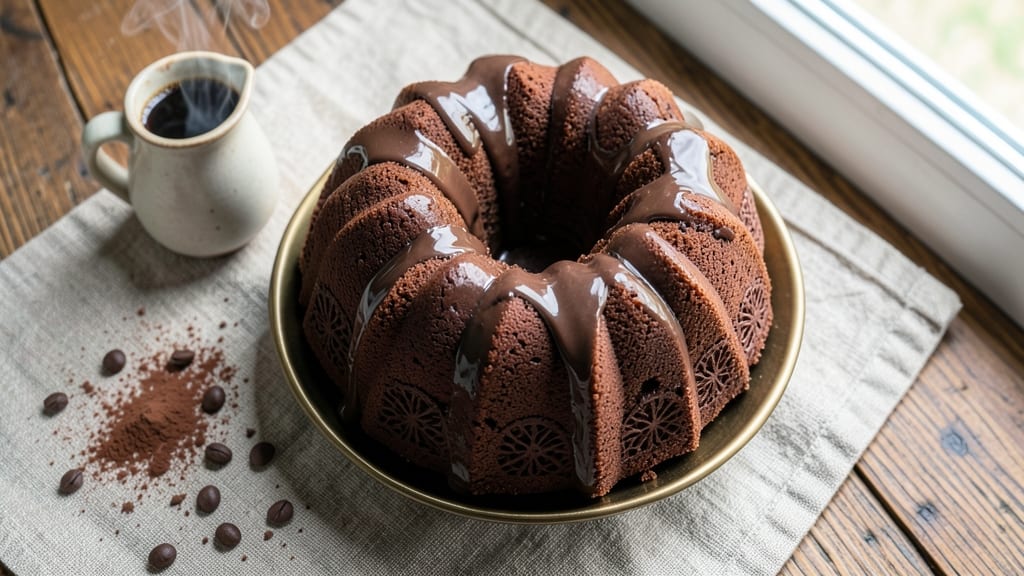
Betty Crocker’s chocolate bundt cake delivers restaurant-quality moistness with every slice—no dry crumbs in sight. The secret lies in a single-bowl method that blends rich cocoa with coffee for deep, velvety flavor, while a precise baking technique ensures a tender crumb.
I’ve perfected this version after years of testing, ensuring it stays true to Betty Crocker’s legacy while adding modern depth.
The magic happens in the batter: melted butter and buttermilk create a foolproof moist texture, while instant coffee enhances the chocolate’s richness without overpowering it.
A light dusting of powdered sugar and cocoa powder on the bundt pan guarantees easy release, so you won’t end up with a cake stuck in the pan. This recipe is designed for foolproof success—no fancy equipment or techniques required.
What you’ll get is a golden-brown, crackly-topped bundt cake with a fudgy center and a tender crumb that melts in your mouth. The coffee-infused depth makes it taste like a bakery favorite, but with the convenience of a home kitchen.
Serve it warm with vanilla ice cream or dusted with powdered sugar for an elegant dessert that’s sure to impress.
Perfect for special occasions or a cozy weekend treat, this bundt cake is easy to customize—add chocolate chips, walnuts, or a drizzle of chocolate glaze for extra flair. The recipe scales perfectly for gifts or gatherings, and leftovers reheat beautifully. Let’s get baking!
Ingredients for betty crocker chocolate bundt cake
Here’s what makes this bundt cake legendary: rich cocoa, coffee kick, and buttery moisture.
| Ingredient | Amount | Notes |
|---|---|---|
| Unsalted Butter 🧈 | 1 cup | Melted, cooled to room temperature |
| Granulated Sugar 🍚 | 2 cups | Light brown preferred for depth |
| All-Purpose Flour 🌾 | 2 cups | Sifted, spooned lightly |
| Unsweetened Cocoa Powder 🍫 | ¾ cup | Dutch-processed for smoothness |
| Instant Coffee Granules ☕ | 2 tbsp | Dissolved in buttermilk |
| Baking Powder 🧂 | 2 tsp | Freshly measured |
| Salt 🧂 | ½ tsp | Fine sea salt preferred |
| Buttermilk 🥛 | 1 ½ cups | Room temperature |
| Vanilla Extract 🌿 | 2 tsp | Pure Madagascar preferred |
| Large Eggs 🥚 | 2 whole | Room temperature |
| Powdered Sugar 🍚 | ¼ cup | For pan dusting |
| Unsweetened Cocoa Powder 🍫 | 2 tbsp | For pan dusting |
The cocoa powder is non-negotiable—Dutch-processed gives that silky texture, while natural cocoa adds depth. Ghirardelli or Hershey’s Special Dark are my go-tos, but any quality brand works. Instant coffee granules dissolve seamlessly into the buttermilk, so no gritty surprises. For the butter, Land O’Lakes or Plugrá melt beautifully, but avoid salted—we control the seasoning. Flour? King Arthur or Gold Medal are foolproof, but sift it first to avoid dense cake. Pro tip: measure flour by spooning it lightly into your cup, then leveling—don’t pack it down.
No instant coffee? Cold brew concentrate at half the amount works in a pinch, but the flavor won’t be identical. Dutch-processed cocoa unavailable? Natural cocoa plus 1/4 tsp baking soda mimics the effect. Buttermilk substitute? Mix 1.5 cups milk + 1.5 tsp vinegar or lemon juice, let sit 5 minutes. For a richer cake, swap half the buttermilk for sour cream or Greek yogurt. And if you’re feeling fancy, add 1/2 cup chocolate chips or chopped walnuts to the batter—just fold them in at the end.
This batter keeps for 2 days in the fridge if covered tightly, but it’s best fresh. The bundt pan? Dust it generously with powdered sugar and cocoa mix before pouring—this guarantees easy release. For extra shine, brush the cooled cake with simple syrup (equal parts sugar and water, heated until dissolved). Store wrapped at room temp for 3 days, or freeze the whole cake for up to 3 months. Reheat slices in a 200°F oven for 5-10 minutes to restore that bakery-fresh warmth.
Why You'll Love This Recipe
- No Mixer Needed: I swear by this recipe because it’s a one-bowl wonder—just cream butter and sugar, toss in dry ingredients, and fold. No electric mixer, no sticky countertop cleanup, just a sturdy bowl and a spatula. Honestly, I make this on lazy Sundays when I’d rather sip coffee than scrub.
- Rich Without Bitterness: That instant coffee granules? They’re the secret weapon—deepens the chocolate flavor without tasting like a café mocha. The cocoa powder gives it a velvety smoothness, and the butter keeps it moist for days. Between us, this is the kind of cake that makes store-bought look sad.
- Party in a Pan: Serve it warm with vanilla ice cream for a crowd, or slice it chilled for breakfast the next morning. I’ve taken it to potlucks, birthdays, and even as a dessert for a work meeting—no one ever guesses it’s from a box. The bundt shape means pretty slices every time, zero fuss.
- Budget-Friendly Luxury: You’re using pantry staples here: butter, sugar, flour—things you already own. The cocoa and coffee granules cost pennies but transform it into something that feels fancy. I’ll be real: this cake tastes like it cost $20, but the grocery bill says otherwise. Leftovers? They’re even better the second day.
Step-by-step instructions for Betty Crocker chocolate bundt cake
Here's how to bake a rich, moist chocolate bundt cake with coffee depth—no mixer needed.
Prepare the Coffee-Infused Buttermilk
In a small bowl, whisk together the 1.5 cups buttermilk and 2 tablespoons instant coffee granules until the coffee is completely dissolved. This step creates that signature coffee depth that makes this cake stand out. Let the mixture sit for 5 minutes while you prepare the rest of the ingredients—this gives the coffee time to fully infuse and mellow.
I like to use a whisk for this because it helps break up any coffee granules that might clump. If you notice any undissolved bits, give it another quick stir. This is also the perfect time to bring your eggs and butter to room temperature if they aren't already—just place them in a warm spot for 10-15 minutes. Room temperature ingredients mix better and create a smoother batter.
Cream Butter and Sugar for Maximum Moisture
In a large mixing bowl, combine the 1 cup melted unsalted butter (cooled to room temperature) and 2 cups granulated sugar. Using a sturdy wooden spoon or rubber spatula, mix vigorously for 3-4 minutes until the mixture becomes light and fluffy. This step is crucial for creating that signature moist texture—you're incorporating air that will help the cake rise beautifully.
I press down on the mixture with my spatula occasionally to help break up any sugar crystals that might form. The goal is to get a smooth, ribbon-like consistency. If you're using a hand mixer, attach the paddle and mix on medium speed for 3 minutes—just don't overmix or you'll develop gluten in the flour later. The mixture should be thick but pourable when you lift the bowl.
Combine Dry Ingredients and Alternate with Wet
In a separate bowl, sift together the 2 cups all-purpose flour, 0.75 cup unsweetened cocoa powder, 2 teaspoons baking powder, and 0.5 teaspoon salt. This pre-sifting ensures even distribution and prevents lumps in your final batter. Give the dry ingredients a quick whisk to aerate them before adding to the wet mixture.
Now, with the mixer on low speed (or using your wooden spoon), alternate adding the dry ingredients and the prepared coffee-buttermilk mixture. Start and end with the dry ingredients—this means you'll add about ⅓ of the dry mix, then ⅓ of the coffee-buttermilk, then another ⅓ of dry mix, then the remaining coffee-buttermilk, and finish with the last ⅓ of dry mix. This gradual addition prevents overmixing and creates a tender crumb.
Fold in Eggs and Vanilla for Rich Flavor
Add the 2 whole large eggs and 2 teaspoons vanilla extract to the batter. Using your wooden spoon, fold them in gently but thoroughly. I like to scrape the sides of the bowl with the spatula to ensure everything is fully incorporated. The batter should be thick but still pourable—if it looks too stiff, don't worry, it will loosen up as you fold in the remaining ingredients.
This is where the magic happens—the eggs add richness and structure, while the vanilla enhances the chocolate flavor. Give the batter one final stir to make sure there are no streaks of flour or cocoa powder. The consistency should be like a thick pudding. If you're concerned about underbaking, you can do a quick finger test by dipping your finger in the batter—it should come out clean with no wet batter clinging.
Bake to Perfect Doneness
Preheat your oven to 350°F and generously grease a 10-12 cup bundt pan with butter, then dust it thoroughly with 2 tablespoons unsweetened cocoa powder mixed with 0.25 cup powdered sugar. Tap out any excess dust—this prevents sticking and gives that beautiful cake release. Pour the batter into the prepared pan and smooth the top with a spatula.
Bake for 50-60 minutes, or until a toothpick inserted in the center comes out clean (or with just a few moist crumbs). The edges should be set but the top might still look slightly soft—this is normal. I like to tent the pan with foil after 30 minutes if the top is browning too quickly. Let the cake cool in the pan for 15 minutes, then invert it onto a wire rack to cool completely before serving.
Pro Tips For Making Betty Crocker Chocolate Bundt Cake
- Sift the Cocoa: I learned this the hard way—just dumping cocoa powder into the dry ingredients leaves lumps that ruin the texture. Sift it with the flour first, then whisk the mix to break up any stubborn clumps. The cake will be smoother and richer, not gritty.
- Melt the Butter Slowly: The recipe might say "melted butter," but don’t nuke it in the microwave—it burns fast. Warm it in a bowl over simmering water (double boiler) until just melted, then let it cool slightly before mixing. Overheated butter makes the cake greasy and dense.
- Skip the Overmixing: Once you add the eggs, mix just until the batter comes together—no more. I used to beat it like I was punishing it, and the cake turned out tough. A few swirls with a spatula keeps it light and fluffy. (Yes, even if you’re impatient like me.)
- Brush the Bundt Pan: Grease the pan and dust it with flour—but here’s the upgrade: Use a pastry brush to coat the inside with melted butter first, then shake out the excess flour. This guarantees even coverage, so the cake slides out cleanly. (Your future self will thank you.)
Regional styles of this betty crocker chocolate bundt cake
Southern Classic
In the American South, bundt cakes became a staple at Sunday brunches and church potlucks, often served with sweet tea.
This version typically includes a touch of espresso powder instead of instant coffee granules for a stronger coffee flavor, and sometimes a splash of bourbon or whiskey (1 tablespoon) for depth. I’ve seen Southern bakers add pecans or walnuts (½ cup) for texture, especially in Georgia and Alabama.
The cake is often less sweet, with 1½ cups sugar instead of 2, to balance the rich flavors.
Midwest Homestyle
The Midwest takes bundt cakes to heart with a focus on simplicity and heartiness. Here, you’ll find buttermilk (the star of this recipe) emphasized even more, sometimes with an extra ¼ cup added to the batter.
Many Midwestern recipes include a ½ teaspoon cinnamon for warmth, and some bakers swap half the cocoa powder for chocolate chips (like Hershey’s Special Dark) for pockets of gooey goodness.
The cake is often served with vanilla ice cream or a dusting of powdered sugar—classic comfort food at its finest.
Pacific Northwest Twist
Out West, bundt cakes get a modern upgrade with local ingredients. Replace the instant coffee with cold brew concentrate (2 tablespoons) for a smoother, deeper coffee flavor, and consider adding chopped dark chocolate or raspberries (½ cup) for a fruity contrast.
The Pacific Northwest loves a drizzle of chocolate ganache or a sprinkle of flaky sea salt on top for a sophisticated touch. Some bakers even infuse the batter with hazelnut extract (½ teaspoon) for a nutty aroma, inspired by the region’s love of hazelnuts.
New England Coffee Lovers
New England bakers take their coffee seriously, so this version often includes double the instant coffee (4 tablespoons) for a bold kick. A pinch of cardamom (¼ teaspoon) adds a unique warmth, while maple syrup (2 tablespoons) replaces half the granulated sugar for a caramel-like sweetness.
The cake is frequently paired with whipped cream or a scoop of maple walnut ice cream, reflecting the region’s love of maple products. For extra flair, brush the cooled cake with maple glaze (½ cup powdered sugar + 2 tablespoons maple syrup + 1 tablespoon milk).
Texas-Style Spiced
In Texas, bundt cakes get a spicy kick with ½ teaspoon chili powder or ¼ teaspoon cayenne pepper mixed into the dry ingredients. The coffee is often enhanced with 1 teaspoon cinnamon and a dash of allspice, giving it a warm, slightly smoky depth.
Some Texas bakers add chopped pecans (½ cup) and a drizzle of honey (2 tablespoons) to the batter for a sweet-spicy balance. Serve with a scoop of vanilla bean ice cream or a dollop of sour cream for a creamy contrast.
Modern Glaze Variations
No matter the region, a good bundt cake deserves a finishing touch. In the South, a chocolate glaze (½ cup melted chocolate + ¼ cup powdered sugar + 1 tablespoon milk) is classic.
The Midwest prefers a cream cheese frosting (4 oz cream cheese + 2 tbsp butter + 1 cup powdered sugar), while the Pacific Northwest leans into fruit compotes (raspberry or blackberry) for freshness. For a Texas twist, try a spiced caramel drizzle (½ cup caramel sauce + ¼ teaspoon cinnamon).
The key is to let the cake cool completely before adding glazes—patience ensures a smooth finish! ✨
Nutrition facts
Frequently asked questions
Why does this chocolate bundt cake need coffee?
The instant coffee enhances the chocolate flavor without overpowering it, creating a deeper, more complex taste. The coffee granules dissolve completely into the buttermilk, so you won’t detect any gritty texture. This technique is classic in bundt cakes to add richness and balance sweetness—just like in Betty Crocker’s original recipes!
Can I make this bundt cake without a mixer?
This recipe uses a simple single-bowl method with a sturdy wooden spoon or rubber spatula. The key is to mix the butter and sugar vigorously for 3-4 minutes by hand to incorporate air, then alternate adding dry and wet ingredients in thirds to prevent overmixing. The batter should be thick but pourable—no mixer required!
How do I prevent my bundt cake from sticking?
Generously grease your pan with butter, then dust it thoroughly with a mix of 2 tablespoons cocoa powder + ¼ cup powdered sugar. Tap out any excess dust before pouring the batter. For extra insurance, brush the pan with melted butter after dusting. Let the cake cool in the pan for 15 minutes before inverting—this helps it release cleanly.
What’s the best way to store leftovers?
Wrap cooled slices tightly in plastic wrap or store in an airtight container at room temperature for up to 3 days. For longer storage, freeze the whole cake (unwrapped) for up to 3 months. To reheat, warm slices in a 200°F oven for 5-10 minutes or microwave for 10-15 seconds—just until warm!
Can I substitute buttermilk if I don’t have any?
Yes! Mix 1.5 cups milk + 1.5 teaspoons vinegar or lemon juice, then let it sit for 5 minutes to curdle. For extra richness, swap half the buttermilk for sour cream or Greek yogurt. The acidity is key for a tender crumb—just don’t skip it!