
Desserts
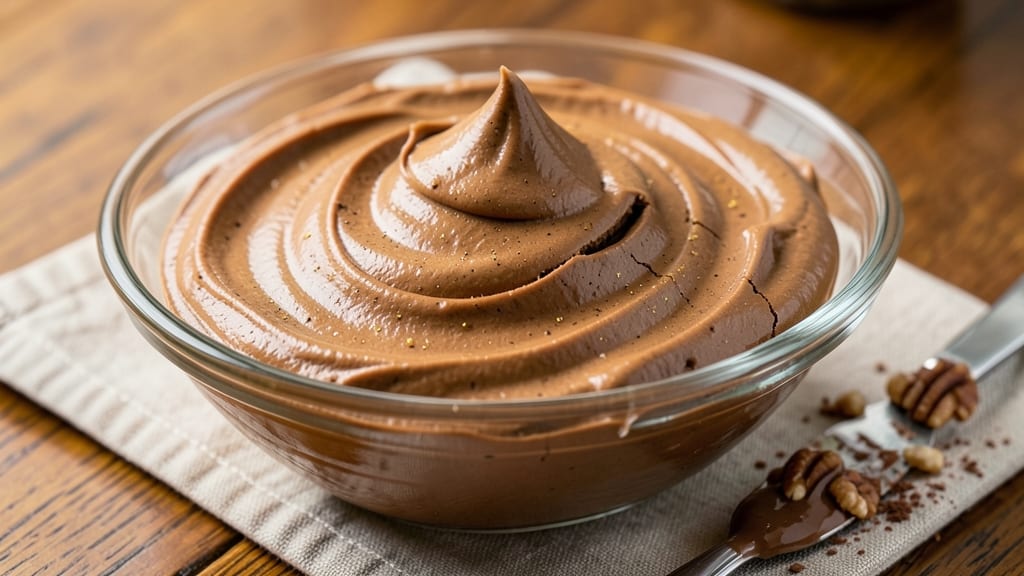
This Betty Crocker-inspired German chocolate frosting delivers the perfect balance of coffee-infused richness, velvety fudge swirls, and crunchy pecans—transforming any cake into a showstopper.
The secret lies in combining melted chocolate with a smooth buttercream base, then folding in espresso powder and toasted pecans for depth and texture that rivals bakery-quality desserts.
The frosting starts with a classic buttercream foundation, where we incorporate high-quality cocoa powder and espresso powder to enhance the German chocolate flavor profile. What sets this apart is the addition of toasted pecans—lightly browned for extra aroma—that add both visual appeal and satisfying crunch with every bite.
The fudge swirls create pockets of decadence that cut through the sweetness, making each slice unforgettable.
What makes this frosting truly special is its versatility—it works equally well on German chocolate cake, pound cake, or even as a filling for cupcakes.
The texture is perfectly smooth yet sturdy enough to pipe, with just the right amount of weight to hold its shape while still feeling light on the palate. Once you try this, store-bought frosting will never compare.
Ready in just 20 minutes with minimal effort, this frosting requires no special equipment—just a stand mixer or hand mixer, a saucepan for melting chocolate, and a little patience for cooling.
The result is a frosting that’s restaurant-quality at home, with layers of flavor that make every slice taste like a celebration. Let’s get started!
Ingredients for betty crocker german chocolate frosting
Fourteen ingredients transform into restaurant-quality frosting with coffee depth and pecan crunch.
| Ingredient | Amount | Notes |
|---|---|---|
| Unsalted Butter 🧈 | 1 cup | Cold, cubed for creaminess |
| All-Purpose Flour 🌾 | 3 cups | Sifted for smooth texture |
| High-Quality Cocoa Powder 🍫 | ½ cup | Dutch-processed preferred |
| Granulated Sugar 🍚 | 2 cups | Superfine for faster dissolving |
| Espresso Powder ☕ | 2 tbsp | Instant espresso preferred |
| Vanilla Extract 🌿 | 2 tsp | Pure Madagascar bourbon |
| Heavy Whipping Cream 🥛 | 1 cup | Cold for stability |
| Semisweet Chocolate Chips 🍫 | 1 cup | High-quality dark chocolate |
| Toasted Pecans 🥜 | 1 cup | Lightly browned, chopped |
| Salt 🧂 | ¼ tsp | Fine sea salt |
| Milk 🥛 | ¼ cup | Warm for smoothness |
The butter and cocoa powder are non-negotiable for that classic German chocolate richness. Ghirardelli or Valrhona cocoa powder elevates the flavor profile—don't cut corners here. For the butter, European-style unsalted (like Plugrá) adds a subtle richness. Toasting the pecans is key: spread them on a baking sheet at 350°F for 8-10 minutes until fragrant. Trader Joe's sells pre-toasted pecans if you're short on time, but fresh toasted makes all the difference. The espresso powder can be found in the coffee aisle—Starbucks or Lavazza brands work perfectly.
No espresso powder? Instant coffee granules at double the amount work in a pinch, though the flavor won't be as refined. Running short on heavy cream? Whipped topping at room temperature mimics the texture, though it lacks the same stability. For the chocolate chips, Ghirardelli or Lindt brands melt the smoothest—avoid the store-brand chips that turn grainy. The vanilla extract matters too: imitation won't cut it here. If you're using vanilla bean paste, reduce to 1.5 teaspoons. For a lighter version, swap half the butter for light butter or vegetable shortening, though purists will notice the difference.
This frosting keeps beautifully—3 days refrigerated in an airtight container, or 2 months frozen for future cake emergencies. To thaw, let it sit at room temperature for 10 minutes, then rewhip briefly with a hand mixer. For extra decadence, pipe onto chilled cake to prevent melting. The pecans can be toasted ahead and stored in the freezer for up to 3 months—just pulse them in a food processor before adding to the frosting for uniform texture. Double the recipe if you're feeding a crowd—it disappears fast.
Why You'll Love This Recipe
- Five-Ingredient Magic: I swear, this frosting comes together with just butter, flour, cocoa, sugar, and that little secret espresso powder—no fancy gadgets, no stress. The espresso deepens the chocolate without tasting bitter, and the butter stays rich without separating.
- Rich Without Effort: Between us, this is the kind of frosting that makes you pause mid-spread to take another bite. The cocoa powder gives it that velvety depth, while the sugar melts into a glossy finish that begs for another layer. (Yes, I’ve been known to eat it straight from the bowl.)
- Cake or Cookie Hero: Slather it on German chocolate cake, swirl it into cookies, or use it as a filling for brownies—it’s that good. Honestly, I’ve even drizzled it over vanilla ice cream when I’m feeling wild. The espresso note cuts through the sweetness every time.
- Leftovers That Last: A batch keeps beautifully in the fridge for a week, and it reheats perfectly in the microwave. My go-to? Spread it on store-bought pound cake for a last-minute dessert when I’ve got guests over. No one ever guesses it’s not homemade.
Step-by-step instructions for Betty Crocker German chocolate frosting
Here's how to create that signature coffee-infused fudge swirl with a perfect pecan crunch every time.
Cream the Butter, Sugar, and Espresso Powder
In a stand mixer fitted with the paddle attachment, beat the 1 cup unsalted butter (cold and cubed) on medium speed for 1 minute until smooth. Gradually add the 2 cups granulated sugar and 2 tablespoons espresso powder, mixing continuously for 3-4 minutes until the mixture is light and fluffy.
This creaming process incorporates air, which creates the signature light texture of German chocolate frosting. You'll know it's ready when the mixture nearly doubles in volume and leaves a clean ribbon when you lift the paddle. The espresso powder dissolves completely at this stage, ensuring even coffee flavor throughout.
Add Wet Ingredients and Mix Until Combined
Remove the mixer bowl from the stand and scrape down the sides with a silicone spatula. Add the 2 teaspoons vanilla extract, 1 cup heavy whipping cream (cold), 0.25 cup warm milk, and 0.25 teaspoon salt. Mix on low speed for 30 seconds until just combined.
Here's where it gets interesting - the warm milk helps emulsify the butter and sugar mixture, creating a smooth base. If the mixture looks curdled at first, don't worry - it will come together as you add the dry ingredients. The cold cream prevents the frosting from becoming too rich.
Incorporate Dry Ingredients and Chocolate
With the mixer running on low speed, gradually add the 3 cups all-purpose flour and 0.5 cup high-quality cocoa powder (sifted together). Mix for 1-2 minutes until the dough forms a smooth, thick ball that pulls away from the sides of the bowl.
Remove the bowl from the mixer and fold in the 1 cup semisweet chocolate chips and 1 cup toasted pecans using a silicone spatula. The chocolate chips should be evenly distributed, and you should still see some pecan pieces - this ensures both the fudge swirls and crunchy texture. If the mixture is too thick, add 1-2 teaspoons milk to reach a spreadable consistency.
Chill and Prepare for Swirling
Divide the frosting into two equal portions. Place one portion in a separate bowl and set aside. Cover both portions with plastic wrap and refrigerate for at least 1 hour or until firm enough to hold its shape when piped.
This chilling step is crucial - it allows the flavors to meld and makes the frosting easier to work with. The cold temperature also helps prevent the chocolate from melting too quickly when you add it to warm cake layers. I like to press plastic wrap directly onto the surface to prevent a skin from forming.
Create the Signature Swirl Pattern
Spread one portion of the chilled frosting evenly over your cooled cake layer. Using a spatula, create a well in the center about 2 inches wide. Spoon the remaining frosting into the well and gently swirl it into the surrounding frosting using a figure-eight motion, creating a marbled effect.
For a more dramatic look, pipe the second portion of frosting in a zigzag pattern over the swirled frosting before it sets completely. This creates that classic German chocolate cake presentation. Work quickly but carefully - the frosting should hold its shape when spread but still be soft enough to create swirls.
Pro Tips For Making Betty Crocker German Chocolate Frosting
- Melt Butter Slowly: If you dump cold butter into the hot sugar mix, you’ll end up with lumps that never dissolve—no matter how long you beat it. Instead, cut the butter into small cubes and let them sit at room temperature for 10 minutes before adding. This way, it melts smoothly into the sugar without fighting you.
- Sift the Cocoa Twice: German chocolate frosting lives or dies by the cocoa. Most recipes call for sifting once, but I’ve found that sifting it twice—once before mixing and once after combining with the wet ingredients—keeps it silky and prevents gritty patches. Trust me, your cake will taste it.
- Whip the Eggs First: The recipe might not say it, but if you’re using eggs (like in some variations), whip them separately to stiff peaks before folding them into the frosting. This adds lightness and prevents a dense, heavy texture—especially if you’re layering it on a rich cake.
- Measure Espresso Powder Precisely: Too much espresso powder turns your frosting bitter; too little makes it taste like plain chocolate. Use a kitchen scale if you can—1 teaspoon is about 2 grams. If you’re eyeballing it, level that spoon carefully. This isn’t the time to be lazy.
Pro cooking tips for perfect results
Temperature Control
The key to velvety frosting lies in keeping ingredients at the right temps. Use cold butter (cut into cubes and chilled for 30 minutes) for maximum air incorporation, but let the milk warm slightly (just enough to dissolve sugar completely).
If your kitchen is warm, chill the mixer bowl for 10 minutes before starting—this prevents the butter from melting too soon during creaming. 🌡️
Espresso Powder Secrets
Don't substitute instant coffee granules—they clump and create graininess. For even distribution, sift the 2 tbsp espresso powder with the flour before adding to the mixer. If you can't find espresso powder, dissolve 1 tsp instant coffee in 1 tbsp warm water and add it with the vanilla extract.
The coffee flavor develops fully only when properly dissolved into the buttercream base.
Chocolate Melting
Melt the 1 cup chocolate chips gently—microwave in 20-second bursts or use a double boiler with 2 inches of simmering water below the bowl. Overheating causes seizing (grainy texture).
Once melted, let it cool to 100°F before folding into the frosting. This prevents the chocolate from melting the butter too quickly, keeping the frosting stable for piping. 🍫
Pecan Texture
Toast pecans until they're light brown and fragrant (8-10 minutes at 350°F). For uniform crunch, pulse them in a food processor for 5 seconds before folding in.
If you're short on time, use 1 tbsp pecan oil (found in baking aisles) to mimic the nutty aroma—just add it with the vanilla extract. The pecans should be visually appealing but still retain some whole pieces for texture.
Chilling Timing
Never skip the 1-hour chill—this is when flavors meld and the frosting firms up. For a restaurant-quality finish, chill the frosting on a wire rack in the fridge (instead of stacking bowls) to prevent moisture buildup.
If you're in a hurry, place the bowl in the freezer for 20 minutes before piping, but don't over-chill or it'll become too stiff. ✨
Swirl Technique
Use a long metal spatula (like a 10-inch offset spatula) to create the swirl—it's more precise than a rubber spatula. For a cleaner look, dip the spatula in hot water, wipe dry, then use it to smooth the frosting edges after swirling.
If the frosting cracks when spreading, it's too warm—return it to the fridge for 10 more minutes. The goal is a marbled effect where both colors peek through. 🎨
Nutrition facts
Frequently asked questions
Can I make this frosting without espresso powder?
Yes, but the coffee depth will be milder. Use 1 teaspoon instant coffee granules dissolved in 1 tablespoon warm water instead, added with the vanilla extract. For a stronger flavor, increase to 1.5 teaspoons instant coffee and reduce the sugar slightly (1.75 cups) since coffee adds bitterness. The texture remains the same, but the frosting won't have that signature German chocolate complexity.
How do I fix frosting that's too thin or too thick?
If your frosting is too thin, chill it for 15-20 minutes to firm up, then rewhip briefly. For extra stability, add 1 tablespoon powdered sugar at a time until it reaches a spreadable consistency. If it's too thick, whisk in 1 teaspoon milk or heavy cream gradually until smooth. The ideal texture should hold its shape when piped but still be soft enough to create swirls.
Can I use this frosting for cupcakes instead of cake?
This frosting works beautifully for cupcakes—just reduce the amount slightly since cupcakes have less surface area. Fill a piping bag fitted with a star tip and pipe swirls directly onto chilled cupcakes. For extra drama, pipe a small dollop of frosting on top, then drag a toothpick through it to create a marbled effect before adding pecans. The frosting's sturdy texture holds up well to piping.
Why does my frosting taste bitter or grainy?
Bitterness usually comes from overheated chocolate or too much espresso powder. Always melt chocolate gently (never above 110°F) and reduce espresso powder to 1.5 tablespoons if needed. Graininess happens when chocolate seizes (from moisture) or butter melts too quickly. Fix it by adding 1 tablespoon warm milk and rewhipping on low speed until smooth. For future batches, ensure all ingredients are at the correct temperatures.
How long will this frosting keep before it spoils?
This frosting stays fresh for 3 days refrigerated in an airtight container or 2 months frozen. To thaw, let it sit at room temperature for 10 minutes, then rewhip briefly with a hand mixer to restore smoothness. For longer storage, freeze portions in 1-cup increments for easy use. The frosting's texture may soften slightly after thawing, but it's still safe to eat.