
Desserts
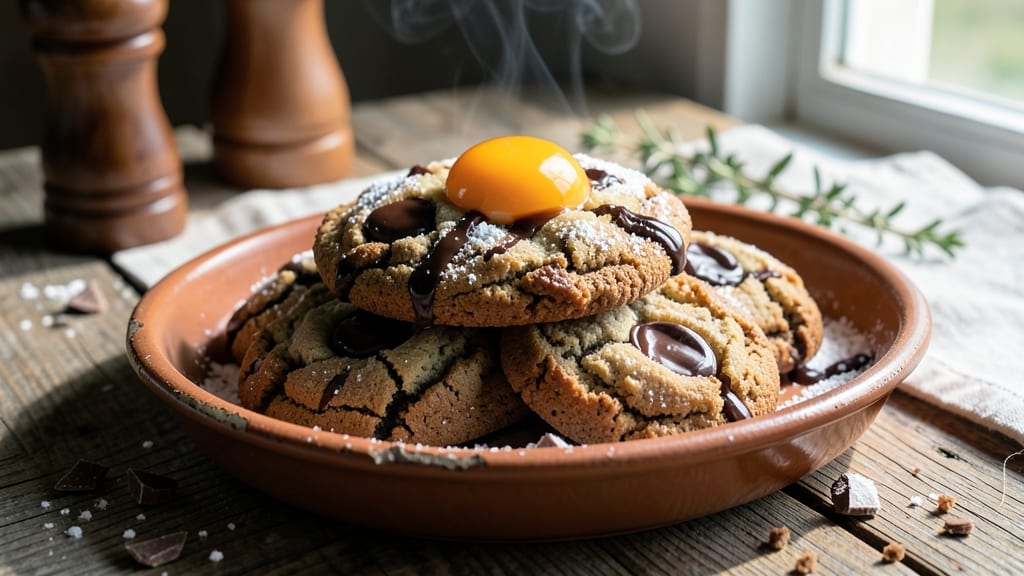
This bittersweet chocolate rustica cookies recipe delivers the perfect balance of deep cocoa richness and satisfying crunch—each bite reveals layers of coffee-infused chocolate that linger like a fine dessert wine. 💛 The secret lies in using high-quality bittersweet chocolate (70% cocoa or higher) and a touch of espresso powder to amplify the chocolate's natural complexity without overpowering its subtle sweetness.
What sets these cookies apart is their rustic texture: thick, crackly edges that give way to a tender, fudgy center, all held together by a delicate crumb. The recipe relies on a few simple ingredients—flour, butter, sugar, and eggs—but the technique is what transforms them into something extraordinary.
A 350°F oven ensures even baking, while a 10-minute rest on the tray before transferring guarantees that signature crispy exterior. By the time these cookies emerge from the oven, your kitchen will smell like a Parisian pâtisserie, and the aroma alone will have everyone gathering around.
The bittersweet chocolate dominates with its bold, slightly bitter notes, while the coffee infusion adds depth that makes these cookies taste like a sophisticated dessert rather than a simple treat.
Serve them warm with a cup of freshly brewed coffee or a glass of port wine, or let them cool slightly for that perfect balance of warmth and crunch. These cookies are ideal for holiday gatherings, intimate dessert nights, or whenever you crave something indulgent yet refined. Let's get baking!
Ingredients for bittersweet chocolate cookies rustica
Bittersweet chocolate, espresso powder, and rich butter create these luxurious rustic cookies.
| Ingredient | Amount | Notes |
|---|---|---|
| High-Quality Bittersweet Chocolate (70% cocoa or higher) 🍫 | 8 oz | Chopped into small pieces |
| Unsalted Butter 🧈 | 1 cup | Cold, cubed for even baking |
| Granulated Sugar 🍚 | ¾ cup | Superfine preferred for smooth texture |
| Large Eggs 🥚 | 2 whole | Room temperature for best mixing |
| All-Purpose Flour 🌾 | 2 cups | Sifted for light texture |
| Instant Espresso Powder ☕ | 1 tbsp | High-quality for deep flavor |
| Kosher Salt 🧂 | ½ tsp | Diamond Crystal preferred |
| Vanilla Extract 🌸 | 1 tsp | Pure, high-quality extract |
| Baking Soda 🧪 | ¼ tsp | For lift and texture |
| Coffee Liqueur (optional) 🍷 | 1 tbsp | Kahlúa brand recommended |
The chocolate is non-negotiable here. Valrhona Guanaja or Lindt Excellence 70% are my go-tos—their deep cocoa notes shine through. If you're using a different brand, stick to 70% or higher to avoid sweetness overpowering the bittersweet balance. The butter should be cold and cubed when you mix it—this prevents overmixing and ensures those signature crackly edges. For the espresso powder, Starbucks or Lavazza are reliable choices, but any high-quality instant works. Pro tip: Toast the flour lightly in a dry pan for 30 seconds to deepen its flavor—trust me, it makes a difference.
No coffee liqueur? Skip it—these cookies are still amazing. Short on espresso powder? Strong brewed coffee at half the amount works in a pinch, but strain it well. Using a different chocolate? Check the cocoa percentage—if it's lower than 70%, reduce the sugar slightly to maintain balance. For the vanilla, imitation extracts will ruin the flavor, so splurge on the good stuff. The baking soda is crucial—don't swap it for baking powder unless you're adjusting the recipe. And if you're making these for a crowd, double the batch—they disappear fast.
Store the dough in the fridge for up to 48 hours if prepping ahead—it actually improves flavor. Once baked, these cookies stay fresh for 5 days in an airtight container at room temperature, or 2 weeks in the freezer. For serving, let them cool slightly—they're best when still warm but not scorching. Pair with a strong black coffee or a glass of Port wine to highlight the chocolate's depth. And if anyone asks, these aren't just cookies—they're a dessert experience.
Why You'll Love This Recipe
- Here’s what sold me: the 70% cocoa bittersweet chocolate delivers that deep, sophisticated flavor, but the butter and sugar keep it from tasting bitter. It’s the kind of cookie that feels fancy but doesn’t demand a side of whipped cream to be perfect.
- I’ll be real: high-quality chocolate costs more, but you use less than a bar per batch, and the flavor makes it worth it. Plus, the butter and flour are pantry staples, so you’re not breaking the bank for something that tastes like a bakery’s secret. Leftovers? They last days in an airtight container—no sad, stale cookies here.
Step-by-step instructions for bittersweet chocolate rustica cookies
Here's how to craft these rich, coffee-infused cookies with perfect texture.
🍳 Step 1: Melt Chocolate and Butter for Smooth Foundation
In a heatproof bowl set over a pot of simmering water, melt together the 8 oz high-quality bittersweet chocolate and 1 cup cold cubed unsalted butter. Stir gently until completely smooth and glossy. Remove from heat and let cool slightly—this prevents the eggs from scrambling when mixed in later.
Here's the thing—this double boiler method ensures even melting without burning the delicate chocolate. You'll know it's ready when the mixture reaches about 110°F (it should be thick but pourable). If you notice any graininess, strain through a fine-mesh sieve for silky texture.
👨🍳 Step 2: Cream Sugar and Eggs for Light Structure
In a stand mixer fitted with the paddle attachment, beat the 0.75 cup granulated sugar and 2 room-temperature whole large eggs on medium speed for 3-4 minutes. The mixture should become pale, thick, and nearly triple in volume. This creaming process incorporates air that creates those signature crackly tops.
I press down gently on the sugar-egg mixture with a spatula during the first minute—this prevents air bubbles from forming on the surface. You're looking for a ribbon consistency when you lift the paddle: the mixture should ribbon back slowly and leave a trail that holds for 2-3 seconds.
🥘 Step 3: Combine Wet and Dry Ingredients
Reduce mixer speed to low and gradually add the chocolate-butter mixture. Mix for 1 minute until fully incorporated. In a separate bowl, whisk together the 2 cups all-purpose flour, 1 tbsp instant espresso powder, 0.5 tsp kosher salt, 0.25 tsp baking soda, and 1 tsp vanilla extract. Add the dry ingredients to the wet mixture and mix just until combined.
For the coffee liqueur (if using), add the 1 tbsp coffee liqueur now—it enhances the chocolate flavor beautifully. The dough will be thick and fudgy. Real talk: don't overmix here. Just until the flour disappears and you have a smooth, cohesive dough that holds together when pressed.
🔥 Step 4: Bake for Deep Chocolate Crunch
Preheat oven to 350°F. Line two baking sheets with parchment paper. Scoop dough into 1.5-tablespoon portions (about 1 inch in diameter) and place 3 inches apart on prepared sheets. Bake for 12-14 minutes until edges are set but centers still look slightly underdone—they'll firm up as they cool.
Here's where it gets fun—the cookies should emerge with a deep mahogany color and crisp edges. They'll be soft in the center when you remove them from the oven, but they'll firm up beautifully as they cool. Don't be tempted to overbake; these cookies continue cooking slightly on the hot pan after removal.
⏰ Step 5: Rest and Enjoy for Maximum Flavor
Let cookies cool on baking sheets for 5 minutes before transferring to a wire rack. The residual heat helps set their shape. These cookies are best enjoyed at room temperature, so let them cool completely for 1-2 hours before storing in an airtight container.
Each bite delivers layers of rich bittersweet chocolate, subtle coffee depth, and buttery crunch. The secret to their texture lies in the precise baking time and cooling process—rushing this step results in a denser cookie. Serve with a cup of freshly brewed espresso for the ultimate pairing.
Pro Tips For Making Bittersweet Chocolate Cookies Rustica
- CHOP CHOCOLATE SMALL: I learned this the hard way—using big chunks means uneven melting and pockets of unmelted cocoa in your dough. Pulse the chocolate in a food processor until it’s no finer than coarse sand, then melt it with the butter. This guarantees a silky texture, not a gritty surprise when you bite in.
- MELT BUTTER SLOWLY: Cranking the heat on butter and chocolate is how you end up with a greasy mess. Melt the butter over low heat until it’s just liquid, then add the chopped chocolate and remove the pan as soon as it’s fully melted—no need to simmer. The residual heat will finish the job without burning the cocoa flavors.
- WEIGH YOUR FLOUR: Scooping flour from the bag packs it too tightly, and your cookies turn out dense and dry. Use a kitchen scale for precision—1 cup of all-purpose flour actually weighs about 120 grams. If you must scoop, fluff the flour first, then dip the measuring cup in and level it off. Your cookies will be light and crisp, not brick-like.
- REST THE DOUGH: Skip this, and your cookies spread like pancakes or crack in the oven. Let the dough chill for at least 30 minutes—better yet, overnight. The flour absorbs the liquid, and the butter firms up, giving you thicker cookies with clean edges. (Yes, even if you’re impatient like me.)
Regional styles of this bittersweet chocolate cookies rustica
Italian Rustica Roots
These cookies trace their lineage to traditional Italian rustica pastries, where rustic textures and bold flavors take center stage. The original rustica cookies from Tuscany often featured dark chocolate and espresso, creating a balance between sweet and bitter that mirrors the region's love of wine and coffee pairings.
The key difference here is the modern twist of using high-quality bittersweet chocolate instead of traditional milk chocolate, which keeps the flavor profile sophisticated and complex. 🌍
French Patisserie Influence
French patisseries brought the concept of rustic chocolate cookies to new heights with their focus on texture contrast—think crispy edges and tender centers.
The technique of baking at 350°F for 12-14 minutes ensures that signature texture, while the double boiler method for melting chocolate is a classic French pastry technique. The addition of espresso powder is a nod to French coffee culture, where strong brews are often paired with rich desserts.
This fusion of Italian and French techniques creates a cookie that feels both nostalgic and modern.
American Coffeehouse Twist
In the U.S., these cookies have become a staple in coffeehouse menus, particularly in cities like Seattle and Portland where specialty coffee culture thrives.
The coffee liqueur (like Kahlúa) is a popular addition, enhancing the chocolate flavor and adding a boozy depth that pairs perfectly with a strong black coffee.
Many American bakeries also serve these cookies with a drizzle of melted chocolate or a sprinkle of flaky sea salt—a technique inspired by modern dessert trends. The result is a cookie that feels both artisanal and approachable for home bakers. ☕
Nordic Minimalist Adaptation
In Scandinavian countries, these cookies have been adapted to suit local tastes by reducing sugar slightly and emphasizing the natural flavors of the chocolate and coffee. The rustic texture is maintained, but the focus shifts toward a darker, more intense chocolate experience.
Bakers in Sweden and Norway often pair these cookies with cloudberry jam or a lingonberry compote, adding a tart contrast that balances the richness. The minimalist approach highlights the quality of the ingredients, making it a favorite in Nordic cafés.
Japanese Precision Technique
Japanese bakers have perfected the art of these cookies by focusing on precision and presentation. The dough is often rolled into uniform, slightly irregular shapes to achieve that signature rustic look, while the baking time is closely monitored to ensure even texture.
In Japan, these cookies are frequently served with matcha-infused white chocolate or a dusting of kinako (roasted soybean flour) for an unexpected but delightful flavor twist. The attention to detail makes them a standout dessert in Japanese patisseries. 🍵
Nutrition facts
Frequently asked questions
What makes these cookies "rustica" style?
Rustica cookies are defined by their thick, crackly edges and tender centers, created through precise baking techniques. The recipe achieves this by using cold cubed butter and baking at 350°F for just 12-14 minutes, allowing the edges to set while keeping the interior fudgy. The rustic texture also comes from the dough's density—it's thick and fudgy before baking, which develops that signature crackly crust.
Can I substitute dark chocolate for bittersweet?
Technically yes, but there's a key difference. Bittersweet (70%+ cocoa) delivers that signature complex, slightly bitter depth, while dark chocolate (50-60% cocoa) will be sweeter. If substituting, reduce sugar by 1-2 tablespoons to maintain balance. For best results, stick with bittersweet—it's what gives these cookies their sophisticated flavor profile.
Why does the dough need to rest before baking?
The 5-minute rest on the baking sheet after removing from the oven is crucial for developing that perfect rustic texture. This short rest allows residual heat to set the cookies' shape and crisp the edges further without overbaking. Skipping this step can result in cookies that spread too much or have a denser texture. Think of it as the final touch that transforms good cookies into extraordinary ones.
How do I store these cookies to maintain freshness?
Store in an airtight container at room temperature for up to 5 days, or freeze for 2 weeks for maximum freshness. The key is to let them cool completely before storing—warm cookies create condensation that makes them soggy. For extra freshness, place a slice of bread in the container to absorb moisture. These cookies actually improve in flavor overnight!
What's the best way to serve these cookies?
Warm cookies pair beautifully with hot coffee or Port wine, but they're also fantastic at room temperature. For a gourmet touch, dust with flaky sea salt or drizzle with melted chocolate before serving. The rustic texture works perfectly with whipped cream or vanilla ice cream for a decadent dessert experience.