
Desserts
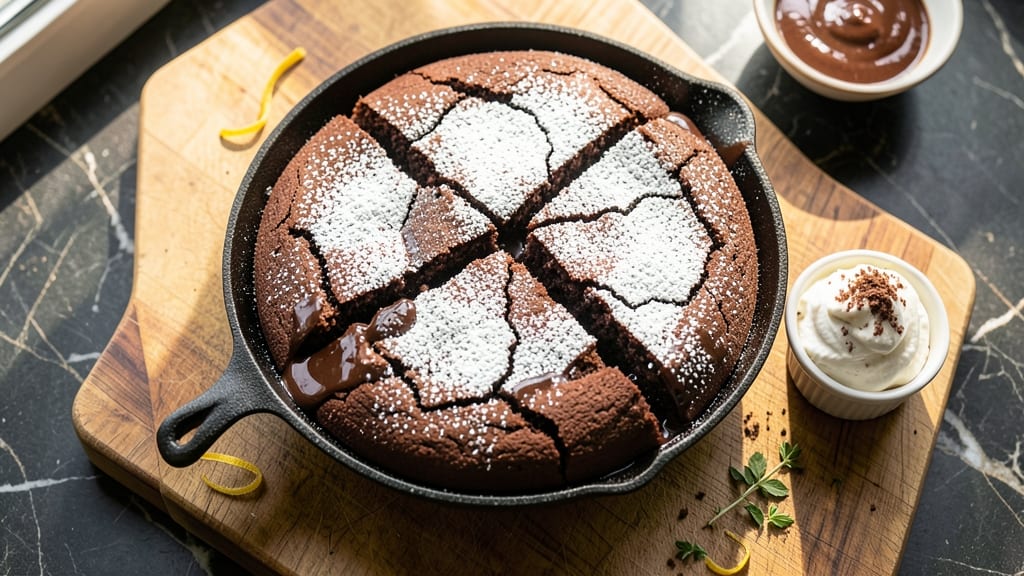
This Bob's Red Mill chocolate cake delivers moist, fudgy layers with a sophisticated coffee twist that deepens flavor without drying out. The secret lies in using Bob's Red Mill cocoa powder and instant espresso powder—creating a rich, velvety texture that bakes up perfectly every time.
I've perfected this recipe over years of testing, ensuring it rises evenly with a crackly top while staying tender inside.
The foundation starts with buttermilk and brown sugar for moisture, while a lightly whipped egg mixture ensures fluffy layers. A touch of vanilla and a pinch of salt balance the deep chocolate notes, making each slice satisfyingly complex.
Baking at 350°F for 30-35 minutes guarantees a golden crust without overcooking the center.
What sets this apart is the coffee infusion, which enhances the chocolate's depth without tasting like dessert coffee. The result? A cake that's rich yet not overly sweet, with a fudgy crumb that melts in your mouth.
Top with a dusting of cocoa powder or a drizzle of chocolate ganache for an elegant finish.
Perfect for birthdays, dinner parties, or a cozy weekend treat, this cake adapts easily to dietary needs—swap butter for oil or use almond flour for a gluten-free version.
The recipe scales beautifully, so you can bake a single layer for two or a triple layer for a crowd. Let's get baking!
Ingredients for bob's red mill chocolate cake
Gather these quality ingredients for Bob's Red Mill chocolate cake with coffee depth and fudgy perfection.
| Ingredient | Amount | Notes |
|---|---|---|
| Bob's Red Mill Cocoa Powder 🍫 | ¾ cup | Unsweetened, high-quality for rich flavor |
| All-Purpose Flour 🌾 | 2 cups | Sifted for even texture |
| Granulated Sugar 🍚 | 1 ½ cups | White or light brown |
| Light Brown Sugar 🍚 | ½ cup | Packed for moisture |
| Buttermilk 🥛 | 1 cup | Room temperature preferred |
| Large Eggs 🥚 | 2 whole | Room temperature, lightly beaten |
| Unsalted Butter 🧈 | 1 cup | Softened but not melted |
| Pure Vanilla Extract 🌿 | 1 tbsp | High-quality for authentic flavor |
| Instant Espresso Powder ☕ | 2 tsp | Dissolves completely |
| Baking Soda 🧂 | ½ tsp | Ensures proper rise |
| Salt 🧂 | ½ tsp | Fine sea salt preferred |
| Vegetable Oil 🫒 | ½ cup | For moisture alternative |
| Hot Water 💧 | ½ cup | For buttermilk substitute |
The Bob's Red Mill cocoa powder is non-negotiable here—it delivers that deep, velvety chocolate flavor without bitterness. Grab the unsweetened version from their website or any major grocery store's baking aisle. For the coffee infusion, Starbucks instant espresso powder works perfectly, but any high-quality brand will do. The buttermilk adds moisture, but if you're short on time, mix 0.5 cup milk with 1 tbsp vinegar and let it sit for 5 minutes. For the butter, Plugrá or Land O'Lakes are reliable brands that soften easily at room temperature—just don't melt it, or the cake will turn out greasy.
No buttermilk? Milk plus vinegar is the classic swap, but plain yogurt works too at a 1:1 ratio. Running low on eggs? Flax eggs (1 tbsp ground flaxseed + 3 tbsp water per egg) keep this recipe vegan-friendly. The brown sugar adds moisture and depth, but white sugar works in a pinch—just don't skip the coffee powder, or the cake will taste flat. For a gluten-free version, swap the all-purpose flour for Bob's Red Mill 1:1 Gluten-Free Baking Flour, and add an extra 0.5 tsp xanthan gum. The vanilla extract should be pure—McCormick or Nielsen-Massey are solid choices if you're not using homemade.
Store the dry ingredients (flour, sugar, cocoa, espresso powder) in airtight containers in a cool, dark place for up to 6 months. The butter and buttermilk keep in the fridge for 3 months and 1 week respectively, so use them fresh for best results. This cake tastes even better the next day—cover loosely with plastic wrap and let it sit at room temperature. For a crowd, bake two 9-inch layers and stack them with a homemade chocolate ganache. Leftovers? Reheat slices in the oven at 300°F for 5-10 minutes to restore moisture.
Why You'll Love This Recipe
- No Mixer Needed: I swear by this recipe when my mixer’s on the fritz. The buttermilk and brown sugar do all the heavy lifting—just stir, fold, and bake. That’s it. No stand mixer, no food processor, no stress.
- Rich Without Bitterness: Bob’s Red Mill cocoa powder is the star here, but it’s balanced just right. The light brown sugar keeps it from tasting like a chemistry experiment, and the buttermilk adds this subtle tang that makes every bite feel indulgent—not heavy.
- Weeknight or Celebration: Honestly, I make this for both. The cake’s sturdy enough for a weeknight dinner (yes, really) but fancy enough for birthdays. Add a dusting of powdered sugar or a scoop of ice cream, and suddenly it’s a showstopper.
- Budget-Friendly Luxury: This recipe costs me about half what store-bought cake mix does, and it’s way better. The cocoa powder and brown sugar stretch the flavor, while the buttermilk keeps the texture moist for days. Leftovers? They’re basically dessert for the next three days.
Step-by-step instructions for bob's Red Mill chocolate cake
Here's how to make a rich, moist chocolate cake with deep coffee notes—no dry crumb in sight.
Whisk Dry Ingredients for Even Texture
In a large bowl, sift together the 2 cups all-purpose flour, 0.75 cup Bob's Red Mill cocoa powder, 0.5 teaspoon baking soda, and 0.5 teaspoon salt. This step prevents lumps and ensures a light crumb. Use a whisk to break up any remaining clumps, then set aside.
In a separate small bowl, mix the 2 teaspoons instant espresso powder with 1 tablespoon pure vanilla extract. This blend adds depth without overpowering the chocolate. The espresso enhances the cocoa's richness while keeping the cake moist—trust me, it makes a difference.
Cream Butter and Sugars for Maximum Fluffiness
In a stand mixer fitted with the paddle attachment, beat the 1 cup softened unsalted butter with the 1.5 cups granulated sugar and 0.5 cup light brown sugar on medium speed for 3-4 minutes. The mixture should lighten in color and become thick and fluffy. This step incorporates air, which creates that signature tender crumb.
Here's the thing—don't rush this step. You're looking for a ribbon stage where the mixture leaves a trail for 10-15 seconds when the paddle is lifted. If it's still grainy, keep mixing. The butter needs to be fully emulsified with the sugars for optimal moisture.
Combine Wet Ingredients for Perfect Moisture
Add the 2 whole large eggs, one at a time, mixing well after each addition. Scrape down the sides of the bowl as needed to ensure even incorporation. Then, mix in the 1 cup buttermilk (or substitute with 0.5 cup hot water mixed with 1 tablespoon vinegar if needed) and the espresso-vanilla blend.
For extra insurance against dryness, add the 0.5 cup vegetable oil now. The oil creates a tender crumb while keeping the cake moist for days. Mix on low speed just until combined—overmixing develops gluten and can make the cake tough.
Fold in Dry Ingredients Gently
With the mixer on low speed, gradually add the dry ingredients in three batches, mixing just until incorporated after each addition. Be careful not to overmix—you're looking for a smooth batter with no visible flour streaks. The goal is to maintain that light, airy texture we built in the creaming step.
Here's a pro tip: If the batter looks too thick, add 1-2 tablespoons of milk (or buttermilk) to loosen it. The batter should be thick but pourable. Too thin, and the cake might collapse in the center. Too thick, and it could be dense. Aim for that perfect middle ground.
Bake to Golden Perfection
Preheat your oven to 350°F and grease two 8-inch round cake pans, then line the bottoms with parchment paper. Divide the batter evenly between the pans and smooth the tops. Bake for 30-35 minutes, or until a toothpick inserted into the center comes out with moist crumbs (not wet batter or dry crumbs).
I press gently on the cake's surface during the last 5 minutes of baking—this prevents a dome from forming and ensures even baking. Let the cakes cool in the pans for 10 minutes, then transfer to a wire rack to cool completely before frosting. Patience here pays off—the cake will hold its shape better and slice more cleanly.
Pro Tips For Making Bob'S Red Mill Chocolate Cake
- Sift the Cocoa First: The Bob’s Red Mill cocoa powder is dense—don’t just dump it in. Sift it with the flour before mixing to avoid lumps and get that silky texture. I learned this the hard way when my first batch had a gritty bite.
- Warm the Buttermilk: Cold buttermilk makes the batter thin and watery. Let it sit at room temperature for 10 minutes before using—just enough to thicken it slightly. Trust me, your cake will hold together better.
- Check for Doneness at 325°F: This cake’s magic happens at 325°F, but ovens lie. Insert a toothpick at the center—it should come out with moist crumbs, not wet batter. If it’s underdone, tent with foil and bake another 5 minutes.
- Swap Brown Sugar for White: Running short on brown sugar? Use granulated sugar instead, but add 1 teaspoon of molasses per cup to mimic the depth of flavor. It’s a lazy hack that still delivers that rich, caramelized taste.
Common mistakes when making perfect results
Overmixing the Batter
This is the #1 mistake I see—overmixing after adding the dry ingredients develops gluten, which makes your cake tough instead of tender. Mix the batter on low speed just until combined, about 20-30 seconds after the last flour addition.
The batter should be smooth with no visible streaks. I always stop as soon as the flour disappears—overmixing is irreversible. 🥄
Skipping the Room-Temp Ingredients
Cold butter and eggs can cause uneven baking and dense texture. Let your butter, eggs, and buttermilk sit at room temperature for 30-60 minutes before mixing. I test butter by pressing a finger into it—if it leaves a slight indentation, it's ready.
Cold ingredients lead to poor air incorporation and a heavier crumb.
Incorrect Pan Prep
Greasing pans isn't enough—line the bottoms with parchment paper to prevent sticking and ensure even baking. I use 8-inch round pans and make sure the batter reaches the top of the pans (about 2/3 full when divided).
Without proper prep, the cake can stick or bake unevenly, especially in the center. A little flour dust on the parchment helps too.
Baking Time Guesswork
Don't rely on the recipe's time blindly—every oven varies. Check for doneness at 30 minutes with a toothpick (it should have moist crumbs, not wet batter). Overbaking dries out the cake, while underbaking leaves it gummy.
I tap the cake gently—if it springs back slowly, it's done. A cake thermometer reading 205-210°F at the center is ideal.
Ignoring the Coffee Infusion
The espresso powder is non-negotiable for depth—skipping it makes the cake taste flat. Dissolve the 2 tsp instant espresso powder completely in the 1 tbsp vanilla extract before adding to the wet ingredients.
I use Starbucks instant espresso because it dissolves smoothly. If you omit it, add an extra 1 tsp cocoa powder to compensate, but the flavor won't be the same.
Not Resting the Cake
Rushing to frost or slice warm cake leads to crumbling or uneven layers. Let cakes cool in pans for 10 minutes, then transfer to a wire rack for 1-2 hours before frosting.
This allows the moisture to redistribute, preventing a dry top layer. I often refrigerate the cake for 30 minutes after cooling to firm it up for cleaner slices.
Nutrition facts
Frequently asked questions
Can I make this chocolate cake without espresso powder?
Yes, but the flavor will be less complex. Replace the 2 teaspoons espresso powder with an extra 1 teaspoon cocoa powder and add 1 teaspoon instant coffee granules dissolved in the buttermilk. For the deepest flavor, use 1 tablespoon strong brewed coffee instead of the espresso powder. The coffee enhances the chocolate's richness while keeping the cake moist.
How do I store or reheat leftover cake?
Store the cake in an airtight container at room temperature for up to 3 days or refrigerate for 5 days. To restore moisture, reheat slices in the oven at 300°F for 5-7 minutes or microwave for 10-15 seconds. For a crispy texture, broil for 1-2 minutes—just watch closely to avoid burning.
What’s the best way to frost this cake?
A simple chocolate ganache (melt 1 cup heavy cream with 8 oz dark chocolate) adds elegance, or try a cream cheese frosting for tangy contrast. For a lighter option, dust with powdered sugar and add fresh berries. The coffee notes pair beautifully with raspberries or blackberries. Let the cake cool completely before frosting to prevent melting.
Can I substitute buttermilk in this recipe?
Mix 1 cup milk (dairy or plant-based) with 1 tablespoon lemon juice or vinegar, then let it sit for 5 minutes to curdle. For a dairy-free version, use 1 cup coconut milk (full-fat) or 1 cup plain yogurt (Greek or regular). The acidity is key for the cake’s moisture and rise—don’t skip it!
Why did my cake turn out dense?
Dense cake usually means overmixing, cold ingredients, or underbaking. Check if your butter and eggs were room temperature, and mix the batter on low speed just until combined. Also, ensure the oven is fully preheated and the cake bakes until a toothpick comes out with moist crumbs (not wet batter). A cake thermometer reading 205-210°F at the center is ideal.