
Desserts
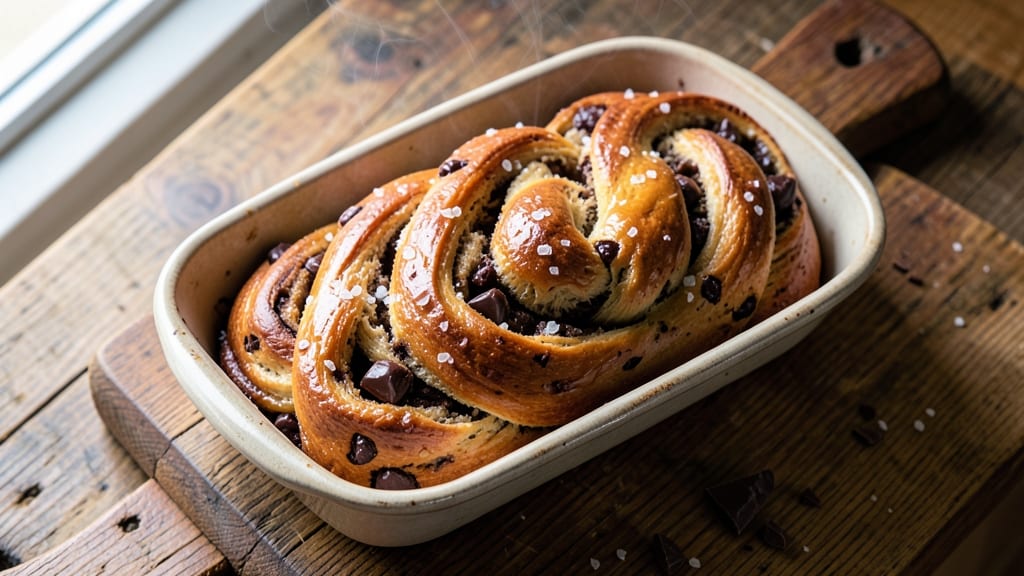
This braided chocolate bread recipe delivers layers of coffee-infused sweetness and buttery richness that will transform any dessert table. The secret lies in a tender yeast-based dough infused with dark chocolate chunks and a hint of espresso powder—creating a perfect balance between deep cocoa flavor and subtle bitterness.
What makes this recipe stand out is the braiding technique, which ensures even baking and a visually stunning presentation that’s as impressive as it is delicious.
The dough develops a fine, airy crumb that stays moist for days, while the chocolate chunks melt slightly during baking, creating pockets of molten sweetness in every bite. Coffee lovers will appreciate the espresso powder, which enhances the chocolate’s depth without overpowering its natural richness.
With just 350°F and 30 minutes of baking time, this recipe is surprisingly straightforward for such an elegant dessert.
Once baked, the bread emerges with a golden crust and those signature braided layers, ready to be sliced and served warm. The aroma alone—warm chocolate, buttery crust, and coffee undertones—will have everyone gathering around.
This is the kind of dessert that feels special enough for holidays but simple enough for a weeknight treat.
Serve it with a dusting of powdered sugar or a drizzle of chocolate glaze for extra indulgence, and pair it with a cup of freshly brewed coffee for the ultimate pairing.
The tender crumb and rich chocolate flavor make every slice worth savoring, proving that homemade desserts can be both impressive and foolproof.
Ingredients for braided chocolate bread
Crafting this braided chocolate bread requires precise ingredients for perfect texture and rich flavor.
| Ingredient | Amount | Notes |
|---|---|---|
| Active Dry Yeast 🍞 | ¼ tsp | Ensure yeast is fresh for optimal rise |
| Granulated Sugar 🍚 | ¼ cup | For yeast activation and sweetness |
| Warm Water 💧 | ½ cup | 110°F for ideal yeast activation |
| Unsalted Butter 🧈 | ½ cup | Cold, cubed for flaky layers |
| All-Purpose Flour 🌾 | 3 ½ cups | Bread flour preferred for structure |
| Dark Chocolate Chunks 🍫 | 1 cup | 70% cocoa or higher for depth |
| Instant Espresso Powder ☕ | 1 tbsp | Enhances chocolate flavor |
| Salt 🧂 | ½ tsp | Diamond Crystal preferred |
| Large Eggs 🥚 | 1 whole | Room temperature for even mixing |
| Milk 🥛 | ¼ cup | Warmed for tender dough |
| Powdered Sugar 🍚 | ¼ cup | For dusting and final touch |
| Chocolate Glaze 🍫 | ½ cup | Optional for extra indulgence |
The dark chocolate chunks are the heart of this recipe—70% cocoa or higher ensures deep flavor without bitterness. Ghirardelli or Valrhona brands deliver consistent quality, but any high-quality bakery chocolate works. For the espresso powder, Starbucks or Lavazza instant varieties provide the right intensity without overpowering the chocolate. Yeast is critical; Fresh yeast from the refrigerated section of your grocery store (not the canned kind) yields the best rise. If your local store doesn’t carry active dry yeast, King Arthur Flour sells it online. The butter should be cold and cubed—this creates those signature flaky layers when baked.
No dark chocolate chunks? Chop a chocolate bar (like Lindt 70%) into small pieces yourself—just ensure they’re uniform in size for even melting. Running short on espresso powder? Instant coffee granules work in a pinch, but reduce the amount to half a teaspoon to avoid overpowering the dough. For the butter, vegetable shortening can replace half the amount if you’re concerned about dairy content, though the flavor will differ slightly. The milk can be swapped for oat or almond milk if needed, though dairy provides the best texture. If you’re making this ahead, freeze the shaped dough for up to 2 weeks—thaw overnight in the fridge before baking.
This bread stays fresh for 3 days at room temperature, wrapped in a clean kitchen towel to retain moisture. For longer storage, slice and freeze—reheat individual slices in a 350°F oven for 5-7 minutes to restore freshness. The chocolate glaze, if used, should be made with powdered sugar, milk, and butter, then drizzled over the cooled bread. Portion the dough into individual loaves if baking for a crowd—each braided loaf serves 2-3 people, making this perfect for gatherings. The aroma alone will draw everyone to the table, so bake just before serving for maximum impact.
Why You'll Love This Recipe
- You’re using pantry basics: yeast, flour, sugar, butter. No specialty ingredients, no markup—just pure, reliable comfort. My grocery bill thanks me every time I make this.
- No-Knead Magic: I swear by this dough—just mix the yeast, warm water, and a pinch of sugar, then let it sit while you butter up your hands. No stand mixer, no fuss, and the slow rise makes it ridiculously tender.
- Rich Chocolate Payoff: That first bite? Warm, buttery dough wrapped around a deep, fudgy chocolate center—like a hug in bread form. The butter keeps it moist, and the sugar in the dough caramelizes just enough to make it dangerously addictive.
- Breakfast or Snack Hero: Serve it fresh with butter for breakfast, pack slices for lunch, or freeze half for when you’re too tired to bake. Honestly, I’ve eaten this cold at 2 a.m. after a late night—no judgment.
Step-by-step instructions for coffee-infused chocolate bread
Master this braided technique for a rich, layered loaf with perfect rise and buttery texture.
Activate the Yeast and Prepare the Dough Base
In a small bowl, combine the 0.5 cup warm water (about 110°F) with the 0.25 cup granulated sugar and 0.25 tsp active dry yeast. Let it sit for 5-10 minutes until frothy—this confirms the yeast is alive and ready to work. If it doesn't bubble, your yeast may be stale, and you'll need to start over.
In a stand mixer fitted with the dough hook, combine 3.5 cups all-purpose flour, 1 tbsp instant espresso powder, and 0.5 tsp salt. Mix on low speed until evenly distributed. The espresso powder will deepen the chocolate flavor, so don't skip this step. Warm the 0.25 cup milk slightly (just enough to dissolve the powdered sugar when added later).
Incorporate Butter and Wet Ingredients
Add the 0.5 cup cold, cubed unsalted butter to the flour mixture and mix on low speed until the butter is broken down into pea-sized pieces. This cold butter will create those signature flaky layers when baked. Gradually add the yeast mixture and the 1 whole large egg, mixing on low speed until a shaggy dough forms.
With the mixer running, slowly pour in the warmed milk mixed with 0.25 cup powdered sugar. Increase speed to medium and knead for 5-7 minutes until the dough is smooth and elastic, pulling away from the sides of the bowl. The dough should be slightly tacky but not sticky—add a few extra tablespoons of flour if needed.
Fold in Chocolate and First Rise
Switch to a clean mixing bowl and transfer the dough. Gently fold in the 1 cup dark chocolate chunks using a silicone spatula, being careful not to overmix. Cover the bowl with a damp towel and let the dough rise in a warm place for 1-1.5 hours, or until doubled in size. The kitchen should feel slightly humid—this helps the dough rise evenly.
Here's the thing—don't rush this step. A proper rise ensures a light, airy texture. If your kitchen isn't warm enough, place the bowl near a slightly warm oven (with the light on) or on top of a heating pad set to low. The dough should spring back slowly when poked, not immediately.
Shape and Braid the Dough
Punch down the risen dough to release air, then divide it into three equal portions on a lightly floured surface. Roll each portion into a 12-inch log, about 2 inches wide. This is where precision matters—keep the logs even in size for a balanced braid.
Lay the three logs parallel to each other, then carefully braid them together by crossing the top log over the middle, then under the bottom, and repeat. Pinch the ends to seal and place the braid seam-side up on a parchment-lined baking sheet. Cover loosely with a towel and let it rise for another 30-45 minutes until puffy. The braid should look slightly taller than when you started.
Bake to Golden Perfection and Glaze
Preheat your oven to 375°F while the dough rises. Brush the braided loaf with a little milk to create a shiny crust, then bake for 25-30 minutes until deep golden brown. The internal temperature should reach 190-200°F—use an instant-read thermometer for accuracy. If the top browns too quickly, tent with foil.
Remove from the oven and let cool for 10 minutes before brushing with the 0.5 cup chocolate glaze. The glaze should be thick enough to coat the bread without dripping. Serve warm or at room temperature for the best texture—each slice should reveal those buttery layers and pockets of melted chocolate. The coffee notes will linger, enhancing the chocolate's depth with every bite.
Pro Tips For Making Braided Chocolate Bread
- Test Yeast First: Skip the guesswork—mix 1 packet yeast with ¼ cup warm water and 1 tsp sugar in a small bowl. If it bubbles within 5–10 minutes, your yeast is alive. I learned this the hard way after baking a dense, flavorless loaf because the yeast was expired.
- Soften Butter Properly: Cold butter makes dough tough; melted butter makes it greasy. Instead, cut butter into small cubes and let them sit at room temp for 30–45 minutes until they’re soft but still hold shape. This keeps the chocolate bread tender without falling apart.
- Knead Until Smooth: Stop when the dough springs back slowly when poked—not when it’s sticky or elastic. Overworking it adds gluten, making the braid tough. I used to rush this, but now I knead for 8–10 minutes by hand (or 5–6 on a stand mixer) until it’s silky.
- Chill Before Braiding: Let the dough rest 1–2 hours in the fridge before shaping. Cold dough is easier to handle and resists shrinking while braiding. I was skeptical until I tried it—now my loaves hold their shape and bake evenly.
Dietary considerations for braided chocolate bread
Gluten-Free Adaptation
For a gluten-free version, replace the 3.5 cups all-purpose flour with a high-quality blend like King Arthur Measure for Measure or Bob's Red Mill 1-to-1 Gluten-Free Flour. Add 1 tsp xanthan gum to help bind the dough, as gluten-free flours lack natural elasticity.
The dough will be stickier, so use a dough scraper and wet your hands slightly when handling. Reduce the milk to 0.2 cup to prevent over-hydration, and let the dough rise for 10-15 minutes longer since gluten-free doughs rise more slowly. 🌱
Vegan Modifications
Swap the unsalted butter for 0.5 cup vegan butter (like Miyoko's or Earth Balance) and replace the large egg with 0.25 cup unsweetened applesauce or a flax egg (1 tbsp ground flaxseed + 3 tbsp water).
Use plant-based milk (like oat or almond milk) and ensure your yeast is vegan-certified. The texture will be slightly denser, but the chocolate flavor remains rich. For extra richness, add 2 tbsp coconut oil to the dough. 🥥
Lower Sugar Options
Reduce the 0.25 cup granulated sugar to 0.125 cup and the 0.25 cup powdered sugar to 0.125 cup while increasing the dark chocolate chunks to 1.25 cups for deeper flavor without added sweetness.
Use erythritol or monk fruit sweetener (like Lakanto) in place of half the sugar for a keto-friendly twist. The espresso powder enhances the chocolate's natural sweetness, so don’t skip it. 💪
Nut-Free Considerations
If you're avoiding nuts, ensure your dark chocolate chunks are nut-free (check labels for cross-contamination warnings). For added texture without nuts, fold in 0.5 cup dried cranberries or raisins during the final rise.
These will soften slightly during baking, adding natural sweetness and moisture. Skip any chocolate glazes containing almond milk or nut oils, and opt for a simple powdered sugar dusting instead. 🍇
Allergen-Friendly Tips
For dairy-free baking, use vegetable shortening (like Crisco) instead of butter and ensure all chocolate chunks are dairy-free. If egg allergies are a concern, replace the egg with 0.25 cup aquafaba (chickpea brine) or a commercial egg replacer like Ener-G.
Always double-check ingredient labels for hidden allergens, especially in chocolate and espresso powder. Cross-contamination risks are highest with gluten-free and nut-free adaptations, so use separate utensils and surfaces. 🛡️
Nutrition facts
Frequently asked questions
Can I make this braided bread without a stand mixer?
While a stand mixer makes kneading easier, you can mix the dough by hand on a lightly floured surface. Use a wooden spoon or dough scraper to work the butter into the flour until pea-sized pieces remain. Knead by folding the dough over itself for 8-10 minutes until smooth and elastic. The key is patience—hand-kneaded dough just needs more time to develop gluten.
Why did my braided loaf collapse after baking?
Collapsed bread usually means the yeast didn't activate properly or the dough didn't rise long enough. Double-check your yeast by testing it in warm water with sugar first—it should bubble within 5-10 minutes. Also, ensure your kitchen is warm enough (at least 75°F) for rising. If using a cold kitchen, place the dough near a warm oven with the light on.
How do I store leftovers to keep them fresh?
Wrap cooled slices tightly in plastic wrap or store in an airtight container with a slice of bread to absorb moisture. At room temperature, it stays fresh for 3 days. For longer storage, freeze slices for up to 3 months. To reheat, warm in a 350°F oven for 5-7 minutes until toasty. The chocolate will soften slightly but still taste delicious!
Can I substitute white chocolate for dark chocolate?
While white chocolate works, it lacks the depth of flavor from dark chocolate and espresso powder. If you must use it, increase to 1.25 cups and add 1 tsp vanilla extract to compensate. For best results, stick with 70% cocoa dark chocolate—it balances sweetness and richness perfectly. The coffee notes will still shine through!
What’s the best way to make this bread ahead of time?
Shape the braided loaf the night before and refrigerate it overnight. Let it rise at room temperature for 30-45 minutes before baking. For longer prep, freeze the shaped dough (unbaked) for up to 2 weeks. Thaw in the fridge overnight, then let it rise before baking as directed. The flavors develop even better after resting!