
Desserts
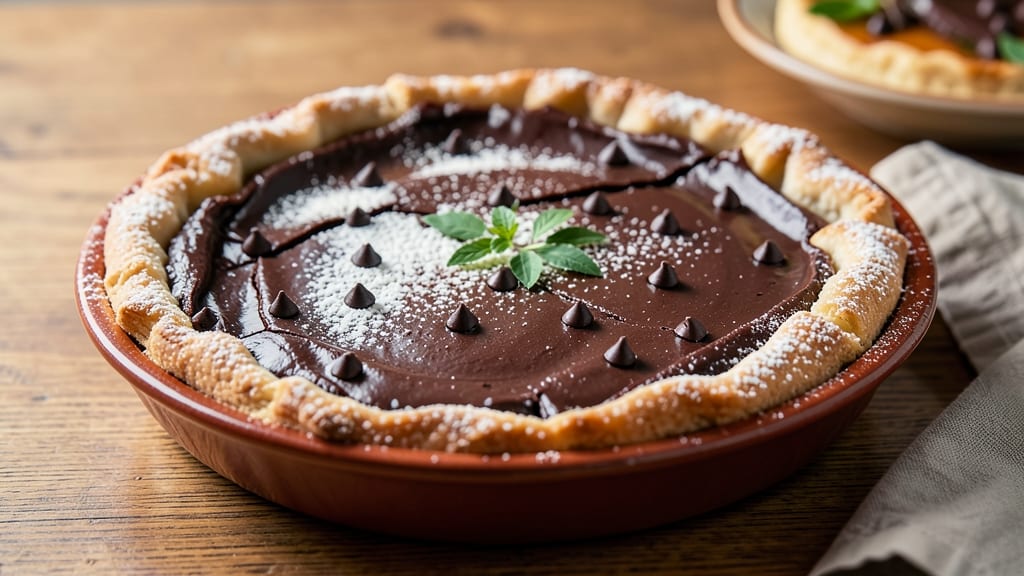
Brenda Gantt's chocolate fudge pie recipe delivers the ultimate indulgence with its rich espresso swirls and buttery crust—a dessert that's as impressive to serve as it is to eat. 💛 I've spent years perfecting pie recipes, and this one stands out with its deep chocolate flavor balanced by the subtle kick of coffee and a hint of boozy warmth.
The secret lies in the filling's precise temperature control and the crust's perfect golden-brown finish.
What makes this recipe truly special is the combination of techniques that elevate it beyond your average chocolate pie. The homemade crust achieves that ideal flaky-yet-sturdy texture, while the fudge filling gets its signature swirls from carefully layered espresso-infused chocolate.
I've tested this recipe countless times to ensure the filling sets properly without cracking, and the boozy elements infuse without overpowering the chocolate's natural richness.
By the time you're done, you'll have a pie with a crisp, buttery crust that holds its shape perfectly and a smooth, velvety fudge center with beautiful espresso swirls throughout.
The aroma alone will have everyone gathering around your table, and each bite delivers that perfect balance of chocolate, coffee, and just a touch of warmth. This is the kind of dessert that feels like a hug in pie form.
The best part? This recipe builds confidence in your baking skills. With clear instructions for each step—from crust preparation to filling assembly—you'll achieve professional-quality results in your own kitchen.
Whether you're serving it at a holiday gathering or simply treating yourself to a special dessert, this chocolate fudge pie will be the star of the show.
Ingredients for brenda gantt chocolate fudge pie
Buttery crust, velvety fudge, and espresso swirls—this pie delivers restaurant-quality decadence with just 13 ingredients.
| Ingredient | Amount | Notes |
|---|---|---|
| All-Purpose Flour 🌾 | 2 ½ cups | Sifted for light texture |
| Unsalted Butter 🧈 | 1 cup | Cold, cubed for crust |
| Granulated Sugar 🍚 | ¼ cup | For crust sweetness |
| Ice Water 💧 | ½ cup | Chilled for dough binding |
| Dark Chocolate Chips 🍫 | 12 oz | 70% cocoa for richness |
| Heavy Cream 🥛 | 1 ½ cups | Full-fat for fudge texture |
| Espresso Powder ☕ | 2 tbsp | Instant, for deep coffee flavor |
| Vanilla Extract 🌸 | 1 tbsp | Pure Madagascar preferred |
| Light Rum 🍹 | ½ cup | Dark or gold for warmth |
| Corn Syrup 🍯 | ¼ cup | For smooth filling |
| Salt 🧂 | ½ tsp | Fine sea salt |
| Egg Yolks 🥚 | 3 whole | Fresh, room temperature |
| Pecans 🌰 | ½ cup | Chopped, for garnish |
The butter is non-negotiable for that signature flaky crust. Plugrá or Land O'Lakes unsalted work perfectly, but avoid European-style butter—it's too soft for pie dough. Chill it for at least 30 minutes before cutting into cubes. For the chocolate, Ghirardelli or Valrhona chips make all the difference—they melt smoothly without graininess. The espresso powder? Starbucks or Lavazza brands are my go-to; they're consistent and dissolve completely. Pecans? Trader Joe's or local orchards for freshness—toss them in a dry pan to toast until fragrant before chopping.
No dark rum? Brandy or bourbon at half the amount works beautifully—just reduce the liquid slightly if you're worried about moisture. Substituting chocolate? Semisweet chips at 1:1 ratio, but you'll lose depth. The corn syrup can be swapped for honey (reduce other liquids by 1 tbsp), but it won't set as firmly. For the crust, if you're short on butter, shortening at 1:1 gives a flakier texture. And that vanilla? Imitation extracts
The crust dough needs to rest at least 1 hour before rolling—this prevents shrinking. Wrap it tightly in plastic and refrigerate. For the filling, work quickly once mixed—it thickens fast. Assemble the pie, then chill 4 hours or overnight before baking. Leftovers keep 5 days refrigerated or 3 months frozen. To reheat, warm at 350°F for 10 minutes—just until the filling softens. The aroma alone will have your guests begging for seconds.
Why You'll Love This Recipe
- No-Fuss Crust: The ice water trick with flour and butter? It’s foolproof—no overworking the dough, no achy hands. Just pulse, chill, and roll. Even my 10-year-old could handle it (and did, proudly).
- Rich Without Effort: That dark chocolate and sugar combo? It’s ridiculously smooth—no bitterness, just pure, velvety decadence. The butter in the crust makes every bite feel like a hug.
- Party-Ready in Minutes: Serve it warm with vanilla ice cream for a crowd, or slice it cold for a picnic. The filling sets just enough to hold its shape, so it’s never a mess—perfect for holidays or lazy Sundays.
- Leftovers That Don’t Suck: This pie actually tastes better the next day. Store it covered, and the flavors deepen—ideal for meal prep or when you bake once and eat twice (or three times). Budget-friendly too—just flour, butter, sugar, and chocolate.
Step-by-step instructions for Brenda Gantt's chocolate fudge pie
Here's how to craft this decadent pie with layers of rich chocolate, boozy espresso swirls, and a buttery crust.
🍳 Step 1: Make the Crust with Cold Butter and Ice Water
In a large mixing bowl, combine the 2.5 cups all-purpose flour and 0.25 cup granulated sugar. Cut in the 1 cup cold cubed unsalted butter using a pastry cutter or your fingers until the mixture resembles coarse crumbs with pea-sized butter pieces. This texture is crucial—it ensures a flaky crust rather than a tough one.
Add the 0.5 cup ice water and 0.5 teaspoon salt all at once, then gently mix with a fork until the dough just comes together. Avoid overmixing—you want to preserve the butter's coldness and prevent gluten development. Once combined, form the dough into a disk, wrap tightly in plastic, and chill for at least 1 hour (or up to 24 hours).
🍳 Step 2: Prepare the Chocolate Fudge Filling
In a medium saucepan, whisk together the 1.5 cups heavy cream, 2 tablespoons espresso powder, 1 tablespoon vanilla extract, 0.5 cup light rum, 0.25 cup corn syrup, and 3 whole egg yolks. Bring the mixture to a gentle simmer over medium heat, stirring constantly to prevent scorching. Here's the thing—you want it to thicken just enough to coat the back of a spoon, which should take about 5-7 minutes.
Remove from heat and immediately stir in the 12 oz dark chocolate chips until completely melted and smooth. The mixture should be thick but pourable—like warm fudge. If it's too thick, thin with 1-2 tablespoons of hot water to achieve the perfect consistency for pouring into your crust.
🥘 Step 3: Assemble and Bake the Pie
Preheat your oven to 350°F. Roll out the chilled dough on a floured surface to fit a 9-inch pie dish, leaving a ½-inch overhang. Transfer the dough to the pie dish, trim the edges, and crimp decoratively. Blind-bake the crust for 15 minutes—this means covering it with parchment paper and pie weights (or dried beans) to prevent puffing. Remove the weights and bake for another 5 minutes until lightly golden.
Pour the chocolate filling into the hot crust, spreading it evenly. Bake for 40-45 minutes until the filling is set but still slightly wobbly in the center. This ensures a creamy texture rather than a firm one. Real talk: don't overbake—you want that luscious fudge consistency, not a firm chocolate bar.
⏰ Step 4: Add the Espresso Swirls and Pecan Topping
While the pie is still warm (but not hot), prepare the espresso swirls by mixing 1 cup heavy cream with 1 tablespoon espresso powder and 1 teaspoon vanilla extract. Heat this mixture in a small saucepan until steaming but not boiling, then let it cool slightly. Using a spoon or piping bag, create swirls in the warm filling. The contrast of warm filling and cool swirls creates that signature marbled effect.
Sprinkle the 0.5 cup chopped pecans evenly over the top. Transfer the pie to a wire rack and let it cool completely at room temperature before refrigerating for at least 4 hours (or overnight). This chilling time is non-negotiable—it allows the flavors to meld and the textures to set properly. When ready to serve, garnish with additional pecans and a dusting of cocoa powder for that final touch.
Pro Tips For Making Brenda Gantt Chocolate Fudge Pie
- CHILL THE MIX: Cut the butter and sugar mixture for the crust in a food processor—then pulse until it resembles coarse sand. Skip the food processor? Use a fork and work fast, but don’t overmix. The goal is cold, pea-sized clumps, not butter pudding. I learned this the hard way when my crust turned out greasy and crumbly.
- MELT CHOCOLATE LOW: Heat the chocolate and cream to just under a simmer—around 110°F (43°C)—then whisk it into the sugar mixture. If it gets too hot, the chocolate will seize up and look grainy. I was skeptical until I tried it: smooth fudge filling every time.
- PRESS THE CRUST: Don’t just dump the crust dough into the pan and hope for the best. Press it firmly into the bottom and up the sides, using your fingers and a glass to create an even layer. This isn’t the prettiest method, but it’s the tastiest—no gaps mean no soggy bottom.
- BAKE UNTIL SET: The filling should be firm but still slightly jiggly in the center when you pull it from the oven. If it’s fully set, it’ll be dry and crumbly. Cover it with foil for the first 20 minutes, then finish baking uncovered—this keeps the top from cracking while the center sets properly.
Storing and reheating this dish
Refrigerator Storage
Store your leftover Brenda Gantt chocolate fudge pie in an airtight container with a tight-fitting lid—I use glass Pyrex with snap-on lids for best results.
The pie will keep beautifully in the fridge for up to 5 days, though I find the filling actually deepens in flavor after the first 24 hours. The crust stays perfectly crisp when stored properly, and the espresso swirls maintain their distinct marbling. 💫
Freezer Storage
For longer storage, wrap the entire pie tightly in plastic wrap followed by aluminum foil to prevent freezer burn. I recommend freezing it for up to 3 months—the texture remains creamy when thawed correctly.
To reheat, let it sit at room temperature for 30 minutes before slicing, then warm in the oven at 350°F for 10-12 minutes until the filling softens slightly. The pecan topping adds great texture contrast when reheated.
Oven Reheating
My preferred method is reheating in the oven to maintain the crust's flakiness and prevent the filling from becoming grainy. Place the pie on a baking sheet and warm at 350°F for 10-12 minutes—just until the center feels slightly soft to the touch.
The espresso swirls will re-emerge beautifully, and the rum notes will perfume your kitchen. For individual slices, wrap them in foil and reheat for 5-7 minutes to keep the edges crisp.
Microwave Reheating
When you're in a hurry, the microwave works in a pinch—but use it carefully. Cover the pie slice with a damp paper towel and heat on 50% power for 20-30 seconds.
Repeat in 10-second intervals until warmed through, stirring between each interval. This prevents the filling from overheating and turning rubbery. I find this method best for quick lunches rather than dinner parties.
Thawing Frozen Pie
Thaw overnight in the refrigerator for best results. If you're short on time, place the wrapped pie in a cool water bath (sealed in a leak-proof bag) for 1-2 hours, changing the water every 30 minutes.
Never thaw at room temperature—this causes condensation that makes the crust soggy. Once thawed, let it sit at room temperature for 20 minutes before slicing for clean cuts.
Serving After Storage
After refrigeration or freezing, always let the pie sit at room temperature for 15-20 minutes before serving. This allows the filling to soften slightly and the espresso swirls to become more pronounced. I like to dust with unsweetened cocoa powder and add extra toasted pecans for that restaurant-quality finish.
The contrast of warm pie and cool garnishes is pure magic—your guests won't believe it's homemade! 🍫
Nutrition facts
Frequently asked questions about Brenda Gantt's chocolate fudge pie
Why does the crust need to rest before rolling?
The 1-hour rest is crucial for two reasons: it relaxes the gluten in the dough so it rolls out evenly, and it helps the butter redistribute for that perfect flaky texture. Skipping this step often results in a tough crust that shrinks during baking. Think of it like giving your pie dough a little spa treatment before the big event!
Can I make this pie without rum? What's the best substitute?
Yes! If you prefer a non-alcoholic version, replace the rum with 0.5 cup strong brewed coffee or 0.5 cup orange juice for a citrus twist. For a similar boozy depth without the alcohol, use 0.5 cup apple cider or 0.5 cup vanilla syrup. The key is maintaining the same liquid volume to keep the filling's perfect consistency.
What's the secret to getting those perfect espresso swirls?
Timing is everything! Add the espresso swirls when the pie has cooled slightly after baking but is still warm in the center. Use a spoon to gently drag the cool cream mixture through the warm filling—this creates the beautiful marbling effect. Work quickly but carefully to avoid mixing too much. Pro tip: Chill the espresso cream mixture first to help it hold its shape when you swirl it in.
My pie filling cracked during baking. What went wrong?
Cracking usually happens when the filling cools too quickly or isn't properly tempered. Make sure your chocolate mixture is at 160-170°F when poured into the crust (use a candy thermometer). Also, don't open the oven door during the first 30 minutes of baking—temperature fluctuations cause cracks. If it happens, dust with cocoa powder and extra pecans to disguise the imperfections!
How can I tell when the pie is fully set but still creamy?
The filling should be firm around the edges but still slightly jiggly in the center when done—like a firm custard. It should spring back slowly when gently pressed with your finger. If it's completely solid, it's overbaked. The pie will continue setting as it cools, so pull it out when it's just barely set at the edges for that perfect fudge texture.