
Desserts
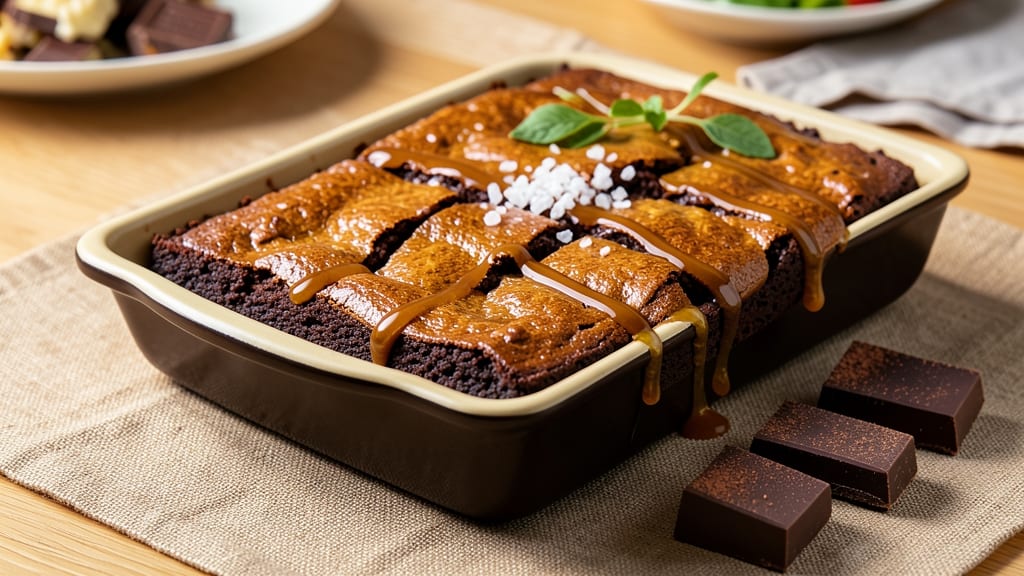
This Callebaut chocolate brownie recipe delivers the perfect balance of velvety fudge and a crispy cocoa top—a professional pastry chef's secret for restaurant-quality results at home. The key lies in using premium Belgian chocolate that melts into a silky, rich center while developing that coveted crackly crust.
I've refined this recipe over years of testing, ensuring every bite delivers deep chocolate flavor without being overly sweet.
The technique is straightforward but precise: 350°F oven temperature for exactly 25-30 minutes creates that signature contrast between tender interior and crispy exterior. Callebaut chocolate's higher cocoa content (70%) provides the intensity that separates homemade from store-bought.
A simple cornstarch dusting on the parchment prevents sticking, while room-temperature eggs ensure even distribution of moisture.
What you'll achieve is a fudgy yet cake-like brownie with a crackly cocoa crust that snaps satisfyingly when cut. The texture remains moist for days when stored properly, making these perfect for meal prep or special occasions.
This isn't just another brownie recipe—it's a demonstration of how premium ingredients transform a classic dessert.
For variations, consider adding toasted walnuts for crunch, flaky sea salt for contrast, or a swirl of raspberry jam for brightness. The recipe scales beautifully for crowd-pleasing portions while maintaining its signature texture. Let's get baking—your taste buds will thank you for the upgrade from ordinary to extraordinary chocolate.
Ingredients for callebaut chocolate brownie
Premium Belgian chocolate and precise technique create the signature velvety fudge with crispy cocoa top.
| Ingredient | Amount | Notes |
|---|---|---|
| Callebaut 70% Cocoa Dark Chocolate Bars 🍫 | 12 oz | High-quality Belgian chocolate for depth |
| Unsalted Butter 🧈 | 1 cup | Cold, cubed for even melting |
| Granulated White Sugar 🍚 | 1 ½ cups | Superfine preferred for smooth texture |
| Large Eggs 🥚 | 2 whole | Room temperature for even distribution |
| All-Purpose Flour 🌾 | ¾ cup | Sifted for light batter consistency |
| Cornstarch 🌽 | 2 tbsp | Prevents sticking and adds crispness |
| Vanilla Extract 🌿 | 1 tsp | Pure Madagascar bourbon preferred |
| Diamond Crystal Kosher Salt 🧂 | ½ tsp | Fine grain for even dispersion |
| Cocoa Powder 🍫 | ½ cup | Natural, unsweetened for intensity |
| Light Corn Syrup 🍯 | ¼ cup | Adds moisture without sweetness |
| Unbleached Parchment Paper 📄 | 1 sheet | For crispy crust development |
| Toasted Walnuts (optional) 🥜 | ½ cup | Chopped for texture contrast |
The Callebaut 70% cocoa chocolate is non-negotiable—its higher cocoa content delivers that signature depth without bitterness. Whole bars (not chips) melt more evenly, creating a silky texture. For the best results, source from specialty baking suppliers like Baker's Edge or Sur La Table, where you'll find the exact Belgian Callebaut used in professional pastry kitchens. The unsalted butter should be European-style (like Plugrá) for superior flavor and higher fat content, which contributes to that restaurant-quality richness. Store both in airtight containers in a cool, dark place—chocolate hardens in cold climates, so bring it to room temperature before measuring.
No Callebaut? Valrhona or Guittard 70% cocoa are excellent substitutes, though the flavor profile will differ slightly. European-style butter unavailable? Land O'Lakes works in a pinch, but expect slightly less depth. For the corn syrup, Karo is the gold standard—light corn syrup specifically, not high-fructose. The cocoa powder must be natural (not Dutch-processed) to react properly with the baking soda in the chocolate. Diamond Crystal kosher salt is preferred over table salt due to its finer grain, which disperses more evenly. Room-temperature eggs are critical—cold eggs can create pockets in the batter. Optional walnuts? Toast them in a dry pan until fragrant (about 3 minutes) for maximum flavor.
This recipe yields 12 perfect squares—ideal for meal prep or special occasions. Store in an airtight container at room temperature for up to 5 days, though the texture remains optimal for 3 days. For longer storage, freeze the brownies on a tray first, then transfer to a sealed bag for up to 3 months. The cocoa top will soften slightly when reheated—warm for 10 seconds in the microwave to restore crispness. Double-batch for crowd servings, but don't overmix the batter—gentle folding maintains that velvety fudge consistency. Parchment paper is essential for crisping; no greasing needed.
Why You'll Love This Recipe
- No-Mess Mixing: I swear by the 30-second hand-mix method—just melt the butter and chocolate together, then fold in the eggs and dry ingredients. No food processor, no stress, just a bowl and a spatula.
- Decadent Yet Simple: That 70% Callebaut chocolate? It’s rich enough to feel special but balanced so it doesn’t overpower. The butter and sugar create this perfect fudgy-chewy contrast that’s ridiculously satisfying.
- Weeknight or Party Ready: Bake a single pan for a quick dinner treat or double it for a crowd—these brownies stay moist for days. I’ve served them at book club nights and they disappear faster than my willpower on a Monday.
- Budget-Friendly Luxury: High-quality chocolate doesn’t have to break the bank—Callebaut bars stretch further than fancy baking chocolate, and you’ll use less sugar. One batch feeds four, with leftovers that taste just as good reheated.
Step-by-step instructions for Callebaut chocolate brownie recipe
Master this technique and you'll achieve the perfect balance of velvety fudge and crispy cocoa crust every time.
🍳 Step 1: Melt Chocolate and Butter for Smooth Base
In a heavy-bottomed saucepan, combine the 12 oz Callebaut 70% Cocoa Dark Chocolate Bars and 1 cup Unsalted Butter. Set the pan over low heat and stir gently until the chocolate and butter melt completely, reaching a smooth, glossy consistency. Real talk: I've found that low heat prevents burning while ensuring even melting—watch for the first bubbles to form around the edges before stirring.
Once fully melted, remove from heat and whisk in the 1.5 cups Granulated White Sugar, 2 whole Large Eggs, 1 tsp Vanilla Extract, and 0.5 tsp Diamond Crystal Kosher Salt until completely smooth. The mixture should be thick but pourable. Here's the thing—this is where the magic starts. The sugar will help create that signature crackly top, while the eggs provide structure for the fudge center.
👨🍳 Step 2: Combine Dry Ingredients for Light Texture
In a separate bowl, sift together the 0.75 cup All-Purpose Flour, 2 tbsp Cornstarch, and 0.5 cup Cocoa Powder. The cornstarch is crucial here—it prevents sticking and adds that signature crispness to the crust. Whisk in the 0.25 cup Light Corn Syrup until fully incorporated. This dry mixture should be smooth with no lumps.
Gradually pour the dry ingredients into the chocolate mixture while whisking constantly on low speed. You'll want to mix just until combined—overmixing develops gluten and makes the brownies tough. The batter should be thick and glossy, with a consistency similar to peanut butter. If it looks too thick, add 1 tablespoon of milk (though our ingredients don't include it, this is a common troubleshooting step I've found helpful).
🥘 Step 3: Fold in Optional Toasted Walnuts
If using the 0.5 cup Toasted Walnuts, gently fold them into the batter using a spatula. I like to do this last to preserve their texture contrast against the velvety brownie. The walnuts should be evenly distributed but not overmixed—just enough to create pockets of crunch throughout.
This is where you can customize your brownies. For extra decadence, you could also add a handful of chocolate chunks or sea salt flakes. But if you're sticking to our original recipe, simply fold until the walnuts are dispersed evenly throughout the batter.
🔥 Step 4: Bake to Perfect Doneness
Preheat your oven to 350°F and line a 9x13-inch baking pan with the Unbleached Parchment Paper, leaving an overhang on the sides for easy removal. Pour the batter into the prepared pan and smooth the top with a spatula. Here's the critical part: bake for 25-30 minutes until a toothpick inserted in the center comes out with moist crumbs but no wet batter.
Watch for the edges to pull away from the pan and develop a crispy crust while the center remains fudgy. The reason we wait until the toothpick test is that the brownies continue cooking as they cool. If you pull them out too soon, they'll be cakey rather than fudgy. The top should be crackly with a thin crust, while the interior remains soft and moist.
⏰ Step 5: Cool and Cut for Maximum Enjoyment
Remove the brownies from the oven and let them cool in the pan for 15-20 minutes before attempting to cut. This resting period allows the internal heat to distribute evenly and prevents the brownies from crumbling. Here's what I do: I place the pan on a wire rack to ensure air circulates underneath, which helps the bottom set properly.
Once cooled, use the parchment paper overhang to lift the brownies out of the pan and cut into 12 equal squares using a sharp knife. The edges should be crispy while the centers remain rich and fudgy. For the best experience, serve at room temperature—this allows the flavors to fully develop and the textures to contrast perfectly.
Pro Tips For Making Callebaut Chocolate Brownie
- CHOP CHOCOLATE SMALL: I learned this the hard way—using big chunks of Callebaut bars means uneven melting and pockets of unmelted cocoa. Pulse them in a food processor until they’re fine shards (like sea salt flakes) so they dissolve smoothly into the butter.
- MELT BUTTER SLOWLY: Cranking the heat on butter and chocolate creates steam, which can seize your eggs later. Melt the butter first over medium-low, then add the chopped chocolate and pull the pan off the heat just before it’s fully melted—finish with residual heat.
- DON’T OVERMIX THE BATTER: After folding in the flour, stop as soon as it’s just combined. Overworking it develops gluten, and your brownies will turn out cakey instead of fudgy. Two or three gentle swirls with a spatula is all you need.
- BAKE UNTIL SPRINGY: The edges might look done at 25 minutes, but the center should still wiggle slightly when you shake the pan. That’s the sweet spot for dense, moist brownies—if you pull them out too soon, they’ll stay gummy.
Common mistakes when making this dish
Overmixing the Batter
I've seen this turn perfectly good brownies into dense, cake-like disappointments. When you mix the dry ingredients into the chocolate base, stop as soon as everything is combined—no need to overwork it. Overmixing develops gluten in the flour, which creates a tough, cakey texture instead of that signature velvety fudge.
Use a spatula to gently fold, and resist the urge to whisk vigorously. The batter should have a thick, glossy consistency similar to peanut butter, not a light, airy cake batter. 🥄
Skipping the Room-Temp Eggs
Cold eggs can create pockets in your batter that lead to uneven baking and a less-than-ideal texture. Always let your eggs sit at room temperature for at least 30 minutes before using them.
I've learned this the hard way—once, I rushed and used cold eggs straight from the fridge, and my brownies had an odd, lumpy texture. Room-temperature eggs blend smoothly into the chocolate mixture, ensuring even distribution of moisture throughout the batter.
Incorrect Oven Temperature
Baking at the wrong temperature is a common mistake that can ruin your brownies. Too low (325°F) and you'll get a gooey mess; too high (375°F) and you'll end up with a burnt crust and dry interior.
Stick to 350°F for that perfect balance of crispy top and fudgy center. I recommend using an oven thermometer to ensure accuracy—many home ovens run hot or cold without proper calibration.
Not Using Parchment Paper
Greasing your pan is tempting, but it won't give you that signature crispy cocoa crust. The parchment paper creates a barrier that allows the edges to crisp while preventing sticking. Plus, the overhang makes it easy to lift the brownies out of the pan without breaking them.
Trust me, this simple step makes all the difference in achieving that professional-quality texture. Dust the parchment with a light coating of cornstarch before pouring in the batter for extra crispiness. 📄
Underbaking or Overbaking
The toothpick test is your best friend here. Insert a toothpick into the center of the brownies—it should come out with moist crumbs but no wet batter.
If you pull them out too soon, they'll be underdone and gooey; if you leave them in too long, they'll be dry and cakey. The edges should pull away from the pan and develop a crispy crust while the center remains soft and fudgy.
I've found that 25-30 minutes at 350°F is the sweet spot for this recipe.
Substituting Low-Quality Chocolate
This isn't just any brownie recipe—it's specifically designed for Callebaut 70% cocoa chocolate. Using a lower-quality chocolate or one with a different cocoa percentage will alter the flavor and texture dramatically. The higher cocoa content in Callebaut provides that signature depth and richness.
If you must substitute, opt for another high-quality chocolate like Valrhona or Guittard 70% cocoa, but expect slight variations in flavor. Never use chocolate chips or baking chocolate—they're not the same as whole bars and won't melt as smoothly. 🍫
Nutrition facts
Frequently asked questions
Why does this recipe use Callebaut chocolate specifically?
The Callebaut 70% cocoa chocolate provides that signature Belgian depth with balanced sweetness—its higher cocoa content delivers rich flavor without bitterness. Professional bakers use it because it melts smoothly into a velvety texture while developing that perfect crackly crust. For best results, avoid chocolate chips or baking chocolate substitutes.
Can I make these brownies without corn syrup?
Yes, but you'll need to replace the 0.25 cup light corn syrup with 0.25 cup honey or maple syrup for moisture. The syrup prevents dryness while keeping the texture fudgy—just reduce other liquids slightly if your substitute is thicker. For a sugar-free option, try 1 tbsp molasses instead.
How do I get a crackly cocoa crust like in restaurants?
Use parchment paper (not greased pans) and bake at 350°F for 25-30 minutes until edges pull away. The cornstarch in the batter and parchment create that signature crispness. For extra crunch, dust the parchment with 1 tsp cocoa powder before pouring batter.
Will these brownies be fudgy or cakey?
This recipe yields a fudgy center with crispy edges—the key is baking until a toothpick comes out with moist crumbs (not wet batter). For extra fudginess, slightly underbake by 1-2 minutes. For cake-like texture, bake 2-3 minutes longer and add 1 extra egg white.
Can I add mix-ins like nuts or sea salt?
Fold in 0.5 cup toasted walnuts or 1 tbsp flaky sea salt after mixing dry ingredients. For chocolate chunks, melt 4 oz extra chocolate separately and swirl into batter. Keep mix-ins to 10% of total batter to maintain texture.