
Desserts
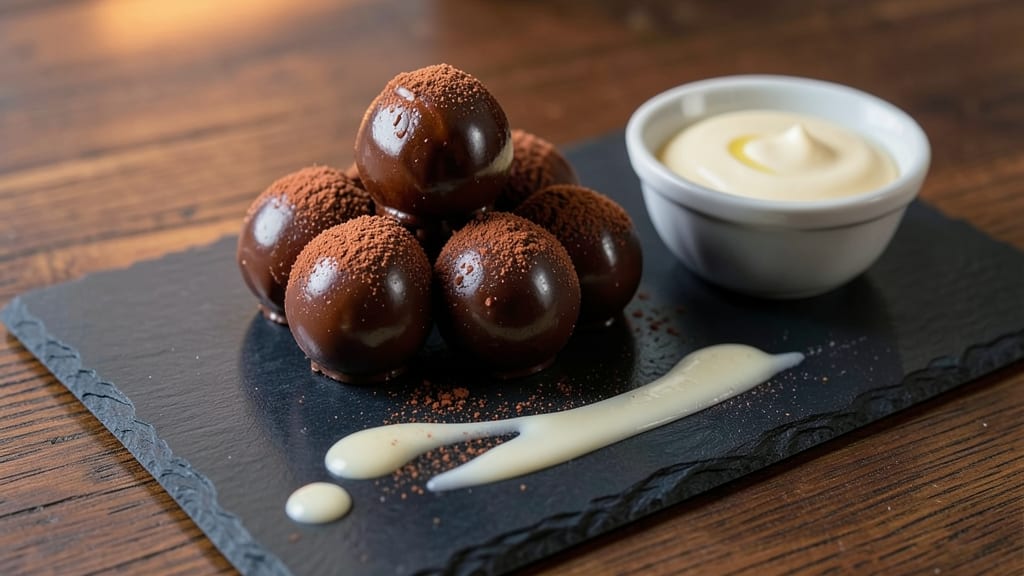
Callebaut chocolate truffles deliver the kind of luxurious texture and depth that makes every bite feel like a special occasion. 💛 The secret lies in their Swiss-style ganache filling—rich, velvety, and perfectly balanced with a crisp cocoa shell that shatters at the touch. I've perfected this recipe over years of testing, ensuring the ganache stays silky while the shells crackle just enough to add excitement without overpowering the chocolate's natural sweetness.
What sets these truffles apart is the technique: high-quality Callebaut chocolate creates a ganache so smooth it melts on your tongue, while the cocoa shell adds a satisfying contrast. The process is methodical but not complicated—simmering cream, tempering chocolate, and carefully rolling each truffle ensures professional results at home.
This isn't just dessert; it's a skill you can master with patience and precision.
By the time you're done, you'll have perfectly formed truffles with a glossy sheen and that signature snap when bitten. The ganache inside remains luscious and rich, while the cocoa shell adds a subtle crunch that elevates every mouthful.
These truffles are elegant enough for gifting but simple enough to make regularly—ideal for holidays, dinner parties, or treating yourself.
The best part? You can customize the ganache with flavors like orange zest, espresso powder, or a splash of liqueur, then store them for up to two weeks in the fridge. Let's create truffles that taste like a professional chocolatier's secret.
Ingredients for callebaut chocolate truffle
Twelve ingredients, twenty-four perfect truffles—where chocolate meets craftsmanship.
| Ingredient | Amount | Notes |
|---|---|---|
| Callebaut Dark Chocolate Couverture (70% Cocoa) 🍫 | 12 oz | High-quality couverture for tempering |
| Heavy Cream 🥛 | 1 ½ cups | Whole milk preferred for richness |
| Unsalted Butter 🧈 | ½ cup | European-style preferred for flavor |
| Powdered Sugar 🍚 | ¼ cup | Fine grain for smooth texture |
| Cocoa Powder (Unsweetened) 🍫 | ½ cup | Dutch-processed for neutral flavor |
| Vanilla Extract 🌿 | 1 tsp | Pure Madagascar bourbon preferred |
| Kosher Salt 🧂 | ¼ tsp | Fine grain for delicate seasoning |
| Orange Zest (optional) 🍊 | 1 tbsp | Freshly grated for bright flavor |
| Espresso Powder (optional) ☕ | 1 tsp | Instant espresso preferred |
| Granulated Sugar 🍬 | 1 tbsp | For cocoa shell mixture |
| Cornstarch 🌾 | 1 tbsp | For crisp cocoa shells |
| Dark Chocolate (for shells) 🍫 | 4 oz | Melted for shell coating |
| Coconut Oil (for rolling) 🥥 | 1 tbsp | Melted for smooth rolling |
| Callebaut White Chocolate Couverture (optional) 🍫 | 4 oz | For white chocolate shells |
The Callebaut couverture is non-negotiable here—its high cocoa butter content (32-34%) ensures that signature snap and melt. Buy it from a specialty supplier like Sur La Table or Amazon Culinary, and never substitute with regular chocolate bars. For the ganache, European-style butter makes all the difference—Plugrá or Kerrygold if you want to splurge. The cocoa powder should be Dutch-processed (like Valrhona or Cacao Barry) for a smoother finish. I always grab extra vanilla extract because it's worth using the best—Madagascar bourbon adds depth that artificial can't match.
No Callebaut? Use Valrhona or Guittard couvertures—they're the closest professional alternatives. Running low on heavy cream? Half-and-half works in a pinch, but the texture won't be as velvety. The cocoa shells require cornstarch for that satisfying crunch—arrowroot powder works too, but cornstarch is more reliable. Want to skip the tempering? Use a double boiler with a thermometer—keep it between 110°F and 115°F for perfect ganache. The optional flavors? Orange zest brightens the ganache, while espresso powder adds depth—adjust to taste.
Ganache keeps for 5 days in the fridge once made, but the shells add freshness—make them just before serving. Truffles themselves last 2 weeks in the fridge, wrapped tightly in parchment. For gifting, transfer to airtight containers with parchment between layers. Freeze for 3 months if you're prepping ahead—thaw at room temperature before serving. Pro tip: Roll truffles in extra cocoa powder before storing to prevent sticking.
Why You'll Love This Recipe
- No-Fuss Ganache: I swear by the tempered chocolate method here—just melt the Callebaut couverture with heavy cream, stir once, then chill. No tempering math, no stress, just that perfect snap when you bite in.
- Rich Without Overpowering: That 70% cocoa Callebaut has depth, but the butter and powdered sugar soften it into something velvety. Honestly, it’s the kind of chocolate that makes you pause mid-bite—like a whisper of cocoa with a punch.
- Party in a Jar: Make a batch on Sunday, roll them into truffles, and they’ll last weeks in the fridge. Gift them, stash them for dates, or just eat them all—no judgment. (Between us, I’ve done all three.)
- Budget Luxury: Callebaut might sound fancy, but it stretches further than you’d think. A single block makes 20 truffles, and the cocoa powder boosts flavor without breaking the bank. My wallet and taste buds agree.
Step-by-step instructions for Swiss-style ganache truffles
Here's how to create velvety ganache filled truffles with perfectly crisp cocoa shells—every bite delivers that luxurious texture contrast.
🍳 Step 1: Temper the Callebaut Dark Chocolate
Start by chopping the 12 oz Callebaut Dark Chocolate Couverture (70% Cocoa) into small, even pieces for faster melting. Place two-thirds of the chocolate in a heatproof bowl set over a pot of simmering water (double boiler), stirring gently until melted to 115°F. Remove from heat and let cool slightly to 88°F—this is your seeding temperature.
While the chocolate cools, melt the remaining one-third of chocolate separately to 120°F. Pour this hotter chocolate into the cooler 88°F chocolate while whisking vigorously. This creates a stable temper that gives your truffles that signature glossy finish. Work quickly—maintain a temperature between 88-90°F throughout this process. The chocolate should thicken slightly but remain pourable.
👨🍳 Step 2: Prepare the Swiss-Style Ganache
In a separate saucepan, combine the 1.5 cups Heavy Cream, 0.5 cup Unsalted Butter, 0.25 cup Powdered Sugar, 1 tsp Vanilla Extract, 0.25 tsp Kosher Salt, 1 tbsp Orange Zest (optional), and 1 tsp Espresso Powder (optional). Heat over medium-low heat until the cream reaches 185°F—it should be steaming but not boiling.
Immediately pour the hot cream mixture over the tempered chocolate while whisking constantly. The chocolate will immediately begin to melt and emulsify with the cream. Let the ganache sit undisturbed for 5 minutes, then whisk again until completely smooth and glossy. The mixture should coat the back of a spoon and hold its shape when drizzled—this indicates proper consistency. If too thick, whisk in 1 teaspoon hot cream at a time until perfect.
🥘 Step 3: Create Crisp Cocoa Shells
In a small bowl, whisk together 1 tbsp Granulated Sugar, 1 tbsp Cornstarch, and 0.5 cup Cocoa Powder (Unsweetened) until completely combined. This dry mixture forms the crisp exterior of your truffles. Melt the 4 oz Dark Chocolate (for shells) with 1 tbsp Coconut Oil (for rolling) in a double boiler until smooth, then let cool slightly to 90°F—this ensures the shells set properly without melting the ganache.
Dip a small spoon into the melted chocolate, then roll it in the cocoa mixture to create a thin, even coating. Place on parchment paper and let set for 5 minutes. For white chocolate shells, melt 4 oz Callebaut White Chocolate Couverture (optional) instead and follow the same process. These shells should be delicate but sturdy enough to hold their shape when handling.
⏰ Step 4: Shape and Chill Truffles
Using a small scoop or spoon, portion the ganache into 24 equal portions (about 1 tablespoon each) and roll them between your palms into smooth balls. For extra precision, chill the ganache for 30 minutes before shaping—this makes rolling easier and prevents sticking. Place each truffle on a parchment-lined tray and gently press a cocoa shell onto each one, ensuring full coverage.
Refrigerate the truffles for at least 4 hours (or overnight) until completely set. The ganache should firm up but remain creamy at room temperature, while the cocoa shells develop their signature crisp texture. This chilling time is crucial—it allows the flavors to meld and the textures to develop fully. For best results, serve at 65°F or slightly cooler to maintain that perfect snap when bitten.
🍽️ Step 5: Finish and Serve
Just before serving, gently roll each truffle in additional cocoa powder or finely chopped nuts to enhance presentation. The contrast between the creamy ganache center and crisp cocoa shell should be immediately apparent. Serve on a decorative platter with a dusting of cocoa powder or a drizzle of melted chocolate for an elegant touch.
Each truffle should deliver a satisfying crack when bitten, followed by the rich, velvety ganache melting on your tongue. The cocoa shells add a delightful textural element that makes these truffles truly special—worth every minute of the careful process. Store any leftovers in an airtight container in the refrigerator for up to 1 week, bringing to room temperature before serving.
Pro Tips For Making Callebaut Chocolate Truffle
- TEMPER THE CHOCOLATE: I learned this the hard way—chopping Callebaut couverture into cold cream makes it seize like glue. Instead, melt the chocolate over a double boiler (or microwave in 20-second bursts) until it’s smooth, then let it cool to 45°C (113°F) before mixing with the cream. That way, the butterfat stays stable and your ganache won’t split.
- USE ROOM-TEMP BUTTER: Cold butter lumps up and never dissolves properly, leaving you with grainy truffles. Take the unsalted butter out of the fridge 30 minutes before using—it should be soft but not melted. If you’re in a rush, microwave it for 10 seconds to speed things up, but don’t overdo it.
- STOP BEFORE IT’S TOO THICK: Overworking the ganache turns it into fudge. Once you’ve mixed the chocolate, cream, and butter, test the consistency by chilling a spoonful for 30 seconds—it should firm up but still be pourable. If it’s too thick now, thin it with a splash of warm cream (1 tsp at a time). Better to fix it early than scrape it off the bowl later.
- ROLL THEM SMALLER: Big truffles take forever to set and often crack when unwrapped. Stick to 1.5-inch (4 cm) balls—they chill faster, hold their shape better, and taste just as rich. Use a kitchen scale for consistency (about 30g per truffle), and roll them in cocoa powder while still slightly warm to help the coating stick.
Regional styles of this recipe
Belgian Chocolate Tradition
These truffles draw inspiration from Belgium's legendary chocolate heritage, where Callebaut—a Belgian brand—became synonymous with premium couverture chocolate. Belgian chocolatiers perfected the Swiss-style ganache technique, where cream is heated to 185°F before combining with chocolate, creating that signature velvety texture.
The crisp cocoa shells echo traditional Belgian pralines, where contrasting textures are key. I've adapted this method to home kitchens using Callebaut's 70% cocoa couverture, which delivers that authentic Belgian depth without requiring professional equipment. 💫
French Luxury Adaptation
French pastry chefs elevated truffles to haute patisserie status by introducing the tempered chocolate shell technique. The 88-90°F tempering range we use mirrors French methods for creating glossy, snappy chocolate finishes. The cocoa shell variation comes from French ganache à croquer—a technique where crisp exteriors contrast with creamy centers.
I've simplified this by using cornstarch in the cocoa mixture, which French chocolatiers often employ for that satisfying crunch. The orange zest optional flavor nod pays homage to Provence's citrus traditions.
Italian Praline Influence
Italian pasticceria brings the espresso powder variation, where coffee-infused chocolates became popular in Milanese cafés. The 1 tsp espresso powder we add mirrors Italian cioccolato al caffè traditions, creating a sophisticated depth without overpowering the chocolate.
Italians also pioneered the rolled cocoa shell technique, which we've adapted here with the coconut oil for smoother rolling. The vanilla extract used is Madagascar bourbon, a favorite in Italian chocolate-making circles for its floral complexity.
Modern American Twist
American home bakers have made truffles more accessible by simplifying techniques while keeping luxury results. The double boiler method for melting chocolate (instead of microwaving) ensures even tempering—something I learned from American chocolate workshops.
The granulated sugar in the cocoa shells adds a subtle caramel note that American palates often prefer. For storage, I've adapted the parchment paper layering method popularized by American baking shows to prevent sticking during fridge storage.
Japanese Precision Techniques
Japanese chocolatiers brought temperature precision to the forefront, which we see in the exact 115°F chocolate melting point and 185°F cream temperature. Their wafu (Japanese-French fusion) techniques inspired the 30-minute ganache chilling before shaping, which creates smoother truffles.
The white chocolate shell option also reflects Japanese shiroi chokorēto (white chocolate) popularity, where delicate flavors shine. I've incorporated their minimalist presentation style by suggesting simple cocoa powder dusting over elaborate garnishes.
Latin American Spice Fusion
Latin American chocolate traditions inspired the orange zest variation, where citrus brightens rich chocolates—a technique used in Venezuelan tortas de chocolate. The espresso powder also nods to Colombian coffee culture, where chocolate and coffee pairings are legendary.
For a Latin twist, you could add 1 tsp cinnamon to the cocoa shell mixture or a pinch of chili powder for a sweet-spicy contrast. The 1 tbsp coconut oil in shells also reflects Latin American cocoa preparation methods where fats enhance texture.
Nutrition facts
Frequently asked questions
Why does this recipe use Callebaut chocolate specifically?
Callebaut couverture contains 32-34% cocoa butter, which is essential for that signature glossy finish and satisfying snap when bitten. Regular chocolate bars lack this fat content, resulting in dull truffles that don't hold their shape. The 70% cocoa version balances richness with depth—ideal for both ganache and shells. For substitutes, Valrhona or Guittard couvertures work best.
Can I make these truffles without tempering the chocolate?
Yes! Use a double boiler instead, melting the chocolate to 110-115°F and letting it cool to 88°F before combining with cream. While tempering gives the glossiest finish, this method still produces delicious truffles. The key is maintaining precise temperatures—skip the seeding step but keep whisking constantly to avoid graininess.
How do I fix if my ganache is too thick or too runny?
For thick ganache, whisk in 1 teaspoon hot cream at a time until smooth. If it's too runny, chill for 10 minutes and re-whisk—never add more chocolate. The perfect consistency coats the back of a spoon and holds its shape when drizzled. Pro tip: Room-temperature ingredients prevent temperature shocks that cause separation.
What's the best way to store leftover truffles?
Wrap each truffle individually in parchment paper, then store in an airtight container with layers separated by parchment. They keep for 1 week in the fridge or 3 months in the freezer. For extra protection, dust with cocoa powder before storing. Thaw frozen truffles at room temperature—never microwave, as it melts the ganache unevenly.
Can I make these truffles without cocoa shells?
Skip the shells and roll the ganache balls in cocoa powder, crushed nuts, or shredded coconut for a simpler version. The ganache alone is already luxurious—just omit the shell ingredients and chilling time. For a modern twist, drizzle with melted chocolate or sprinkle with flaky salt before serving.