
Desserts
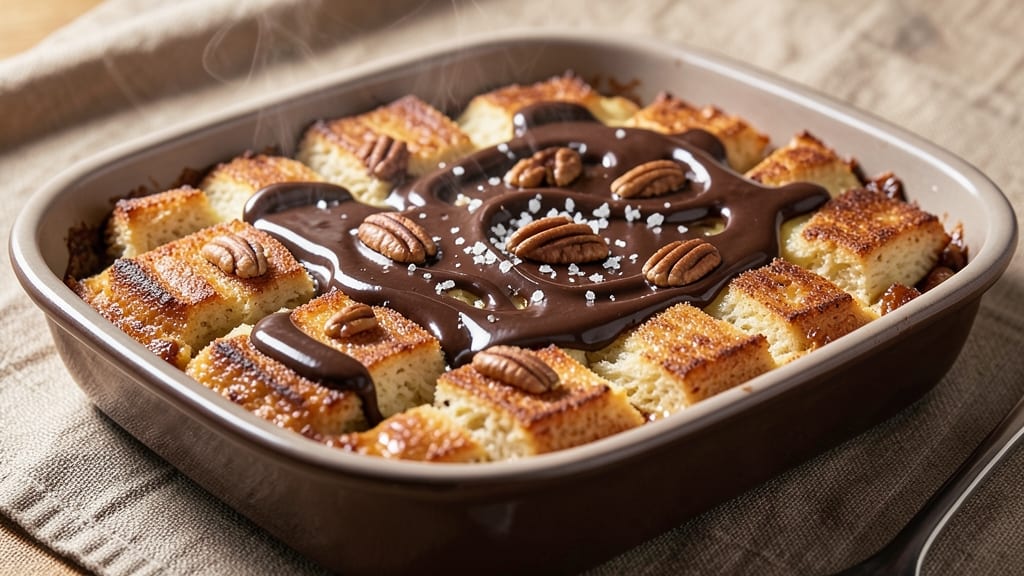
This Carmines chocolate bread pudding recipe delivers the ultimate dessert experience—rich, decadent layers of espresso-infused chocolate swirled into buttery, custardy bread pudding. The secret lies in caramelized elements that add depth, transforming a classic dessert into something extraordinary.
Every bite combines the comforting texture of bread pudding with the bold, velvety intensity of chocolate and espresso.
The recipe begins with cubed brioche or challah bread soaked in a custard made with eggs, milk, and a touch of vanilla. What sets this apart is the addition of espresso powder and melted chocolate, creating deep, aromatic layers that elevate the flavor profile.
The bread absorbs the custard perfectly, ensuring a moist yet firm texture with a golden, buttery crust that's impossible to resist.
As it bakes, the bread pudding develops a caramelized crust that adds a subtle sweetness, while the chocolate and espresso swirls create striking visual appeal.
Served warm with a drizzle of caramel sauce or a dusting of powdered sugar, this dessert feels indulgent yet balanced—perfect for special occasions or satisfying cravings. The combination of textures and flavors makes it a standout dessert that will impress any guest.
This recipe is designed to be approachable yet impressive, with clear steps that ensure success every time. Whether you're hosting a dinner party or simply treating yourself, the rich, complex flavors and satisfying texture make it a dessert worth the effort. Let's get started on creating this unforgettable treat.
Ingredients for carmines chocolate bread pudding
Rich espresso swirls and decadent chocolate layers make this dessert unforgettable.
| Ingredient | Amount | Notes |
|---|---|---|
| Brioche Bread 🍞 | 1 ½ lb | Stale or lightly toasted for texture |
| Large Eggs 🥚 | 6 whole | Room temperature for even mixing |
| Whole Milk 🥛 | 2 cups | Full-fat for creaminess |
| Granulated Sugar 🍚 | 1 cup | Plus 2 tbsp for caramel |
| Unsalted Butter 🧈 | ½ cup | Cold, cubed for custard |
| Vanilla Extract 🌿 | 1 tbsp | Pure Madagascar preferred |
| Espresso Powder ☕ | 2 tbsp | High-quality, freshly ground |
| Dark Chocolate Chips 🍫 | 1 cup | 70% cocoa or higher |
| All-Purpose Flour 🌾 | ¼ cup | For thickening custard |
| Salt 🧂 | ½ tsp | Fine sea salt preferred |
| Powdered Sugar 🍚 | ½ cup | For dusting and caramel |
| Caramel Sauce 🍯 | ½ cup | Store-bought or homemade |
The bread is the foundation—brioche gives that buttery richness, but challah works too if you prefer a lighter texture. Day-old bread soaks up custard perfectly, but if you're using fresh, toast it lightly first. For the chocolate, 70% cocoa or higher ensures deep flavor without overpowering. I grab mine from Whole Foods or Trader Joe's—their dark chocolate bars melt beautifully. The espresso powder is non-negotiable; Starbucks VIA or Lavazza are solid choices, but freshly ground beans work even better if you've got a grinder.
No espresso powder? Strong brewed coffee (cooled) works in a pinch, but reduce the liquid by 2 tbsp to maintain balance. White chocolate can replace dark if needed, though the flavor profile shifts slightly. The custard needs to be smooth and fully combined—whisk vigorously to avoid lumps. For extra decadence, fold in 1 tbsp of Nutella with the chocolate chips. The caramel sauce can be store-bought, but homemade is easier than you think: just melt 1 cup sugar with 6 tbsp butter and 3 tbsp cream, then simmer until golden.
Prep ahead for best results—the custard can be made 2 days in advance and stored in the fridge. Bread cubes keep well in an airtight container for 3 days or frozen for 1 month. Once baked, the pudding reheats beautifully—just 350°F for 10-15 minutes until warmed through. Leftovers? Portion into jars for grab-and-go desserts. The caramelized crust freezes surprisingly well, so double the recipe if you're feeding a crowd.
Why You'll Love This Recipe
- I’ll be real: I’ve reheated this bread pudding three days in a row, and it’s still just as good. The butter-rich brioche stays tender, and the chocolate flavor only deepens—proof that simplicity wins every time.
- No-Bake Magic: I swear, this bread pudding comes together while you’re still debating what to make for dessert. Toss in cubed brioche, pour over warm milk and eggs, and let the oven do the rest—no fancy layers or hours of baking.
- Rich Without Guilt: That brioche soaks up the custard like a dream, but the real star? The dark chocolate chunks melting into a gooey center. Honestly, it’s the kind of dessert that feels indulgent but won’t leave you hiding from your jeans.
- Weeknight Hero: Between us, this is my go-to for when I’ve got company but zero energy. Serve it warm with a scoop of vanilla ice cream, or let it cool for a make-ahead breakfast—either way, it’s always a hit.
Step-by-step instructions for Carmines chocolate bread pudding
Transform simple ingredients into a decadent dessert with rich espresso swirls and a golden crust.
Prepare the Brioche Base
Cut the 1.5 lb brioche bread into 1-inch cubes—about 24 pieces total. Arrange them in a 9x13-inch baking dish, overlapping slightly. This creates a textured base that soaks up custard perfectly. For extra richness, lightly toast the cubes in a 350°F oven for 5 minutes before assembling, but don't let them color too much or they'll lose moisture during baking.
In a separate bowl, whisk together the 2 cups whole milk, 1 cup granulated sugar, 1 tbsp vanilla extract, and 2 tbsp espresso powder until the sugar dissolves completely. The espresso powder should dissolve fully—if not, strain it through a fine-mesh sieve to avoid grainy texture in your pudding. Set this mixture aside for now.
Create the Chocolate Custard
In a large mixing bowl, beat the 6 whole large eggs until they're pale and slightly thickened—about 2-3 minutes with a hand mixer. Add the 0.5 cup unsalted butter, 0.25 cup all-purpose flour, and 0.5 tsp salt, mixing until fully combined. The butter should melt slightly from the egg's warmth, creating a smooth batter.
Gradually pour in the milk mixture while whisking continuously to prevent curdling. Stir in the 1 cup dark chocolate chips and 0.5 cup powdered sugar, ensuring even distribution. The batter should be thick but pourable—if it's too stiff, whisk in 1-2 tablespoons of milk to reach the right consistency. This custard forms the heart of your bread pudding, so don't rush the mixing.
Assemble and Swirl
Pour the custard mixture evenly over the brioche cubes in the baking dish, pressing down gently to ensure the bread soaks up the liquid. Let it sit for 10 minutes—this allows the brioche to absorb some custard before baking, preventing a watery center.
Using a spoon, create swirls in the custard by dragging it through the bread cubes. For extra decadence, drizzle 0.5 cup caramel sauce over the top in zigzag patterns. The contrast between the espresso-infused custard and caramel adds depth to every bite. Sprinkle the remaining 0.25 cup powdered sugar over the top for a sweet, snowy finish.
Bake to Golden Perfection
Bake at 350°F for 40-45 minutes, until the edges are deep golden brown and the center still has a slight wobble when gently shaken. A toothpick inserted should come out with moist crumbs—not wet batter. The pudding will continue setting as it cools, so don't overbake.
For the final touch, broil on high for 1-2 minutes to crisp the top slightly. Watch carefully—this step adds texture but can burn quickly. Let the pudding cool for 15 minutes before serving to allow the custard to fully set. The contrast between the buttery crust, espresso custard, and caramel drizzle makes this dessert unforgettable.
Pro Tips For Making Carmines Chocolate Bread Pudding
- Soak the Brioche Properly: Brioche absorbs liquid like a sponge—don’t rush it. Cut the loaf into 1-inch cubes, then pour the warm milk mixture over them in a baking dish and let it sit for at least 30 minutes. I used to skip this, and the bread ended up dry and gummy. Trust me, the extra wait makes the texture rich and tender.
- Use Room-Temperature Eggs: Cold eggs won’t blend smoothly and can curdle your custard. Take the eggs out of the fridge 30 minutes before mixing—just long enough to reach room temp. I learned this the hard way after scrambling to fix lumpy batter mid-recipe.
- Watch the Butter Temperature: Melt the butter just until it’s liquid, then let it cool slightly before mixing into the custard. If it’s too hot, it’ll cook the eggs prematurely and make the pudding grainy. A quick test: dip your finger in—if it’s warm but not scalding, you’re good.
- Bake Until Golden, Not Just Set: The pudding’s done when the top is deep golden brown, not just firm. If it’s still pale, broil it for 2-3 minutes—just keep an eye on it. I used to pull mine out too soon, and it tasted undercooked. A toothpick test works, but don’t rely on it alone.
Common mistakes when making perfect results
Over-Soaking the Bread
One of the most common mistakes is letting the bread soak up too much custard before baking. If the bread cubes absorb all the liquid during the 10-minute rest, your pudding will turn out dry and crumbly.
To prevent this, work quickly when assembling the dish and avoid pressing down too hard on the bread. The custard should coat the bread but still leave a slight sheen on top—this ensures moisture stays trapped during baking. 🌟
Skipping the Rest Time
Rushing the 10-minute rest before baking is another rookie error. This step allows the bread to absorb just enough custard to create structure without becoming soggy. If you skip it, the liquid will pool at the bottom of your dish, leading to a watery center and uneven texture.
Patience here makes all the difference—trust the process!
Uneven Baking Temperatures
Baking bread pudding at inconsistent temperatures can ruin its texture. If your oven runs hot, the edges will brown too quickly while the center stays undercooked. Preheat your oven to 350°F and use an oven thermometer to confirm accuracy.
For even browning, place a baking sheet on the lower rack to reflect heat upward. The goal is a golden crust with a soft, custardy center—not a burnt exterior hiding raw bread.
Ignoring the Broil Step
Many home cooks forget the 1-2 minute broil at the end, which crisps the top for that perfect contrast. Without it, your pudding will lack the satisfying crunch that balances the creamy interior.
Keep a close eye during this step—broilers can vary wildly in intensity. A light golden color is ideal; avoid letting it turn brown or burn.
Using Low-Quality Chocolate
Substituting melted chocolate bars for high-quality dark chocolate chips (70% cocoa or higher) can dull the flavor. Pre-shredded chocolate often contains anti-caking agents that prevent proper melting, leading to grainy pockets in your pudding.
For best results, use chunks or chips and chop them into even pieces yourself. Brands like Ghirardelli or Valrhona elevate the dessert to restaurant-quality decadence. 🍫
Overmixing the Custard
Whisking the egg mixture too vigorously can incorporate air, causing the custard to rise unevenly in the oven. Overmixed custard often results in a lumpy texture or even a slightly rubbery consistency. Mix just until the butter is fully incorporated and the batter is smooth—no need for a stiff peak.
If you're worried about lumps, strain the custard through a fine-mesh sieve before pouring it over the bread.
Nutrition facts
Frequently asked questions
Can I make this bread pudding without espresso powder?
Yes! Use 2 tablespoons of strong brewed coffee (cooled) instead, but reduce the milk by 1-2 tablespoons to maintain balance. For extra depth, add ½ teaspoon instant coffee granules directly to the custard mixture. The flavor will be slightly different but still delicious.
What’s the best bread to use for maximum richness?
Brioche is ideal for its buttery, tender crumb, but challah or challah brioche also work beautifully. Avoid dense breads like sourdough—they absorb too much custard and can make the pudding dry. For extra decadence, toast the cubes lightly before assembling.
How do I prevent a watery center in my bread pudding?
Don’t skip the 10-minute rest after pouring the custard—this lets the bread absorb just enough liquid to set properly. Also, ensure your custard isn’t too thin; if it separates, whisk in 1 tablespoon of flour to thicken. Bake until the center has a slight wobble (not completely set).
Can I make this ahead of time?
Assemble the pudding up to 24 hours ahead and refrigerate uncovered. Bake straight from the fridge, adding 5-10 minutes to the baking time. For best texture, reheat leftovers at 350°F for 10-15 minutes until warmed through.
What’s the secret to the perfect caramelized crust?
Broil for just 1-2 minutes at the end—watch closely! A light golden color adds texture without burning. For extra shine, brush the top with a little melted butter before broiling. The contrast between the crisp crust and creamy interior is what makes this dessert unforgettable.