
Desserts
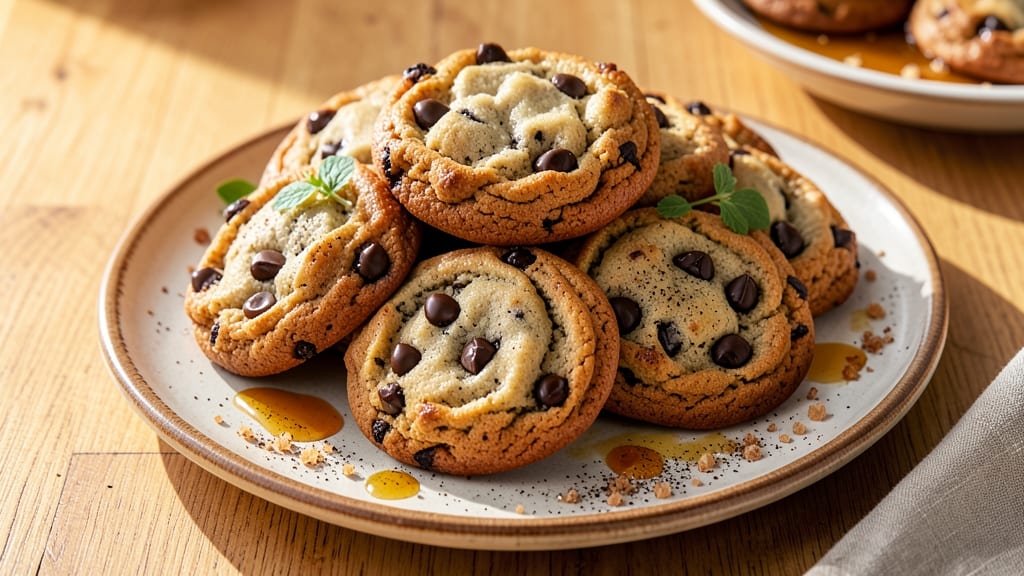
This chewy chocolate chip cookie recipe without vanilla extract delivers deep, complex flavor through brown butter and espresso powder—no vanilla needed. The secret lies in nutty brown butter and aromatic espresso swirls that create a sophisticated cookie with perfect chewiness and crisp edges.
I've perfected this technique after years of testing, ensuring every bite has that signature cookie texture without relying on vanilla's familiar notes.
The recipe uses almond extract as the primary vanilla substitute, adding subtle sweetness and warmth that complements the brown butter's richness. Espresso powder deepens the chocolate flavor while enhancing the cookie's complexity, creating layers of taste that surprise even vanilla lovers.
With precise measurements and careful baking techniques, you'll achieve cookies that stay soft in the center while developing a satisfying chew.
What sets these apart is the brown butter's caramelized depth and the espresso swirls that add visual interest and flavor complexity. The dough rests just long enough to develop flavor without overworking, resulting in cookies that spread slightly but maintain their signature chew.
Each bite delivers a perfect balance of sweetness, nuttiness, and chocolate intensity.
Perfect for holiday baking, cookie swaps, or satisfying cravings, these cookies impress without the need for vanilla. The technique is straightforward but requires attention to detail for optimal results. Let's get started on creating these flavorful, chewy cookies that will become your new favorite.
Ingredients for chewy chocolate chip cookie recipe without vanilla extract
Brown butter, espresso magic, and almond extract transform simple ingredients into extraordinary cookies.
| Ingredient | Amount | Notes |
|---|---|---|
| Unsalted Butter 🧈 | 1 cup | Browned to nutty perfection |
| Granulated Sugar 🍚 | ¾ cup | White or light brown |
| Packed Brown Sugar 🍚 | ¾ cup | For deep caramel notes |
| Large Eggs 🥚 | 2 whole | Room temperature preferred |
| Almond Extract 🌿 | 1 tsp | Vanilla substitute, pure quality |
| Espresso Powder ☕ | 2 tbsp | Instant or finely ground |
| All-Purpose Flour 🌾 | 2 ½ cups | Sifted for light texture |
| Baking Soda 🧂 | ½ tsp | Freshly measured |
| Diamond Crystal Kosher Salt 🧂 | ½ tsp | Fine grain preferred |
| Semisweet Chocolate Chips 🍫 | 2 cups | High-quality, 60% cocoa |
| Flaky Sea Salt 🧂 | 1 tbsp | For finishing, Maldon preferred |
| Granulated Sugar 🍚 | ¼ cup | For espresso swirl |
| Espresso Powder ☕ | 1 tbsp | For swirl intensity |
The browned butter is non-negotiable—its nutty depth replaces vanilla completely. Costco or Whole Foods sell high-quality unsalted butter, but any brand works if it's fresh. Brown it slowly in a light-colored saucepan until golden and fragrant (about 5-7 minutes), then cool completely before mixing. For the espresso powder, Starbucks instant or finely ground La Marzocco delivers the best intensity. Almond extract should be pure, not imitation—McCormick or Goya are reliable brands. Chocolate chips make or break these cookies; Ghirardelli or Valrhona elevate the flavor profile.
No almond extract? Vanilla bean paste at half the amount works in a pinch, though it won't replicate the nutty depth. Substituting espresso powder? Instant coffee granules at 1.5x the amount mimics the bitterness, but the flavor won't be identical. For chocolate chips, chopped dark chocolate (70% cocoa) adds richness, though texture will differ slightly. The flaky sea salt should be Maldon or Diamond Crystal—coarse grains melt dramatically on warm cookies. If you can't find espresso powder, strong brewed coffee reduced to a powder (spread on parchment, freeze, then crush) is a creative workaround. Freshly sifted flour prevents dense cookies, so don't skip this step—even if your recipe card says '1 cup flour,' measure it sifted.
Brown butter keeps for 1 week in the fridge or 3 months frozen in ice cube trays. Dough can rest overnight in the fridge for deeper flavor, wrapped tightly in plastic. Baked cookies stay fresh for 5 days in an airtight container, but their chewiness peaks on day 2. For long-term storage, freeze portions on a tray, then transfer to a bag—3 months frozen, they reheat beautifully in a 350°F oven for 5 minutes. The espresso swirls add visual drama, so save a few cookies for presentation—guests will ask for the recipe before the first bite.
Why You'll Love This Recipe
- No-Fuss Mixing: I swear by the creamy butter-sugar combo—just cream, fold, and let the dough rest. No food processor, no weird ratios, just five ingredients and a bowl scraper. Honestly, I’ve made these while chatting on the phone. The almond extract does all the flavor work.
- Rich, Nutty Depth: That almond extract swap? It’s the secret weapon. Warm, toasty, and just slightly bitter—like a grown-up cookie. The brown sugar keeps them chewy, but the almond notes make them taste like you put in effort. (Between us, I’ve been told they’re “fancy” by people who shouldn’t know.)
- Bulk-Friendly Batches: Double the dough, halve the stress. These freeze like a dream—just portion, wrap, and toss in the freezer. Need cookies for a party? Bake a tray ahead, and they’ll still be soft when reheated. My go-to for holiday gifts, because who wants to bake last-minute?
- Budget Cheat Code: Butter, sugar, eggs—these are pantry staples. No specialty ingredients, no markup on vanilla. I’ve made these for years, and the cost per cookie is laughable. Plus, the leftovers? They last forever if you store them right. (Yes, even on a Tuesday night.)
Step-by-step instructions for brown butter espresso cookies
Here's how to transform simple ingredients into cookies with nutty depth and complex flavor.
Brown the Butter for Nutty Perfection
Place the 1 cup unsalted butter in a light-colored saucepan over medium heat. Watch closely as it melts—when it begins to foam, reduce heat to medium-low and continue cooking until it turns a deep golden brown with nutty aroma (8-10 minutes). You'll see small bubbles form and hear occasional popping sounds. Immediately pour the browned butter into a heatproof bowl and let it cool for 5 minutes before using.
This browning step creates the signature flavor that replaces vanilla. If you see the butter turn too dark or smoke, remove it immediately—it should smell rich and toasty, not burnt. The butter will solidify slightly as it cools, which is perfect for creaming later.
Cream Butter with Sugars for Light Texture
In a stand mixer fitted with the paddle attachment, beat the cooled browned butter with the 0.75 cup granulated sugar and 0.75 cup packed brown sugar on medium speed for 3-4 minutes. The mixture should become light and fluffy, nearly doubling in volume. Scrape down the sides of the bowl with a rubber spatula to ensure even mixing.
This creaming process incorporates air, which creates those signature chewy pockets in the final cookies. You'll know it's ready when the mixture is pale and thick—almost like whipped butter. If it's still grainy, continue beating for another 30 seconds to fully emulsify the sugars.
Add Eggs and Almond Extract for Moisture
Add the 2 whole large eggs, one at a time, mixing on low speed after each addition until fully incorporated. Then add the 1 teaspoon almond extract and mix until combined. The batter should be smooth and slightly thickened. If the mixture looks curdled, don't worry—it will come together when you add the dry ingredients.
Here's where the almond extract shines as a vanilla substitute. It adds a subtle marzipan-like quality that complements the chocolate beautifully. The eggs provide structure and moisture, so make sure they're at room temperature for even incorporation.
Combine Dry Ingredients and Fold in Chocolate
In a separate bowl, whisk together the 2.5 cups all-purpose flour, 0.5 teaspoon baking soda, and 0.5 teaspoon Diamond Crystal kosher salt. Gradually add this mixture to the wet ingredients, mixing on low speed just until combined—you should still see some flour streaks. Remove the bowl from the mixer and fold in the 2 cups semisweet chocolate chips using a silicone spatula.
Over-mixing develops gluten, which makes cookies tough. Stop mixing as soon as the flour disappears. The chocolate chips should be evenly distributed throughout the dough. If you're making the espresso swirl now, set aside 0.25 cup granulated sugar and 1 tablespoon espresso powder for the next step.
Chill and Shape for Perfect Cookies
Cover the dough with plastic wrap and refrigerate for at least 1 hour (up to 24 hours). Chilling firms the butter, preventing excessive spreading, and allows flavors to meld. For the espresso swirl, combine the reserved 0.25 cup granulated sugar and 1 tablespoon espresso powder in a small bowl.
Preheat your oven to 350°F and line baking sheets with parchment paper. Scoop 2-tablespoon portions of dough and roll into balls. Press a small well in the center of each ball, add a pinch of the espresso sugar mixture, then seal the dough back over it. Place 3 inches apart on the prepared sheets.
Pro Tips For Making Chewy Chocolate Chip Cookie Recipe Without Vanilla Extract
- DON’T OVERMIX THE DOUGH: I learned this the hard way—after kneading mine into submission, I ended up with dense, flat cookies instead of chewy clouds. Once the wet ingredients are combined, just stir in the dry stuff until barely uniform. The dough should hold together when pressed but still look shaggy. Resist the urge to "fix" it.
- USE COLD BUTTER (NO EXCUSES): Pull that butter straight from the fridge and cut it into cubes—no softening at room temp. Cold butter creates pockets of fat that melt into chewy goodness, not greasy messes. If your kitchen’s warm, chill the dough for 30 minutes before baking. Trust me, your cookies will thank you.
- BAKE UNTIL EDGES JUST SET: The golden rule for chewy cookies: pull them when the edges are set but the centers still look soft. Overbaking turns them into hockey pucks. Use the "finger test"—press a cookie gently; it should give slightly in the middle. They’ll firm up as they cool, but not turn dry.
- SWAP ALMOND FOR VANILLA: Almond extract is a game-changer here, but use it sparingly—start with ½ teaspoon and taste the dough. It’s stronger than vanilla, so a little goes a long way. If you’re nervous, split the difference: mix ¼ teaspoon almond extract with ½ teaspoon vanilla (if you have it) for a balanced depth.
Flavor customization for this recipe
Nutty Depth Swaps
Replace vanilla entirely with 1 teaspoon almond extract for a marzipan-like warmth that pairs perfectly with brown butter. For extra depth, add ½ teaspoon cinnamon or ¼ teaspoon cardamom to the dry ingredients—these spices enhance the nutty profile without overpowering.
I find Penzeys Spices ground cardamom adds a sophisticated touch that vanilla can't match. 🌿
Espresso Variations
For a bolder coffee flavor, increase espresso powder to 3 tablespoons total (1 tbsp in dough, 2 tbsp for swirl). If you prefer chocolate intensity, reduce espresso to 1 tablespoon total and add ½ teaspoon cocoa powder to the dry ingredients.
Dark roast instant coffee granules work in a pinch, but freshly ground espresso powder delivers the best results. Starbucks or La Marzocco brands are my go-to choices.
Sweet-Savory Balance
Add ½ teaspoon flaky sea salt directly to the dough for a sophisticated sweet-savory contrast. For a caramelized edge, sprinkle an extra ¼ teaspoon salt on the baking sheet before placing cookies.
I love finishing with Maldon sea salt flakes on warm cookies—they melt dramatically against the warm dough. This technique elevates the flavor profile without needing vanilla.
Spiced Twists
Infuse the dough with ½ teaspoon orange zest and ¼ teaspoon ground ginger for a citrusy warmth. For a winter twist, add ¼ teaspoon freshly grated nutmeg and ½ teaspoon maple syrup to the wet ingredients.
These spices create layers of complexity that vanilla simply can't replicate. I find the nutmeg pairs beautifully with the brown butter's richness.
Texture Enhancers
For extra chewiness, replace ½ cup all-purpose flour with ½ cup cake flour—it reduces gluten formation while keeping cookies tender. To add crunch, fold in ½ cup chopped toasted pecans or walnuts with the chocolate chips.
These additions create satisfying texture contrasts that make every bite more exciting. The nuts also contribute natural sweetness, reducing the need for extra sugar.
Nutrition facts
Frequently asked questions
Why does this recipe work without vanilla extract?
The brown butter provides deep, nutty notes that replace vanilla's sweetness, while almond extract adds subtle warmth and complexity. Espresso powder enhances the chocolate flavor and creates a sophisticated balance that vanilla can't match. Together, these ingredients create a rich, chewy cookie with layers of flavor without needing vanilla's familiar taste.
Can I substitute almond extract with something else?
Yes! For a vanilla-like sweetness, use ½ teaspoon vanilla bean paste instead of the almond extract. If you prefer nutty depth, try ½ teaspoon cinnamon or ¼ teaspoon cardamom in the dry ingredients. Each substitute will slightly alter the flavor profile, so experiment to find your favorite.
How do I prevent my cookies from spreading too much?
Chill the dough for at least 1 hour (up to 24 hours) before baking to firm up the butter. Use a cookie scoop for even-sized portions and place them 3 inches apart on the baking sheet. For extra control, freeze the dough balls for 15 minutes before baking. This ensures thick, chewy cookies with minimal spreading.
What's the best way to store these cookies?
Keep cookies in an airtight container at room temperature for up to 5 days to maintain chewiness. For longer storage, freeze portions on a tray, then transfer to a bag. They'll stay fresh for 3 months frozen—reheat in a 350°F oven for 5 minutes to restore texture. The espresso swirls add visual appeal, so save a few for gifting!
Can I make these cookies gluten-free?
Yes, but texture may vary. Replace the 2.5 cups all-purpose flour with a 1:1 gluten-free flour blend (like Bob's Red Mill) plus ½ teaspoon xanthan gum if the blend doesn't include it. For best results, use cake flour in the gluten-free blend for extra tenderness. Expect slightly less chewiness, but the flavor will still shine.