
Desserts
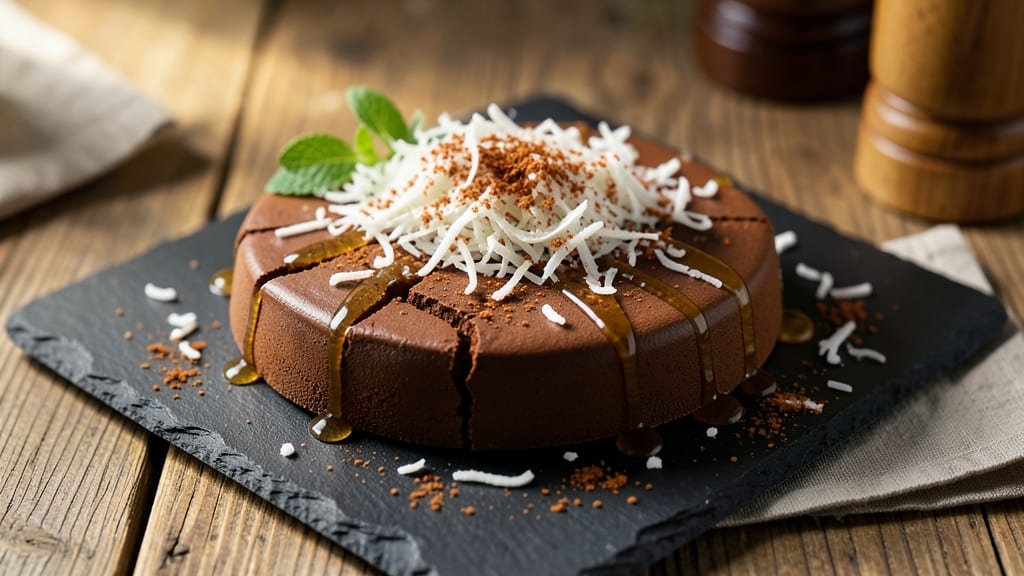
This carob powder chocolate recipe transforms nutty, caffeine-free carob into decadent fudge bars with a crispy topping—no refined sugar or dairy required. 🌟 The secret lies in balancing carob’s earthy sweetness with vanilla and coconut oil for a rich, velvety texture that rivals traditional chocolate desserts.
Perfect for those seeking a healthier indulgence without sacrificing flavor.
Carob’s natural sweetness and lower glycemic index make it an ideal alternative to cocoa, offering a subtly nutty profile that pairs beautifully with cinnamon and sea salt. These bars deliver a satisfying snap from the toasted coconut topping while keeping the center silky-smooth.
The recipe is designed to be foolproof, with precise measurements and simple techniques for consistent results every time.
What you’ll end up with is a batch of vegan fudge bars that taste luxurious yet align with dietary preferences—naturally sweetened, dairy-free, and packed with plant-based richness.
The carob’s caffeine-free nature makes these bars a guilt-free treat for any time of day, while the crunchy topping adds a satisfying contrast to every bite.
These bars freeze beautifully for meal prep or gifting, and the recipe scales easily for larger batches. Whether you’re accommodating dietary restrictions or simply craving a chocolate alternative, this carob creation delivers restaurant-quality results at home.
Ingredients for carob powder chocolate
Twelve ingredients transform carob’s earthy sweetness into decadent, dairy-free fudge bars with crispy coconut topping.
| Ingredient | Amount | Notes |
|---|---|---|
| Organic Carob Powder 🌿 | 1 cup | High-quality, finely ground |
| Unsweetened Shredded Coconut 🥥 | 1 ½ cups | Toasted for enhanced flavor |
| Coconut Oil (Refined) 🫒 | 1 cup | Melted for smooth texture |
| Pure Maple Syrup 🍯 | ½ cup | Grade A for optimal sweetness |
| Pure Vanilla Extract 🌸 | 1 tbsp | Alcohol-free preferred |
| Ground Cinnamon 🌶️ | 1 tsp | Ceylon cinnamon for delicate flavor |
| Sea Salt 🧂 | ½ tsp | Fine grain for even distribution |
| Ground Flaxseed 🌾 | 1 tbsp | For vegan binding |
| Filtered Water 💧 | ¼ cup | Room temperature |
| Unsweetened Almond Milk 🥛 | ¼ cup | For creaminess |
| Dark Brown Sugar (Vegan) 🍚 | ¼ cup | Packed tightly |
| Toasted Coconut Flakes 🥥 | ½ cup | For crunchy topping |
The quality of carob powder is non-negotiable here—NOW Foods or Bob’s Red Mill brands deliver consistent results. Look for organic certification to ensure purity and avoid additives. Coconut oil should be refined for a neutral flavor, not the virgin variety which can impart coconut taste. Toast your shredded coconut in a dry pan for 3-5 minutes until golden—this enhances its natural sweetness and creates that perfect crunch. For the vanilla, alcohol-free extracts like Frontier Co-op work beautifully, especially if you're avoiding alcohol content.
No carob powder? Substitute with equal parts cocoa powder plus 1 tsp extra maple syrup—though the flavor won't be identical. Swap refined coconut oil for avocado oil if needed, but the texture may be slightly less rich. If you're avoiding maple syrup, date syrup or agave nectar work well, though they may alter the caramel notes slightly. For the crunchy topping, toasted pecans or walnuts add a delicious variation. Always measure your brown sugar tightly—it's packed differently than regular sugar, and accuracy matters for the perfect balance of sweetness.
Store these bars in an airtight container at room temperature for up to 5 days, or freeze for 3 months for maximum freshness. The coconut topping stays crispy when stored properly—if it softens, simply toast it again for 2 minutes in the microwave. These bars reheat beautifully in the oven at 300°F for 5 minutes to restore their fudgy texture. Portion into individual squares for easy meal prep or gifting—everyone will assume they're loaded with sugar and dairy, but they're secretly a guilt-free indulgence.
Why You'll Love This Recipe
- Here’s what sold me: deep chocolatey flavor, but none of the sugar crash. The carob’s natural bitterness balances the coconut’s sweetness, and the vanilla extract? It’s like a warm hug for your taste buds. Honestly, I reach for this over store-bought chocolate bars any day.
- No-Mess Mixing: I swear by this recipe because it’s literally three ingredients in a bowl—no melting, no tempering, no stress. Just stir, chill, and enjoy. The carob powder dissolves like a dream in coconut oil, and the maple syrup ties everything together without turning it into a sticky disaster.
- Rich Without Guilt: Here’s what sold me: deep chocolatey flavor, but none of the sugar crash. The carob’s natural bitterness balances the coconut’s sweetness, and the vanilla extract? It’s like a warm hug for your taste buds. Honestly, I reach for this over store-bought chocolate bars any day.
- Endless Uses: Between us, this stuff is my secret weapon for holidays, gift boxes, or just sneaking into oatmeal when I’m lazy. Freeze it into chunks for smoothies, sprinkle it on toast, or press it into molds for last-minute treats. (Yes, even on a Tuesday night.)
Step-by-step instructions for nutty-sweet carob fudge bars
Here's the method for creating rich, velvety carob fudge with a perfect crunchy coconut topping.
🍳 Step 1: Melt the Coconut Oil and Maple Syrup Base
In a medium saucepan, combine the 1 cup refined coconut oil and 0.5 cup pure maple syrup over low heat. Warm gently until the coconut oil melts completely and the mixture reaches a smooth, liquid consistency—about 3-4 minutes. I like to stir occasionally with a silicone spatula to ensure even melting.
This gentle heating prevents scorching while allowing the coconut oil to fully incorporate with the maple syrup. The mixture should be clear and homogeneous with no visible oil separation. Remove from heat once melted and set aside for the next step.
👨🍳 Step 2: Create the Carob Fudge Mixture
In a separate large mixing bowl, whisk together the 1 cup organic carob powder, 0.25 cup dark brown sugar (vegan), 1 tsp ground cinnamon, and 0.5 tsp sea salt until fully combined. This dry blend forms the flavor foundation of your fudge bars.
Gradually pour the melted coconut oil and maple syrup mixture into the dry ingredients while whisking continuously. The carob powder will react immediately, creating a thick, paste-like consistency. Add the 1 tbsp pure vanilla extract and 0.25 cup unsweetened almond milk, whisking until smooth and free of lumps.
🥘 Step 3: Prepare the Flaxseed Binding Solution
In a small bowl, combine the 1 tbsp ground flaxseed with the 0.25 cup filtered water. Stir well and let the mixture sit for 5 minutes until it thickens into a gel-like consistency. This flaxseed mixture acts as our vegan binding agent, replacing eggs in traditional recipes.
Once thickened, stir the flaxseed gel into the carob mixture until fully incorporated. The texture should become slightly more cohesive and spreadable. Here's the thing—this binding step is crucial for achieving that perfect fudge texture without cracking.
🍳 Step 4: Incorporate Coconut and Prepare the Pan
Gently fold in the 1.5 cups unsweetened shredded coconut using a rubber spatula, being careful not to overmix. The mixture should remain thick but spreadable. Line an 8x8-inch baking pan with parchment paper, leaving an overhang on all sides for easy removal later.
Spread the carob mixture evenly into the prepared pan, pressing down gently with the back of a spoon to ensure even distribution. The surface should be smooth and level—this ensures uniform baking and cutting. Place the pan in the refrigerator while you prepare the coconut topping.
🔥 Step 5: Add Crunchy Topping and Set
In a small bowl, mix together the 0.5 cup toasted coconut flakes with 1 tablespoon additional coconut oil (if needed) to help them adhere better. Sprinkle the coconut mixture evenly over the top of the carob layer, pressing down very lightly with the back of a spoon.
Return the pan to the refrigerator and let it set for at least 4 hours or until completely firm. I prefer to let mine set overnight for maximum firmness and easier cutting. Once set, use the parchment overhang to lift the fudge bars out of the pan and cut into 12 equal squares using a sharp knife.
Pro Tips For Making Carob Powder Chocolate
- Melt Oil Slowly: Heat your coconut oil on low until it’s just liquid—no sizzling, no bubbles. I learned this the hard way after burning carob’s earthy notes into oblivion. Once melted, it blends smoother and won’t scorch the carob’s delicate flavor.
- Toast Coconut First: Dry-toast your shredded coconut in a pan for 2–3 minutes before mixing it in. This deepens its nuttiness and prevents it from turning mushy when the carob melts. (Yes, even if you’re impatient like me—wait for the aroma to change.)
- Whisk Carob Like Paint: Sift or whisk the carob powder thoroughly before adding liquids—clumps turn your chocolate into lumpy sludge. I skip this step sometimes, and the texture suffers. A fine mesh strainer works too if you’re lazy, but whisking guarantees silkiness.
- Sweeten Gradually: Start with half the maple syrup, taste, then add more. Carob’s bittersweet edge needs balancing, and you can’t un-sweeten. My grandmother swore by this, and she was right: better to adjust than overdo it.
Essential equipment for perfect results
Mixing Essentials
For these carob fudge bars, a silicone spatula is your best friend—it won’t scratch your pan and handles the thick carob mixture beautifully. I keep a medium-sized mixing bowl (about 8 cups capacity) for combining ingredients without spills, and a whisk with a long handle for smooth incorporation.
A small saucepan (2-3 quarts) works perfectly for melting the coconut oil and maple syrup base. 🍳
Measuring Tools
Precision matters with carob powder—use a 1-cup dry measuring cup with a level edge for accurate measurements. A small liquid measuring cup (with pour spout) helps with the maple syrup and almond milk.
For the flaxseed binder, a medicine dropper or small spoon ensures you measure the 1 tablespoon flaxseed and ¼ cup water exactly. I also recommend a digital kitchen scale for weighing carob powder if you’re feeling fancy—it eliminates packing inconsistencies. ⚖️
Baking Pan Prep
An 8x8-inch metal baking pan is ideal for these bars, but any rigid pan of similar size works. Line it with parchment paper (cut slightly larger than the pan) to prevent sticking—Kraft brand is my go-to for its sturdy texture.
A small offset spatula helps spread the mixture evenly, while a sharp chef’s knife (8-inch) cuts clean squares. For the coconut topping, a small mixing bowl (2 cups) holds everything while you press it into place. 📏
Refrigeration Setup
Your refrigerator needs space for the 8x8-inch pan to set properly. I use a large ceramic plate to stabilize the pan while it chills, preventing any accidental shifting. A small bowl (for the coconut topping) and a measuring spoon set (for cinnamon and salt) should be within arm’s reach.
Pro tip: Place the pan on the middle shelf where temperatures are most consistent—this ensures even setting. ❄️
Optional Extras
For extra flair, a mini food processor (like the Cuisinart DLC-4BC) quickly pulses toasted coconut flakes into finer pieces if you prefer a smoother topping. A fine-mesh sieve helps dust the top with extra carob powder for a marbled effect.
If you’re making these often, a stackable airtight container (like Rubbermaid Brilliance) keeps extras fresh for up to 5 days at room temperature. 💫
Nutrition facts
Frequently asked questions
Is carob powder really a good chocolate substitute?
Carob powder offers a naturally sweet, nutty flavor that's caffeine-free and lower in sugar than cocoa. It's perfect for those avoiding chocolate's stimulants or seeking a healthier alternative. The earthy sweetness pairs beautifully with vanilla, cinnamon, and coconut—just like in these fudge bars. Plus, carob's higher calcium content makes it a nutritional upgrade!
Can I make these bars without coconut?
Yes, but the texture will change. Swap the shredded coconut for 1.5 cups chopped walnuts or pecans (toasted first) for a different crunch. For a nut-free option, try 1 cup crushed graham crackers or 1 cup toasted oats—just adjust the topping quantity to maintain the same volume. The binding will still work perfectly with these alternatives.
Why does my carob mixture taste bitter?
Bitter notes usually mean you used too much carob powder or didn't sweeten enough. The recipe's 0.5 cup maple syrup + 0.25 cup brown sugar balance is key—don't skip either. If it's still bitter, add 1-2 teaspoons extra vanilla extract or a pinch of sea salt to enhance sweetness. Always use high-quality carob powder (like NOW Foods) for the best flavor.
How do I store these bars for maximum freshness?
Store in an airtight container at room temperature for up to 5 days, or freeze for 3 months. For best texture, keep the coconut topping dry by placing a small piece of parchment paper between layers if stacking. To revive any softness, toast the bars at 300°F for 5 minutes—they'll be just as delicious!
Can I make this recipe gluten-free?
Yes! This recipe is naturally gluten-free since it uses coconut oil, carob powder, and flaxseed binding. Just ensure your cinnamon and sea salt are certified gluten-free. The coconut and almond milk are also typically gluten-free, but always check labels. The texture remains exactly the same—rich, fudgy, and perfectly crunchy!